

Have you ever received a message that starts with “FYI” and wondered what the person is trying to say? Maybe you saw it in a group chat, email, or social media comment and weren’t sure if they were simply sharing information or expecting you to do something.
If you’re searching for FYI meaning in chat, the answer is simple. FYI stands for “For Your Information.” People use it when they want to share details, updates, facts, or reminders with someone. It usually means, “I’m telling you this so you’re aware.”
Unlike some texting abbreviations that express emotions or reactions, FYI is mainly practical. It helps people communicate quickly without writing long explanations. However, the tone can change depending on the situation. A friendly FYI can be helpful, while a serious FYI might sound like a warning or correction.
In this guide, you’ll learn everything about FYI meaning in chat, including its full form, history, everyday uses, examples, related terms, and common misunderstandings.
What Does FYI Meaning in Text?
The most common FYI meaning in chat is “For Your Information.”
In simple words, FYI means:
“I’m sharing this information with you so you know.”
It does not usually mean you need to take immediate action. Instead, it’s a way to keep someone updated.
For example:
“FYI, the meeting has been moved to Monday.”
Meaning:
“I’m letting you know about the schedule change.”
Another example:
“FYI, your order will arrive tomorrow.”
Meaning:
“I’m sharing this update with you.”
You’ll commonly see FYI used in:
- Text messages
- WhatsApp chats
- Emails
- Workplace conversations
- Social media posts
- Group chats
Because it’s short and clear, FYI has become one of the most common abbreviations in modern communication.
Read more: What Does OPT Mean in Text? Meaning, Uses & Examples
Origin and Background of the Term

To fully understand FYI meaning in text, it helps to know where this abbreviation came from.
FYI has been around long before smartphones and social media. It originally became popular in business communication, especially in office memos and written documents.
People used FYI to mark information that was being shared for awareness rather than immediate action.
For example, a manager might write:
“FYI: The office will close early tomorrow.”
The message simply informed employees about the update.
As email and digital messaging became popular, FYI moved from workplace documents into everyday conversations.
Today, people use FYI everywhere because it saves time and keeps messages simple.
How FYI Is Used in Daily Life
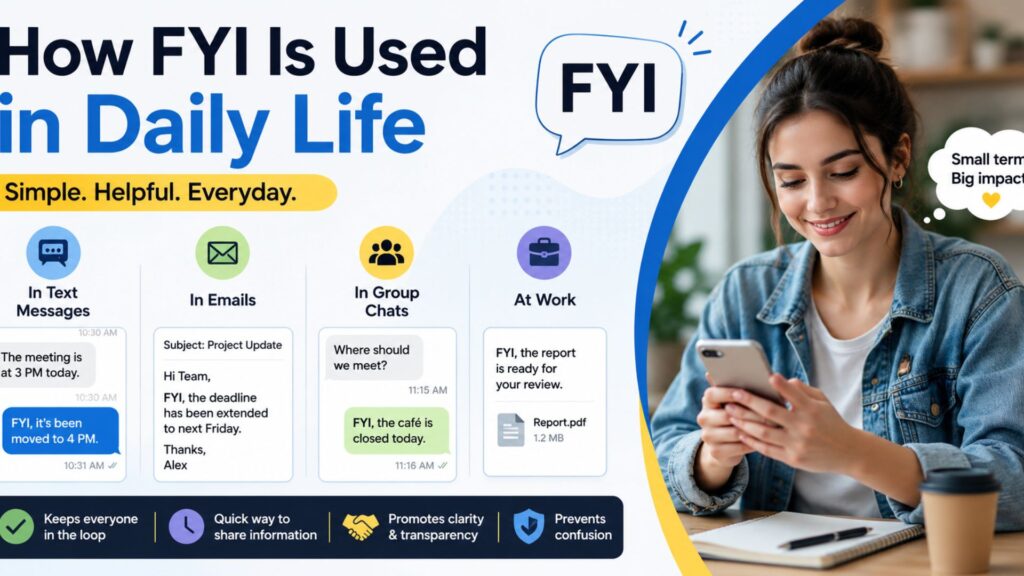
Understanding FYI meaning in chat becomes easier when you see the different situations where people use it.
1. Workplace Communication
One of the most common places you’ll see FYI is at work.
Employees and managers often use it to share updates, announcements, or important details.
Examples:
- “FYI, the client call has been rescheduled.”
- “FYI, I completed the report.”
- “FYI, the deadline has been extended.”
In workplace conversations, FYI often means:
“You don’t need to respond right now, but you should know this.”
However, the meaning can change depending on the message. If someone writes:
“FYI, this issue has happened three times.”
it may sound like they are pointing out a problem.
2. Group Chats
FYI is also common in casual group conversations.
Friends and communities use it to share useful information quickly.
Examples:
- “FYI, the restaurant closes at 10 tonight.”
- “FYI, we changed the meeting location.”
- “FYI, Sarah won’t be joining us.”
Instead of sending a long explanation, people use FYI to quickly update everyone.
3. Emails
Email communication uses FYI frequently, especially in professional settings.
Examples:
- “FYI, I attached the updated document.”
- “FYI, the new schedule is available.”
- “FYI, the report has been approved.”
In emails, FYI often appears at the beginning of a subject line:
Subject: FYI – Updated Project Timeline
This tells the reader that the email contains information they should know.
4. Social Media
People also use FYI on social platforms when sharing updates.
Examples:
- “FYI, this product is back in stock.”
- “FYI, the event starts earlier than expected.”
- “FYI, this feature is now available.”
On social media, FYI works like a quick announcement.
5. Family Messages
FYI isn’t only for work. Many people use it in everyday family conversations.
Examples:
- “FYI, dinner will be ready at 7.”
- “FYI, I left your keys on the table.”
- “FYI, grandma is visiting this weekend.”
It’s simply a convenient way to share information.
Emotional or Practical Meaning of FYI
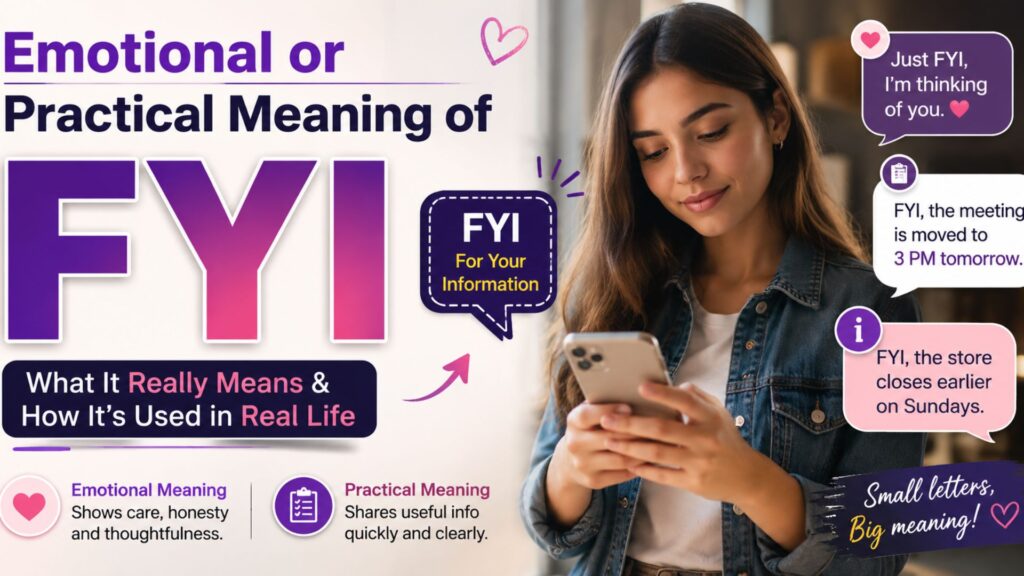
The meaning behind FYI meaning in chat is usually practical rather than emotional.
FYI does not express happiness, sadness, anger, or excitement. It mainly tells someone that information is being shared.
However, the tone depends on the surrounding message.
| Situation | Possible Meaning |
|---|---|
| Sharing an update | Keeping someone informed |
| Workplace notice | Providing important details |
| Friendly message | Helpful information |
| Argument | May sound like a correction |
| Reminder | Making someone aware |
For example:
Friendly:
“FYI, I saved you some food.”
Serious:
“FYI, this deadline was already discussed.”
The abbreviation itself is neutral; the message around it creates the feeling.
Similar or Related Terms
Several words and abbreviations have meanings similar to FYI.
| Term | Meaning |
|---|---|
| FYI | For Your Information |
| BTW | By The Way |
| PSA | Public Service Announcement |
| Just so you know | Casual information sharing |
| Reminder | A note to remember something |
| Note | Important information |
Key Differences:
FYI vs BTW
- FYI: Used for useful or important information.
- BTW: Used to add a casual extra point.
Example:
“FYI, the store closes at 6.”
(Important update)
“BTW, I watched that movie.”
(Extra conversation detail)
FYI vs PSA
- FYI: Usually directed toward a person or group.
- PSA: Usually a public announcement for many people.
FYI vs Reminder
- FYI: Gives information.
- Reminder: Encourages someone not to forget something.
Common Misunderstandings About FYI
Many people misunderstand FYI meaning in chat because the abbreviation can sometimes feel different depending on the situation.
1. FYI Is Always Rude
This is not true.
FYI is usually a neutral and helpful phrase. It only sounds rude when the surrounding message has a negative tone.
Example:
Friendly:
“FYI, your package arrived.”
Serious:
“FYI, you missed the deadline again.”
The difference comes from the message, not the abbreviation.
2. FYI Is Only for Work
Many people think FYI belongs only in office communication.
That’s incorrect.
People use FYI in:
- Friend chats
- Family messages
- Social media
- Online communities
It has become a normal part of everyday texting.
3. FYI Requires Immediate Action
FYI usually does not mean “do something now.”
It mainly means:
“I want you to know this.”
If someone wants action, they usually use clearer words like:
- Please complete this.
- Let me know your thoughts.
- Take action on this.
4. FYI Is Formal
FYI can be used in professional settings, but it isn’t extremely formal.
It works well in workplace communication, but it also appears in casual messages.
5. FYI Should Always Be Capitalized
Traditionally, FYI is written in capital letters because it is an abbreviation.
However, in casual texting, people often write:
- fyi
- Fyi
All versions are generally understood.
6. FYI Is Old-Fashioned
Some people think FYI is outdated because it has existed for a long time.
However, it remains popular because it is short, clear, and useful. Many modern apps and workplaces still use it every day.
Examples of FYI in Sentences

Here are some real examples showing FYI meaning in chat:
- “FYI, the meeting starts at 2 PM.”
- “FYI, I sent the files to your email.”
- “FYI, your order has been delivered.”
- “FYI, the weather might change tonight.”
- “FYI, the event location has changed.”
- “FYI, I already finished the task.”
- “FYI, tickets are almost sold out.”
- “FYI, the store is closed today.”
- “FYI, your favorite show is returning.”
- “FYI, I’ll be late.”
These examples show how FYI fits naturally into many types of conversations.
Why Understanding FYI Meaning in Text Matters Today
Digital communication is full of abbreviations, and understanding them helps you communicate better.
Knowing FYI meaning in chat helps you:
- Understand messages faster.
- Recognize whether someone is informing or requesting.
- Avoid misunderstandings.
- Reply with the right tone.
- Communicate more confidently online.
Whether you see FYI in a work email, a friend’s message, or a social media post, knowing what it means helps you understand the person’s intention.
FAQs
What does fyi mean in simple words?
FYI means “For Your Information.” It is used when someone wants to share information or an update with you.
Is fyi positive or negative?
FYI is usually neutral. It can feel positive when sharing helpful information, but the tone depends on the context.
Where is fyi commonly used?
FYI is commonly used in text messages, emails, workplace chats, social media posts, and group conversations.
Is fyi formal or informal?
FYI can be both. It is common in professional communication but also appears in casual texting.
Why do people search for fyi meaning in text?
People search for FYI meaning in chat because they want to understand whether someone is simply sharing information or expecting a response.
Conclusion
Understanding FYI meaning in chat makes online conversations much easier. FYI stands for “For Your Information” and is used when someone wants to share updates, details, or helpful information.
Although it started as a workplace abbreviation, FYI has become a normal part of texting, social media, and everyday communication. Most of the time, it simply means someone wants you to know something.
The key is to pay attention to context. A friendly FYI can be helpful, while a serious FYI may carry a different tone. Once you understand how it works, you’ll recognize this abbreviation instantly.
