
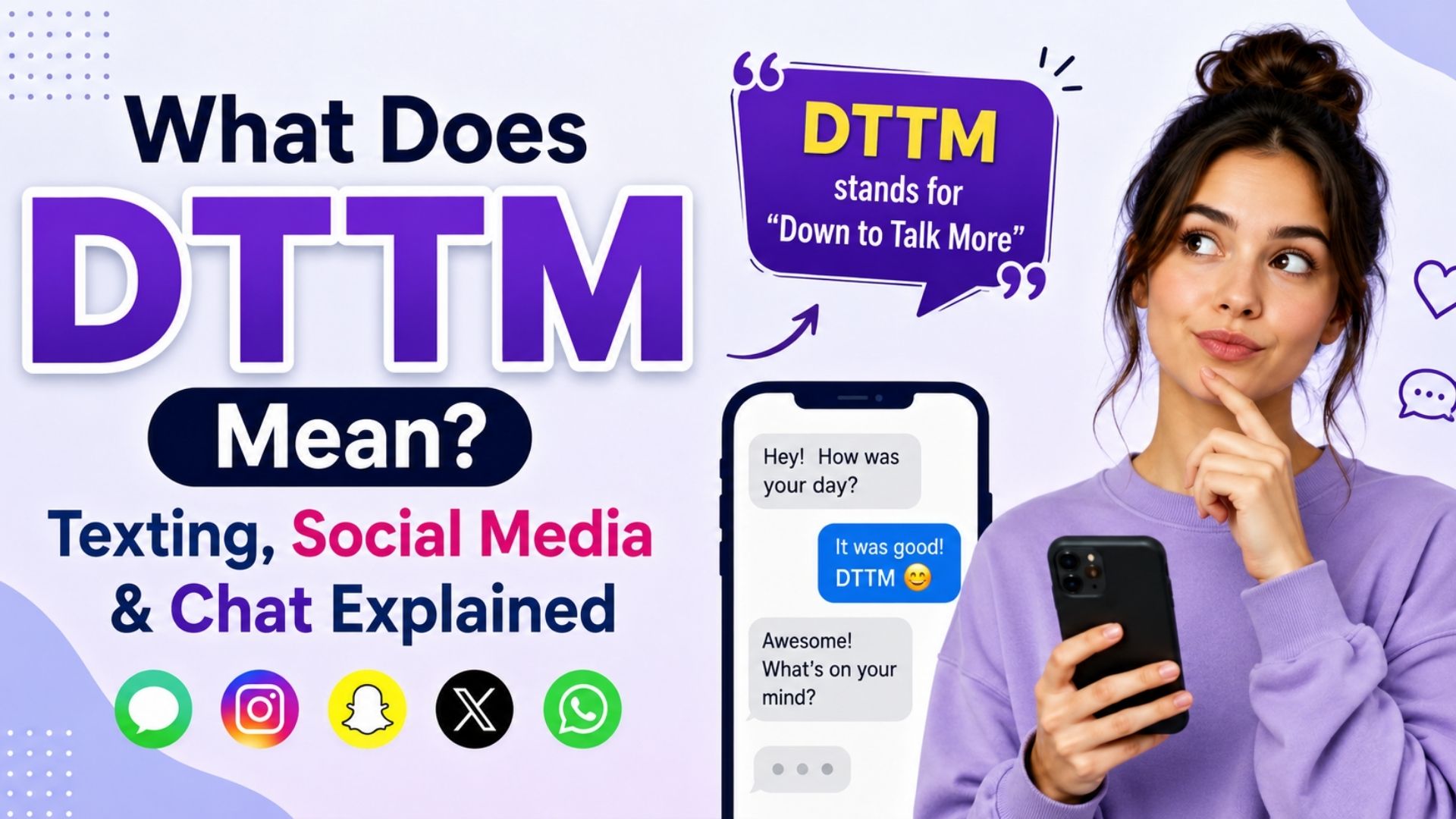
Have you ever received a message with DTTM and wondered what it meant? Internet slang changes quickly, and new abbreviations appear across texting apps, social media, and online chats all the time. Some acronyms have a single, widely accepted definition, while others can have different meanings depending on the conversation.
In casual texting, DTTM is sometimes used to mean “Don’t Talk To Me.” It’s usually a playful or emotional expression rather than a literal request to end all communication. The exact meaning depends on the context, the relationship between the people chatting, and the tone of the conversation. In this guide, you’ll learn what does DTTM mean, where it comes from, how people use it, and when you should (or shouldn’t) use it yourself.
What Does DTTM Mean?
If you’re wondering what does DTTM mean, the most common texting interpretation is “Don’t Talk To Me.”
People often use it to express frustration, embarrassment, mock anger, or emotional overwhelm. In many conversations, it’s not meant to be taken literally. Instead, it’s a dramatic or humorous way of reacting to something that just happened.
For example:
Friend: “Remember when you waved at someone who wasn’t waving at you?”
You: “DTTM 😭”
In this example, the speaker isn’t ending the friendship. They’re simply reacting with playful embarrassment.
Read more: What Does WYGG Mean in Text? Meaning, Uses & Examples
Origin and Background of the Term
Like many internet abbreviations, DTTM likely developed as people looked for faster ways to communicate in text messages and online chats. Acronyms help users express emotions with just a few letters, making conversations quicker and more casual.
Although DTTM isn’t as widely recognized as abbreviations like LOL, BRB, or OMG, it occasionally appears in group chats, gaming communities, and social media conversations where informal language is common.
Because it’s less common than many internet slang terms, readers should always rely on the surrounding conversation to understand its intended meaning.
How DTTM Is Used in Daily Life
1. After Embarrassment
One of the most common situations is after an embarrassing moment.
Example:
“I sent the message to the wrong person… DTTM.”
The speaker is joking about their embarrassment.
2. Playful Drama
Friends often exaggerate their reactions for comedic effect.
Example:
“You finished the pizza without me? DTTM 😂”
This isn’t genuine anger—it’s playful teasing.
3. Emotional Overload
Sometimes people use DTTM when they’re overwhelmed after surprising or stressful news.
Example:
“I have three exams tomorrow. DTTM.”
Here, the phrase expresses frustration rather than asking others to stop talking.
4. Joking Between Friends

Close friends frequently use dramatic expressions with each other.
Example:
“You beat my high score again? DTTM.”
The message is humorous and friendly.
5. Setting Boundaries
Occasionally, DTTM may be used more seriously when someone wants a little space.
Example:
“I’ve had a long day. DTTM for a while.”
In this situation, the sender genuinely wants some quiet time.
Emotional or Practical Meaning of DTTM
The emotional meaning behind DTTM depends entirely on context.
Sometimes it communicates:
- Playful annoyance
- Embarrassment
- Stress
- Frustration
- Emotional exhaustion
- A desire for temporary space
In simple terms, DTTM often expresses a feeling rather than giving a strict command.
Similar or Related Terms
| Term | Meaning |
|---|---|
| BRB | Be Right Back |
| GTG | Got To Go |
| TTYL | Talk To You Later |
| AFK | Away From Keyboard |
| IRL | In Real Life |
| IDC | I Don’t Care |
| SMH | Shaking My Head |
These abbreviations help people communicate quickly in online conversations, although each has a different purpose.
Common Misunderstandings About DTTM
1. It’s Always Rude
Not necessarily. In many conversations, DTTM is meant jokingly rather than as an insult.
2. It Means a Friendship Is Over
Usually not. Friends often use it playfully after funny or embarrassing situations.
3. It’s Only for Teenagers
While younger people may use internet slang more often, anyone familiar with online culture can understand or use DTTM.
4. It’s Always Serious
Many uses are humorous or exaggerated rather than literal.
5. It’s the Same as Blocking Someone
No. Saying DTTM doesn’t automatically mean someone wants to end communication permanently. Often, it simply reflects a temporary emotion.
Examples of DTTM in Sentences
- “I forgot my homework again. DTTM.”
- “You spoiled the ending? DTTM 😂”
- “That was so embarrassing… DTTM.”
- “I’m exhausted after today. DTTM for a bit.”
- “You really posted that picture? DTTM!”
- “I can’t believe I said that out loud. DTTM.”
- “Another Monday already? DTTM.”
- “You beat me again? DTTM 😅”
- “My internet crashed during the meeting. DTTM.”
- “I need a break after today. DTTM.”
Why Understanding DTTM Meaning in Text Matters Today
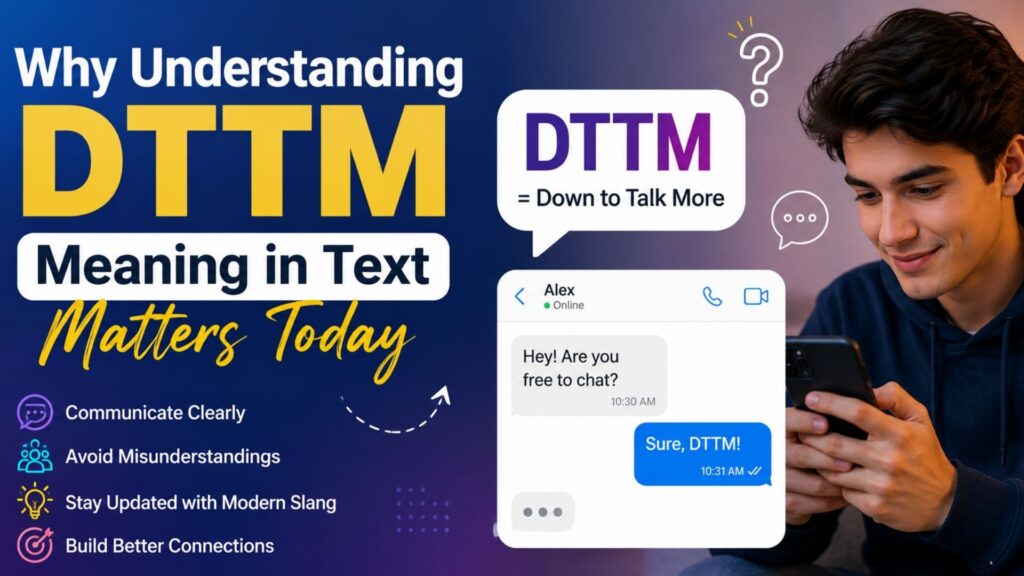
Internet language evolves constantly, and abbreviations often change meaning depending on the platform and community. Understanding what does DTTM mean helps you avoid misunderstandings and interpret messages more accurately.
It’s also a reminder that context matters. A phrase that sounds serious on its own may actually be playful when exchanged between close friends.
FAQs
What does DTTM mean in text in simple words?
In casual texting, DTTM is sometimes used to mean “Don’t Talk To Me,” usually as a humorous or emotional reaction.
Is DTTM positive or negative?
It depends on the conversation. It can express frustration or embarrassment, but it’s often used jokingly.
Where is DTTM commonly used?
You may see it in text messages, group chats, gaming communities, and on social media platforms.
Is DTTM formal or informal?
DTTM is an informal internet abbreviation and isn’t appropriate for professional or formal communication.
Why do people search for DTTM meaning in text?
People often encounter the acronym in a message or online conversation and want to understand its meaning and context.
Conclusion
If you’ve been wondering what does DTTM mean, it’s commonly interpreted in casual online conversations as “Don’t Talk To Me.” Most of the time, it’s used humorously to express embarrassment, frustration, or playful drama rather than as a literal request to stop communicating. Since DTTM isn’t a universally standardized abbreviation, always pay attention to the context before deciding what it means. Understanding internet slang like this makes texting and social media conversations much easier to follow.
