Have you ever searched for the meaning of a text abbreviation or slang term but found nothing because the word or symbol wasn’t displayed? It can be confusing when you see an empty space, quotation marks, or an unfamiliar expression in a message and don’t know what the sender means.
The meaning of a blank text term depends on what you’re actually seeing. Sometimes the keyword hasn’t been entered, the text hasn’t loaded correctly, or a special character isn’t displaying on your device. In other cases, the blank space may be part of a search query or formatting issue rather than an actual slang expression.
Text slang is constantly changing. Expressions such as LOL, BRB, HMU, and IMO have become common in everyday digital conversations, but not every unfamiliar symbol has a recognized meaning.
In this guide, you’ll learn how to understand missing text terms, where slang is commonly used, why people use abbreviations, and how to identify the meaning of an unfamiliar expression without making assumptions.
What Does “ ” Mean in Text?
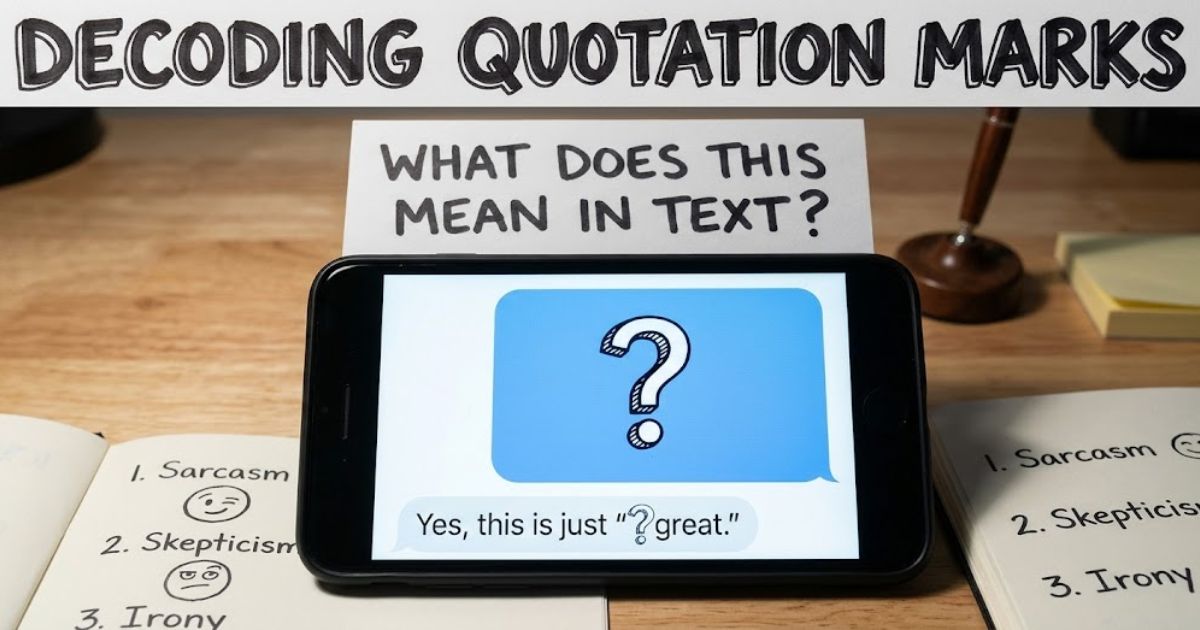
The expression “ ” doesn’t contain a visible word or abbreviation. It’s an empty pair of quotation marks, which means there’s no actual text between them.
Therefore, “ ” doesn’t have one established meaning in texting or online slang. Its interpretation depends on why the space is empty and where you encountered it.
There are several possible explanations:
- Missing keyword: The word or abbreviation may have been accidentally left out when someone created the text.
- Formatting problem: A website, article, or messaging application might not display the original text correctly.
- Unsupported character: A special symbol or character might not appear because your device or application doesn’t support it.
- Empty quotation marks: Someone might intentionally use quotation marks without adding any words inside.
- Incomplete search query: A search phrase may contain a placeholder where the actual keyword should appear.
For example, if you see a heading such as “ABC Mean in Text,” the abbreviation ABC is the keyword you’re supposed to understand. However, if the heading appears as “ ” Mean in Text, the actual term is missing.
This distinction is important because you shouldn’t assume that an empty space represents a secret abbreviation or a popular internet expression.
Simple Meaning (In Easy Words)
In simple words, “ ” represents an empty space between quotation marks. It doesn’t communicate a specific emotion, reaction, or slang meaning on its own.
Think of it like receiving a message that says:
“Can you explain what _____ means?”
The missing part is the actual word or expression you’re supposed to understand. Without it, you can’t determine the intended meaning.
Here are a few situations that can help you understand the difference:
| What you see | What it means |
|---|---|
| “LOL” | An abbreviation for laughing out loud |
| “BRB” | Be right back |
| “HMU” | Hit me up |
| “IMO” | In my opinion |
| “ ” | Empty quotation marks |
| “ABC” | A placeholder or example term, depending on context |
For example, if a friend sends you an unfamiliar abbreviation, you can search for that exact expression to discover its meaning.
However, if the abbreviation is missing entirely, you’ll need the original message or additional context before identifying it.
Read More: The Mean in Text: What Does It Really Mean? Definition & Examples (2026)
Where Is It Usually Used?
Although empty quotation marks aren’t a traditional texting abbreviation, blank or missing text can appear across different digital platforms.
Sometimes it’s caused by formatting, while other times it’s simply an incomplete message.
Here are some places where you might encounter missing text or unfamiliar slang.
1. Regular Text Messages
In SMS conversations, people frequently use abbreviations to save time. However, a message can occasionally arrive with missing characters because of typing mistakes, unsupported symbols, or transmission issues.
For example, someone might send:
“Meet me at ”
If the location was accidentally deleted, the message becomes incomplete. You need to ask the sender what they intended to write.
2. WhatsApp
On WhatsApp , people use abbreviations, emojis, stickers, and special characters in everyday conversations.
Sometimes, copied text doesn’t display correctly. This can happen when a message contains unusual characters or formatting that isn’t supported by the receiving application.
3. Instagram
On Instagram , unfamiliar slang often appears in comments, captions, reels, and direct messages.
You might also find blank quotation marks in copied captions, content templates, or text that hasn’t loaded properly.
4. Snapchat
On Snapchat , conversations are often short and informal. Users commonly write abbreviations such as HMU, LOL, and WYD.
If a message contains an empty space where a word should appear, it might be an incomplete message rather than a special Snapchat expression.
5. TikTok
On TikTok , new slang terms and internet expressions can become popular quickly.
Sometimes, creators use placeholders in video captions or comments. A missing word might also result from copied text or an editing issue.
The main point is that the platform can help you understand where an expression came from, but it doesn’t automatically give an empty symbol a specific meaning.
Why Do People Use Text Slang?
People use text slang because it makes digital conversations faster, more casual, and sometimes more expressive.
Instead of writing a complete sentence, you can use a short abbreviation that communicates the same basic idea.
For example, writing LOL takes less time than typing “That was really funny.” Similarly, BRB communicates that you’ll return shortly without requiring a long explanation.
Here are five common reasons people use text slang.
1. It’s Faster
Speed is one of the biggest reasons people use abbreviations in texting.
Most conversations happen while people are doing other things, such as studying, working, traveling, or spending time with friends.
Short expressions make it easier to respond quickly.
For example:
- LOL – Laughing out loud.
- BRB – Be right back.
- IDK – I don’t know.
- BTW – By the way.
- TTYL – Talk to you later.
These expressions help people communicate without typing long sentences every time.
2. It Feels Casual
Text slang creates a relaxed atmosphere, especially when you’re talking with friends and family.
Compare these two messages:
- Formal: “I will contact you later.”
- Casual: “TTYL!”
Both communicate a similar idea, but the second feels more natural in an informal conversation.
People often prefer this style because it makes digital communication feel less formal and more personal.
3. It Shows Emotion
Some abbreviations communicate feelings more quickly than ordinary sentences.
For example, LOL can show amusement, while OMG can express surprise or excitement.
Other expressions, such as SMH, communicate disappointment or disbelief.
Emojis also work alongside slang to make messages more expressive.
For example:
- “LOL 😂” – Strong amusement.
- “OMG 😍” – Excitement or admiration.
- “SMH 🤦” – Frustration or disbelief.
- “ILY ❤️” – Affection or love.
However, the emotional meaning can change depending on the conversation. LOL doesn’t always mean someone is genuinely laughing; sometimes it’s simply used to make a message feel lighter.
4. It Builds Belonging
Slang can help people feel connected to a particular group or online community.
Friends might develop their own expressions, while gaming communities, social media users, and younger internet audiences often share certain abbreviations.
Using familiar terms makes conversations feel more natural among people who understand the same expressions.
For example, a group of friends might regularly use phrases such as HMU, WYD, and TBH.
However, you don’t need to know every trending abbreviation to participate in a conversation. Clear communication matters more than using popular slang.
5. It Keeps Up with Trends
Internet language changes constantly. New abbreviations, phrases, and expressions appear through social media, online communities, music, and viral videos.
Some expressions become widely recognized, while others disappear after a short time.
For example, LOL and BRB have remained familiar to many internet users for years. Meanwhile, newer expressions can become popular within specific communities before spreading more widely.
Following these trends can help you understand modern online conversations, but it’s always better to check the meaning of an unfamiliar term instead of assuming you know what it means.
Examples of Common Text Meanings
Understanding common abbreviations is a useful way to become more comfortable with digital communication.
Here are four popular text expressions, their meanings, and examples of how people use them.
Example 1: LOL
Laughing expression
LOL stands for Laughing Out Loud.
People use it when something is funny or when they want to make a message sound more relaxed.
For example:
- Friend: “I just walked into the wrong classroom.”
- You: “LOL 😂 How did that happen?”
LOL doesn’t always mean someone is literally laughing out loud. It can also soften a statement or make a conversation feel friendly.
Example 2: BRB
Conversation abbreviation
BRB means Be Right Back.
It’s commonly used when someone needs to leave a conversation temporarily but plans to return.
For example:
- Friend: “Are you still there?”
- You: “BRB, someone is calling me.”
You can use BRB in personal messages, gaming chats, and casual online conversations.
It tells the other person that you’re temporarily unavailable rather than ending the conversation completely.
Example 3: HMU
Social expression
HMU stands for Hit Me Up.
It means contact me, message me, or get in touch with me.
For example:
- Friend: “I’m free this weekend.”
- You: “HMU if you want to hang out.”
People commonly use HMU when making plans or inviting someone to contact them later.
It’s an informal expression, so it works better in casual conversations than in professional emails.
Example 4: IMO
Opinion abbreviation
IMO means In My Opinion.
People use it before sharing a personal thought, preference, or viewpoint.
For example:
- Friend: “Which movie should we watch?”
- You: “IMO, the second one is better.”
IMO helps show that you’re expressing a personal opinion rather than presenting something as an established fact.
You might also encounter IMHO, which usually means “In My Humble Opinion.”
[Keyword] vs Similar Terms
When you encounter an unfamiliar text expression, it’s useful to compare it with similar abbreviations.
Some terms communicate emotions, while others indicate opinions, temporary absence, or a desire to continue a conversation.
Here’s a comparison of commonly used texting expressions:
| Text term | Full meaning | Main purpose |
|---|---|---|
| LOL | Laughing Out Loud | Show amusement |
| BRB | Be Right Back | Announce a short absence |
| HMU | Hit Me Up | Invite someone to contact you |
| IMO | In My Opinion | Introduce a personal opinion |
| IDK | I Don’t Know | Express uncertainty |
| TBH | To Be Honest | Introduce an honest opinion |
| BTW | By The Way | Introduce additional information |
| OMG | Oh My God | Express surprise or excitement |
| SMH | Shaking My Head | Show disappointment or disbelief |
| TTYL | Talk To You Later | End a conversation casually |
The main difference is their purpose.
For example, LOL communicates amusement, whereas IMO introduces an opinion. BRB tells someone you’re temporarily leaving, while HMU invites them to contact you.
If your actual search keyword is missing, this comparison can help you recognize common alternatives, but it can’t identify the intended meaning of an unknown expression.
When Should You Use It?
You should use text slang when it fits the conversation, the relationship, and the situation.
Informal abbreviations are usually appropriate when talking with friends, family members, or people who regularly communicate using casual language.
For example, you can comfortably write:
- “LOL, that’s hilarious!”
- “BRB, I’ll call you.”
- “HMU when you’re free.”
- “IMO, this is the best option.”
- “IDK what happened.”
These expressions are short and easy to understand for people familiar with texting language.
However, not every situation is suitable for slang.
In professional conversations, such as workplace emails, business messages, or communication with clients, complete sentences are generally a better choice.
For example:
| Casual message | More professional message |
|---|---|
| BRB | I’ll be back shortly. |
| IDK | I’m not sure at the moment. |
| HMU | Please contact me when convenient. |
| IMO | In my opinion |
| TTYL | I’ll speak with you later. |
Always consider your audience. If the other person might not understand an abbreviation, writing the complete phrase is often the clearest option.
Common Misunderstandings
Text slang can make conversations easier, but it can also create confusion.
The same abbreviation might have different meanings in different communities, and a message can sound completely different depending on its context.
Here are three common misunderstandings worth avoiding.
1. One Word, Multiple Meanings
Some abbreviations have more than one possible interpretation.
For example, an abbreviation might represent a common English phrase in everyday texting but have a different meaning in gaming, business, or a particular online community.
This is why searching for an abbreviation without considering its context can lead to incorrect answers.
Before deciding what someone means, consider:
- The complete sentence.
- The subject of the conversation.
- The platform where you found it.
- The relationship between the people communicating.
A little context can make an unfamiliar expression much easier to understand.
2. Tone Can Change Meaning
The same words can communicate different emotions depending on how they’re used.
For example:
“LOL, that’s funny.”
This probably expresses amusement.
However:
“LOL, whatever.”
This might communicate frustration, sarcasm, or an attempt to end the conversation.
Text messages don’t include natural voice tone, facial expressions, or gestures. As a result, readers sometimes interpret a neutral statement as rude or sarcastic.
If you’re unsure, don’t immediately assume the sender has a negative intention.
3. Emojis Don’t Always Mean What They Look Like
Emojis can make messages more expressive, but their meanings aren’t always universal.
For example, a laughing emoji might indicate genuine amusement, nervousness, or sarcasm.
Similarly, a thumbs-up emoji can communicate agreement, acknowledgment, or a short response that some people might interpret as cold.
Consider these examples:
- “Okay 😂” – Might express amusement.
- “Fine 🙂” – Could be friendly or sarcastic.
- “Sure 👍” – Usually indicates agreement or acknowledgment.
- “Really? 🤔” – Shows curiosity or uncertainty.
The meaning depends on the relationship, conversation, and communication style of the people involved.
Pro Tips for Understanding Text Slang
You don’t need to memorize every internet abbreviation to understand modern texting.
Instead, develop a few simple habits that help you interpret unfamiliar expressions accurately.
1. Look at the Conversation Context
Context is one of the most important clues when interpreting text slang.
Suppose someone sends you the abbreviation HMU.
If you’re discussing weekend plans, it probably means “Hit Me Up.”
However, an abbreviation used in a different subject or professional community might have another interpretation.
Read the complete conversation rather than focusing on one unfamiliar word.
2. Check the Platform
Different platforms have different communication styles.
For example:
- WhatsApp commonly features personal conversations and group chats.
- Instagram includes captions, comments, and direct messages.
- Snapchat focuses heavily on short, casual interactions.
- TikTok popularizes expressions through videos and comments.
- Gaming chats often include community-specific abbreviations.
Knowing where you found an expression can help narrow down its possible meaning.
However, remember that slang isn’t always exclusive to one platform.
3. Don’t Panic
Not understanding a slang term isn’t a problem.
Internet language changes quickly, and even people who use social media every day encounter unfamiliar expressions.
You don’t need to understand every abbreviation immediately.
Instead of guessing, take a moment to check the meaning or ask the sender for clarification.
This is especially important when the message involves an important decision, emotional conversation, or professional matter.
4. Just Ask
Sometimes the easiest solution is to ask the person who used the unfamiliar term.
You can write:
- “What does that abbreviation mean?”
- “Can you explain that expression?”
- “I’ve never seen that term before.”
- “What do you mean by that?”
- “Is that a new slang word?”
These questions are natural and polite.
Most people won’t mind explaining an abbreviation, especially if it’s something they use regularly.
5. Use Reliable Sources
When you search for the meaning of an unfamiliar abbreviation, don’t automatically trust the first explanation you find.
Some slang websites list several possible meanings without explaining where or how each expression is used.
To get a more accurate interpretation:
- Search the exact abbreviation.
- Include the phrase “meaning in text.”
- Compare multiple explanations.
- Check examples of real usage.
- Consider the platform and conversation topic.
- Avoid assuming that every suggested meaning applies to your situation.
For popular expressions, established dictionaries and reputable language references can also provide helpful information.
The goal isn’t just to find a definition. It’s to understand what the sender most likely intended.
Why Your Keyword Might Be Blank
If you searched for a phrase such as “ ” Mean in Text and couldn’t find a clear definition, the most likely explanation is that the actual keyword is missing.
There are several technical and formatting reasons this can happen.
1. The keyword wasn’t entered
Sometimes an article title or search template is created without replacing the placeholder with the intended word.
For example:
- Intended title: “WYD Mean in Text”
- Incomplete title: “ ” Mean in Text
The second version doesn’t contain the abbreviation, so there’s no specific slang term to explain.
2. A website failed to display the text
Websites sometimes experience formatting or loading problems. A word may disappear when content is copied, transferred, or displayed incorrectly.
This can happen with dynamic page elements, embedded text, or incorrectly formatted content.
3. The original symbol isn’t supported
Some devices and applications don’t support every special character or writing symbol.
When an unsupported character appears, it may be replaced with an empty space or a blank box.
4. The text was copied incorrectly
If you copied a phrase from a website, document, or social media post, the original text might not have transferred completely.
Formatting errors can remove characters or leave behind empty quotation marks.
5. The search query is incomplete
Search engines need actual words or recognizable expressions to identify the topic accurately.
If your search contains only empty quotation marks followed by “mean in text,” the search engine can’t determine which abbreviation you’re asking about.
How can you fix it?
Try these simple steps:
- Return to the original message or webpage.
- Check whether a word or symbol is missing.
- Copy the expression again.
- Paste it into a plain-text editor to check the characters.
- Search for the exact abbreviation with the phrase “meaning in text.”
If the word is completely missing, you’ll need to provide the original term before its meaning can be identified.
Final Thoughts
Understanding text slang becomes much easier when you know how to interpret abbreviations, symbols, and the context surrounding a message.
The empty quotation marks “ ” don’t have an established slang definition. They generally indicate that a word or expression is missing, or that the text hasn’t displayed correctly.
Expressions such as LOL, BRB, HMU, and IMO have recognizable meanings, but an empty space cannot be interpreted in the same way.
If you encounter an unfamiliar term, check the complete message, consider the platform, and ask for clarification when necessary.
Remember, you don’t need to know every internet trend to communicate effectively. Understanding the context and choosing clear words will always matter more than memorizing every abbreviation.
Frequently Asked Questions
1. Why can’t I find the meaning of a text term?
You might be searching for an incomplete abbreviation, an uncommon expression, or a term that has been misspelled. Check the original message and search for the exact word or symbol.
2. Do text slang meanings change over time?
Yes. Text slang evolves as online communities, social media trends, and communication habits change. Some abbreviations remain popular for years, while others become less common or develop new meanings.
3. Is it bad if I don’t understand modern slang?
Not at all. Internet slang changes constantly, so nobody understands every expression. You can simply ask someone to explain an unfamiliar abbreviation or look up its meaning.
4. Should I use slang in professional messages?
It’s generally better to avoid casual slang in formal workplace communication, business emails, and messages to clients. Use clear, complete sentences unless you know the other person prefers an informal style.
5. What does an empty quotation mark mean in texting?
An empty quotation mark contains no actual word or expression. It may indicate missing text, a formatting issue, or an intentionally empty placeholder. It doesn’t have a universally recognized texting meaning.
6. What are the most common text abbreviations?
Some widely recognized texting abbreviations include LOL (Laughing Out Loud), BRB (Be Right Back), HMU (Hit Me Up), IMO (In My Opinion), IDK (I Don’t Know), and BTW (By The Way).
7. How can I understand an unfamiliar abbreviation?
Read the entire conversation, identify the platform, and search for the exact abbreviation. If its meaning remains unclear, ask the sender what they intended.
8. Are text abbreviations and internet slang the same?
They’re closely related but not identical. Text abbreviations shorten phrases, while internet slang includes informal words, expressions, and phrases commonly used in online communities.
