Have you ever received a text that says “mija” and wondered what it means? This Spanish word may look unfamiliar if you don’t speak Spanish, but it’s often used to express affection, care, and closeness.
Mija is a warm, informal Spanish term that usually means “my daughter” or “dear.” However, its meaning can change depending on who says it, the relationship between the people, and the situation.
You might hear it from a mother, grandmother, friend, or even someone who wants to show kindness. It’s also common in casual conversations and social media messages.
Let’s explore what mija means in text, how people use it, and how you can respond naturally.
What Does “Mija” Mean in Text?
In texting, mija is an affectionate Spanish expression used to address a girl or woman. It can mean “dear,” “sweetheart,” “girl,” or “my daughter,” depending on the context.
For example, if someone texts:
- “Are you okay, mija?”
- “Don’t worry, mija. Everything will be fine.”
- “You did a great job, mija!”
They’re usually speaking warmly or showing concern.
The word doesn’t always mean the person is your actual daughter. Spanish speakers often use family-related expressions as friendly terms of affection, even when there’s no family relationship.
For example, an older woman might call a younger woman mija as a caring way to address her. Friends may also use it playfully or lovingly.
The tone matters. It can sound sweet, supportive, familiar, or occasionally sarcastic if used in the wrong situation.
Read More: Rabe Meaning: What Does Rabe Mean in Texting and Social Media?
Full Form of “Mija”
Mija is a shortened form of the Spanish expression “mi hija.”
- Mi means “my.”
- Hija means “daughter.”
- Mi hija translates to “my daughter.”
- Mija is the contracted, informal form.
In everyday speech, the two words often blend together, creating the familiar expression mija.
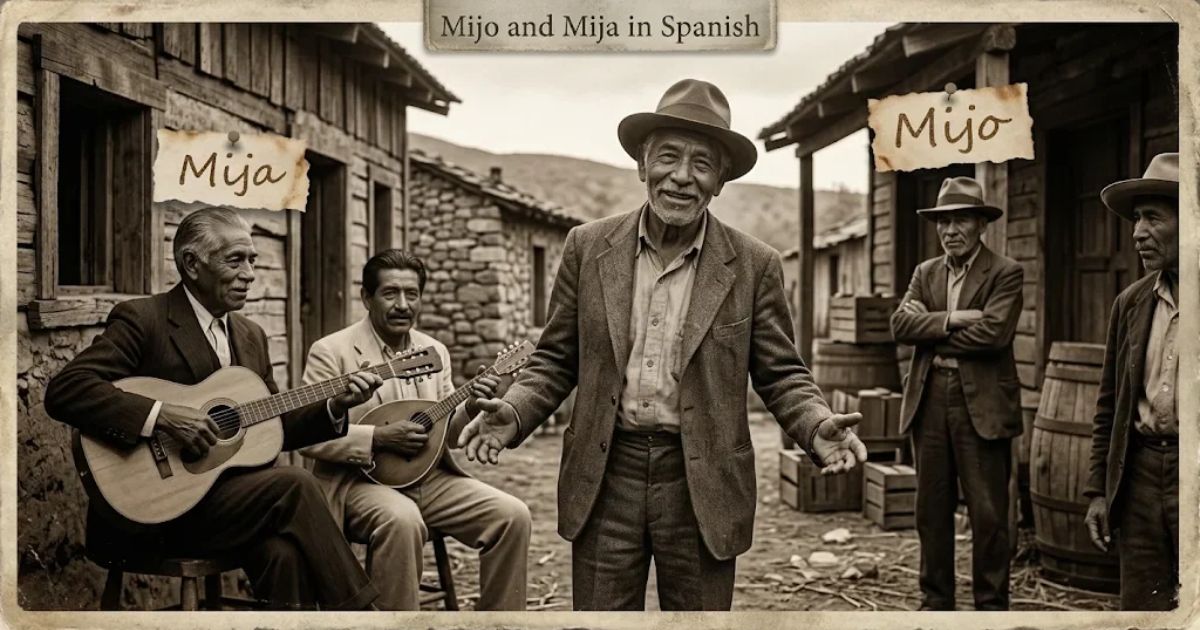
The masculine equivalent is mijo, which comes from “mi hijo” and means “my son.” Like mija, mijo can also be used affectionately for someone who isn’t actually your child.
You’ll commonly hear both expressions in families and communities where Spanish is spoken.
How Is “Mija” Used in Chat?
People use mija in messages to sound affectionate, friendly, encouraging, or caring. It can make an ordinary sentence feel more personal.
Its meaning depends on the relationship and the message surrounding it. Here are a few realistic examples.
Example 1: Between Friends
Friends may use mija as a playful or affectionate way to address each other.
Example conversation:
- Friend 1: “Girl, I can’t believe he said that!”
- Friend 2: “I know, mija. He’s unbelievable 😂”
Here, mija works like “girl” or “bestie.” It adds warmth and familiarity to the conversation.
Example 2: Showing Care
Someone may use mija when checking on another person or expressing concern.
Example conversation:
- Person 1: “I’ve been feeling stressed lately.”
- Person 2: “Take some rest, mija. Everything will be okay ❤️”
In this situation, mija makes the message sound gentle and supportive. The sender is showing affection rather than simply giving information.
Example 3: Giving Advice
Mija can also appear when someone offers advice, especially when speaking from experience.
Example conversation:
- Person 1: “I don’t know if I should give him another chance.”
- Person 2: “Think carefully, mija. You deserve someone who respects you.”
The word adds a caring tone to the advice. It may sound like something an older sister, mother, or close friend would say.
What Does “Mija” Mean From a Girl?
When a girl calls you mija, she’s usually using it as a friendly or affectionate expression.
Depending on your relationship, she might mean:
- Girl: A casual way to address another girl.
- Dear: A sweet way to show affection.
- Bestie: A playful expression between close friends.
- My girl: A familiar way to express closeness.
- Sweetheart: A caring way to address someone.
For example:
“Don’t let anyone ruin your day, mija!”
This message sounds encouraging and supportive. It doesn’t necessarily suggest romantic interest.
A girl might also use mija jokingly when reacting to gossip, sharing advice, or talking about everyday problems.
The best way to understand her intention is to consider your friendship and the rest of the conversation.
What Does “Mija” Mean From a Boy?
When a boy calls you mija, it can have several meanings. He might be using it as a friendly nickname, showing affection, or simply speaking in a familiar Spanish style.
For example:
- “Good morning, mija ❤️”
- “You got this, mija!”
- “Don’t be sad, mija.”
These messages may sound sweet or caring, but they don’t automatically mean he’s flirting.
If you already have a close friendship, he may use mija casually. If you’re dating, it could be a loving nickname. In some situations, an older boy or man might use it in a protective or fatherly way.
Does it mean he likes you?
Not necessarily. Look at how he treats you, whether he uses similar nicknames with other people, and the overall tone of your conversations before assuming it’s romantic.
Is “Mija” Rude or Polite?
Generally, mija is affectionate and informal, not rude. It’s often used to express warmth, kindness, familiarity, or care.
However, the word isn’t appropriate in every situation.
| Situation | How it may sound |
|---|---|
| From a mother or grandmother | Loving and caring |
| Between close friends | Friendly and playful |
| From a romantic partner | Sweet and affectionate |
| From a stranger | Overly familiar |
| During an argument | Potentially sarcastic or condescending |
| In a formal workplace conversation | Too informal |
For example, “Come here, mija” might sound perfectly natural from a grandmother. But if a stranger uses the same expression, you might find it too personal.
Tone, culture, age, and familiarity all influence how the word is received.
When Should You Use “Mija”?
You can use mija when you want to address a girl or woman in a warm, casual, and affectionate way.
Here are some situations where it may feel natural:
- With family: Use it when speaking to your daughter, younger sister, niece, or another female relative.
- With close friends: It can be a sweet or playful nickname between friends who are comfortable with each other.
- When offering support: Use it to make an encouraging message feel more personal.
- With someone you’re dating: It may work as an affectionate nickname if both people enjoy that style of communication.
- In casual Spanish conversations: It’s common in some Spanish-speaking families and communities.
For example, you might say:
- “You look beautiful today, mija!”
- “Stay strong, mija. You’ve got this.”
- “I’ll see you tomorrow, mija.”
If you’re learning Spanish, remember that mija is informal. It’s best to understand the relationship and cultural setting before using it.
When Should You NOT Use “Mija”?
Although mija is usually friendly, using it with the wrong person can make a conversation uncomfortable.
Avoid using it in these situations:
- With strangers: Someone you don’t know may not appreciate an affectionate nickname.
- In formal communication: It’s generally unsuitable for professional emails, business meetings, or official messages.
- With someone who dislikes nicknames: Not everyone enjoys being addressed with familiar expressions.
- During serious disagreements: It may sound dismissive or sarcastic if the other person feels you’re not taking them seriously.
- When you’re unsure about the relationship: It’s better to use the person’s name until you know they’re comfortable with informal language.
Also, don’t assume every Spanish-speaking woman wants to be called mija. People have different preferences, and a friendly expression should never feel forced.
Best Replies to “Mija”
If someone calls you mija, you don’t need a special response. You can reply naturally based on the conversation and your relationship.
Here are some options.
| Type of reply | Example response |
|---|---|
| Sweet | “Aww, thank you! ❤️” |
| Friendly | “What’s up, girl?” |
| Playful | “Yes, mija? 😂” |
| Affectionate | “Love you too!” |
| Casual | “Hey! How are you?” |
| Spanish | “Gracias, amiga!” |
| Funny | “At your service 😂” |
If someone uses mija while giving you advice, you can say:
- “Thank you for looking out for me.”
- “I appreciate you, seriously.”
- “You’re always so sweet.”
If you don’t understand why someone used the word, you can simply ask, “What does mija mean?” Most Spanish speakers will be happy to explain it.
“Mija” Meaning on WhatsApp, Instagram, and Snapchat
The meaning of mija doesn’t change from one social media platform to another. It’s still an affectionate Spanish expression.
However, the way people use it can vary depending on the type of conversation.
Mija on WhatsApp
On WhatsApp, mija commonly appears in private messages, family group chats, and conversations between friends.
For example:
- “Good morning, mija. Have a beautiful day!”
- “Call me when you get home, mija.”
- “Don’t forget your appointment, mija.”
It often makes messages sound more personal and caring, especially when relatives or close friends use it.
Mija on Instagram
On Instagram, you may see mija in comments, captions, replies, and direct messages.
For example:
- “You look gorgeous, mija! 😍”
- “Keep shining, mija ✨”
- “Love this picture, girl!”
Friends may use it to compliment someone’s photo or show support. It can also appear in playful comments under posts and stories.
Mija on Snapchat
On Snapchat, mija may appear in quick chats, replies to snaps, and casual conversations.
For example:
- “Where are you going, mija?”
- “That outfit is everything, mija 😂”
- “Text me when you get there!”
Because Snapchat conversations are often informal, the word can feel like a natural nickname between people who know each other.
Similar Slang Words Like “Mija”
If you’ve come across mija, you may also see other affectionate words in Spanish and English. Some have similar meanings, although they’re not always interchangeable.
1. Mijo
Mijo is the masculine equivalent of mija. It comes from “mi hijo,” meaning “my son.”
It’s commonly used when addressing a boy or man affectionately. It can also be used for friends, younger people, or someone close to the speaker.
Example: “Take care of yourself, mijo!”
2. Mijita
Mijita is a more affectionate or diminutive form of mija. It comes from adding the Spanish diminutive ending “-ita.”
It can mean something like “dear girl,” “sweetheart,” or “my little daughter.” It often sounds especially tender or caring.
Example: “Come here, mijita. I have something for you.”
3. Hija
Hija directly means “daughter” in Spanish.
Unlike mija, which is a contraction of “mi hija,” hija is the standard word for daughter. It can also be used affectionately when addressing a girl or woman, depending on the speaker and region.
Example: “Hija, don’t forget your jacket.”
4. Honey
Honey is an English term of affection used for a partner, child, friend, or someone close.
It can be similar to mija in a warm conversation, but it doesn’t have the same literal meaning.
Example: “Are you feeling better, honey?”
5. Sweetie
Sweetie is another English nickname that expresses affection or kindness.
Parents, partners, and close friends may use it when talking to someone they care about.
Example: “Have a wonderful day, sweetie!”
FAQs
1. What does mija mean in Spanish?
Mija is a shortened form of “mi hija,” which literally means “my daughter.” It’s also used as an affectionate expression meaning “dear,” “sweetheart,” or “girl.”
2. Does mija mean my girl?
It can have a similar feeling to “my girl” in casual conversation. However, its literal meaning comes from “my daughter.” The exact meaning depends on the relationship and context.
3. Is mija a romantic word?
Not necessarily. Mija can be romantic when used by a partner, but it’s also common between relatives and friends. The word alone doesn’t prove someone has romantic feelings.
4. Can you call a friend mija?
Yes. In some Spanish-speaking communities, close friends use mija as a friendly and affectionate nickname. Just make sure the other person is comfortable with it.
5. What is the male version of mija?
The male equivalent is mijo, which comes from “mi hijo” and literally means “my son.” It can also be used as a warm nickname for a boy or man.
6. What does mijita mean?
Mijita is an affectionate, diminutive version of mija. It can mean “dear girl,” “sweetheart,” or “my little daughter,” depending on the context.
7. How do you pronounce mija?
Mija is generally pronounced MEE-hah. The Spanish letter “j” sounds like a strong English “h,” rather than the English “j” in “jump.”
Conclusion:
Mija is a sweet and affectionate Spanish expression that comes from “mi hija,” meaning “my daughter.” In everyday conversations and text messages, it can also mean “dear,” “girl,” or “sweetheart.”
You may hear it from family members, close friends, or romantic partners. Its meaning depends on the speaker, relationship, and tone of the conversation.
If someone calls you mija, they’re usually being warm or friendly. Just remember that it’s an informal expression, so use it with people who are comfortable with that level of familiarity.
