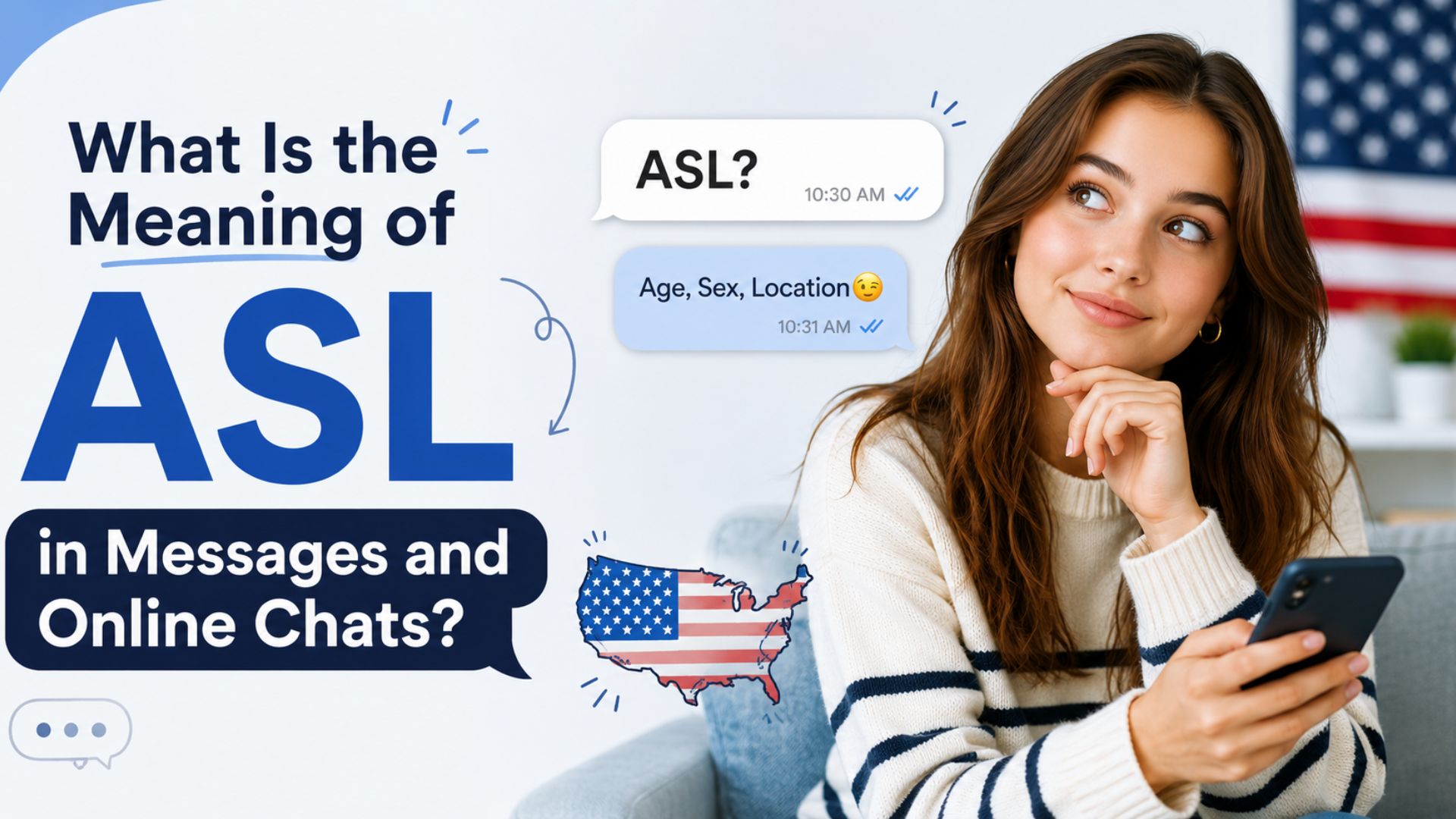
Have you ever been chatting online and suddenly received a message that simply says “ASL?” If you’re not familiar with internet slang, those three letters can be confusing. You might even wonder whether it’s a typo or some new social media trend.
The truth is that ASL has been around for decades and remains one of the most recognized abbreviations in online communication. While it can have different meanings depending on the context, its most common use in chats and text conversations is surprisingly simple.
In this guide, you’ll learn exactly what ASL means, where it came from, how people use it today, and why understanding it can help you navigate online conversations more confidently. If you’ve ever searched what does ASL mean when texting, you’re in the right place.
What Does ASL Mean in Text?
In texting and online chats, ASL typically stands for:
| Letter | Meaning |
|---|---|
| A | Age |
| S | Sex (or Gender) |
| L | Location |
In simple terms, someone using ASL is asking for three basic pieces of information:
- How old you are
- Your gender
- Where you’re located
This abbreviation became popular because it allows people to introduce themselves quickly without typing several separate questions.
For example:
Person A: Hi there!
Person B: ASL?
Person A: 23/F/Chicago
In this conversation, Person B is asking for age, gender, and location.
Even though internet communication has evolved, many people still recognize ASL immediately because of its long history in online culture.
Real-life Examples
Here are some common examples of ASL in everyday online conversations:
Example 1
“ASL before we start chatting?”
Meaning:
“Can you tell me your age, gender, and location?”
Example 2
“18/M/Florida. What’s your ASL?”
Meaning:
“I’m 18, male, and from Florida. What about you?”
Example 3
“Anyone want to talk? ASL?”
Meaning:
“Tell me your age, gender, and location if you’d like to chat.”
These examples show how ASL functions as a quick introduction tool in online communication.
Origin and Background of the Term
To fully understand what does ASL mean when texting, it helps to look back at the early days of the internet.
ASL became popular during the late 1990s and early 2000s when chat rooms were one of the primary ways people met online. Platforms such as AOL Instant Messenger, Yahoo Chat, MSN Messenger, and IRC allowed users from different countries to communicate instantly.
Back then, internet users wanted fast ways to exchange basic information. Typing long introductions repeatedly became tedious, so abbreviations emerged naturally.
ASL quickly became one of the most common shortcuts because it answered the three questions most people asked when meeting someone online:
- How old are you?
- Are you male or female?
- Where are you from?
For many internet users, seeing “ASL?” was as common as seeing “Hello.”
Read more: How to Respond to Wassup? Funny, Flirty, and Cool Answers
How ASL Is Used in Daily Life
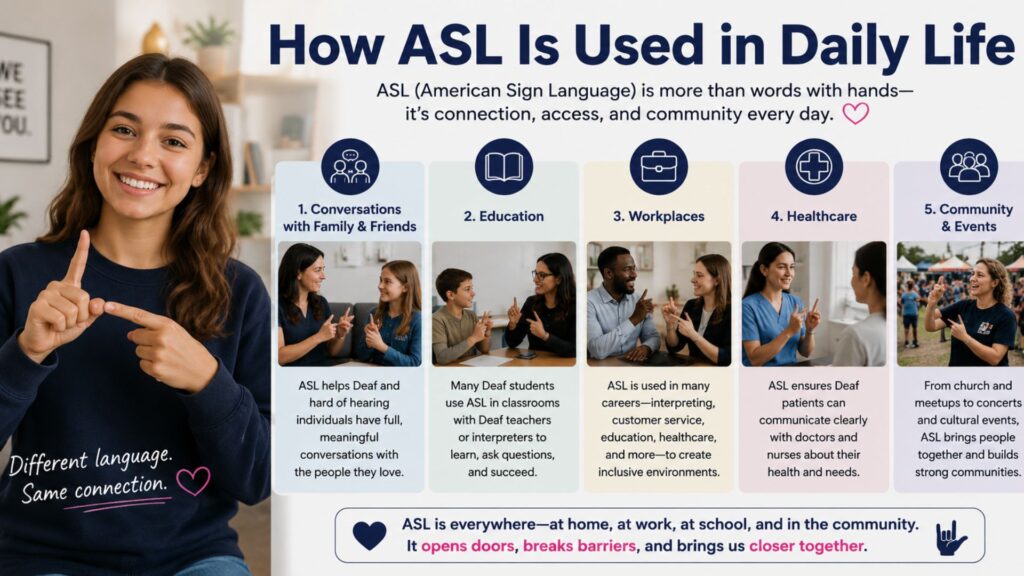
Although ASL isn’t as dominant as it once was, it still appears in many online environments.
You may encounter it in:
- Online gaming communities
- Social media groups
- Chat apps
- Discussion forums
- Anonymous chat platforms
- International conversation groups
Today, younger users often ask these questions individually instead of using ASL. However, many long-time internet users still rely on the abbreviation because it’s quick and widely understood.
For example, someone in a gaming lobby might type:
“ASL?”
Rather than asking three separate questions.
The abbreviation continues to survive because it remains efficient and recognizable.
Emotional or Practical Meaning of ASL
At first glance, ASL appears to be purely informational. However, there’s often more behind it.
Practical Meaning
From a practical perspective, ASL helps people:
- Introduce themselves quickly
- Find others in similar age groups
- Identify local connections
- Create context for conversations
For example, someone discussing college life may want to know whether they’re talking to another student or someone much older.
Emotional Meaning
On a deeper level, ASL often serves as a conversation starter.
When people know basic details about each other, conversations tend to feel more personal and relatable. Instead of chatting with a completely anonymous stranger, you gain a clearer picture of who you’re speaking with.
However, it’s always wise to be cautious when sharing personal information online, especially with people you’ve just met.
Similar or Related Terms
ASL is part of a larger collection of internet abbreviations that simplify digital communication.
Here are some common examples:
| Term | Meaning |
| LOL | Laugh Out Loud |
| BRB | Be Right Back |
| TBH | To Be Honest |
| IMO | In My Opinion |
| IDK | I Don’t Know |
| FYI | For Your Information |
| IRL | In Real Life |
| DM | Direct Message |
Like ASL, these abbreviations became popular because they save time and make conversations faster.
Modern Alternatives to ASL
Today, many users skip the abbreviation and simply ask questions directly.
For example:
- “How old are you?”
- “Where are you from?”
- “What’s your background?”
These alternatives often feel more natural in modern messaging apps.
Common Misunderstandings About ASL
One reason so many people search what does ASL mean when texting is that ASL has multiple meanings.
ASL Can Mean American Sign Language
One of the most common misunderstandings involves American Sign Language.
For example:
“I’m taking an ASL class.”
In this sentence, ASL refers to American Sign Language rather than Age, Sex, Location.
ASL Can Mean Different Things in Different Industries
Depending on the context, ASL may also stand for:
- Above Sea Level
- American Sign Language
- Age, Sex, Location
The surrounding conversation almost always reveals the correct meaning.
Context Is Everything
Consider these examples:
“ASL?”
This usually means Age, Sex, Location.
“I want to learn ASL.”
This almost certainly refers to American Sign Language.
Understanding context prevents confusion and helps you interpret messages correctly.
Examples of ASL in Sentences
Here are several examples showing how ASL is used naturally in conversations:
- “Someone asked for my ASL in a chat room.”
- “Back in the day, every online conversation started with ASL.”
- “I haven’t seen anyone use ASL in years.”
- “She replied with her ASL and introduced herself.”
- “What’s your ASL if you don’t mind sharing?”
- “The gaming group was asking everyone’s ASL.”
- “ASL used to be one of the most common internet abbreviations.”
These examples demonstrate how the term fits into everyday online communication.
Why Understanding ASL Matters Today
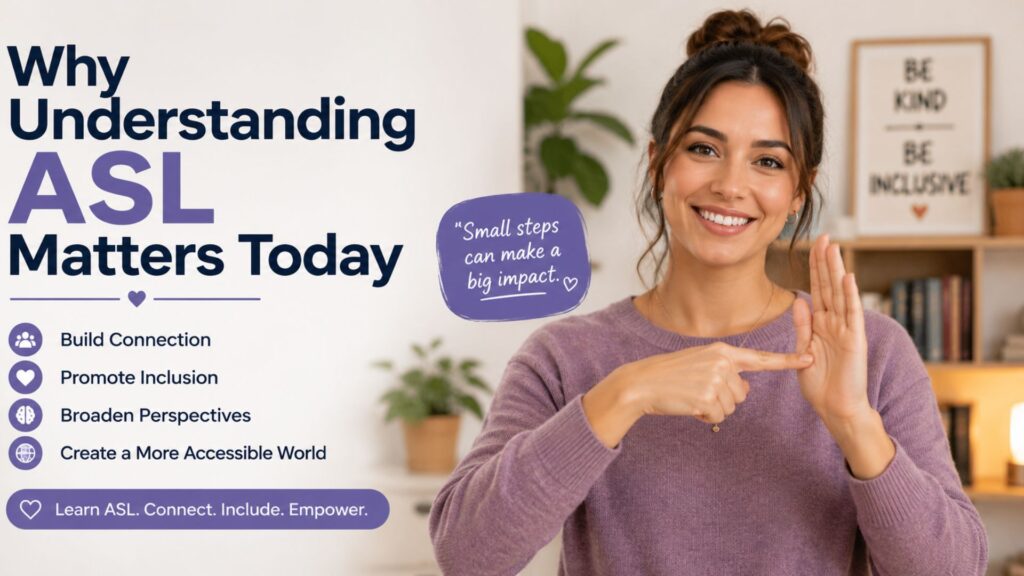
You might wonder why an older internet abbreviation still matters.
The answer is simple: internet culture never completely disappears.
Many classic terms continue to appear in online communities, forums, gaming chats, and social platforms. Understanding ASL helps you:
- Recognize internet slang quickly
- Avoid confusion in conversations
- Understand older online content
- Communicate more effectively
- Navigate digital communities with confidence
Think of ASL as part of the internet’s vocabulary. Just as knowing common phrases helps in real-world conversations, understanding abbreviations helps you communicate online.
As online communication continues to evolve, knowing both old and new slang can make interactions smoother and more enjoyable.
FAQs
What does ASL mean in simple words?
ASL usually means Age, Sex, Location. It’s a quick way to ask someone their age, gender, and where they live.
Is ASL positive or negative?
ASL is generally neutral. It’s simply an abbreviation used to request basic information during online conversations.
Where is ASL commonly used?
You’ll most often see ASL in chat rooms, gaming communities, social media groups, forums, and messaging apps.
Is ASL formal or informal?
ASL is highly informal. It’s internet slang and isn’t appropriate for professional or business communication.
Why do people search for ASL meaning in text?
Many people encounter the abbreviation in messages and want to understand whether it means Age, Sex, Location or American Sign Language. Context usually determines the correct meaning.
Conclusion
Understanding ASL is useful because it remains one of the most recognizable abbreviations in online communication. In most texting and chat situations, ASL stands for Age, Sex, Location and serves as a quick way for people to introduce themselves.
While its popularity peaked during the early days of internet chat rooms, the term still appears in forums, gaming communities, and social conversations today. Knowing what it means helps you avoid confusion and better understand the language of the internet.
The next time someone asks “ASL?” you’ll know exactly what they’re asking—and why this simple abbreviation has survived for so many years.
