
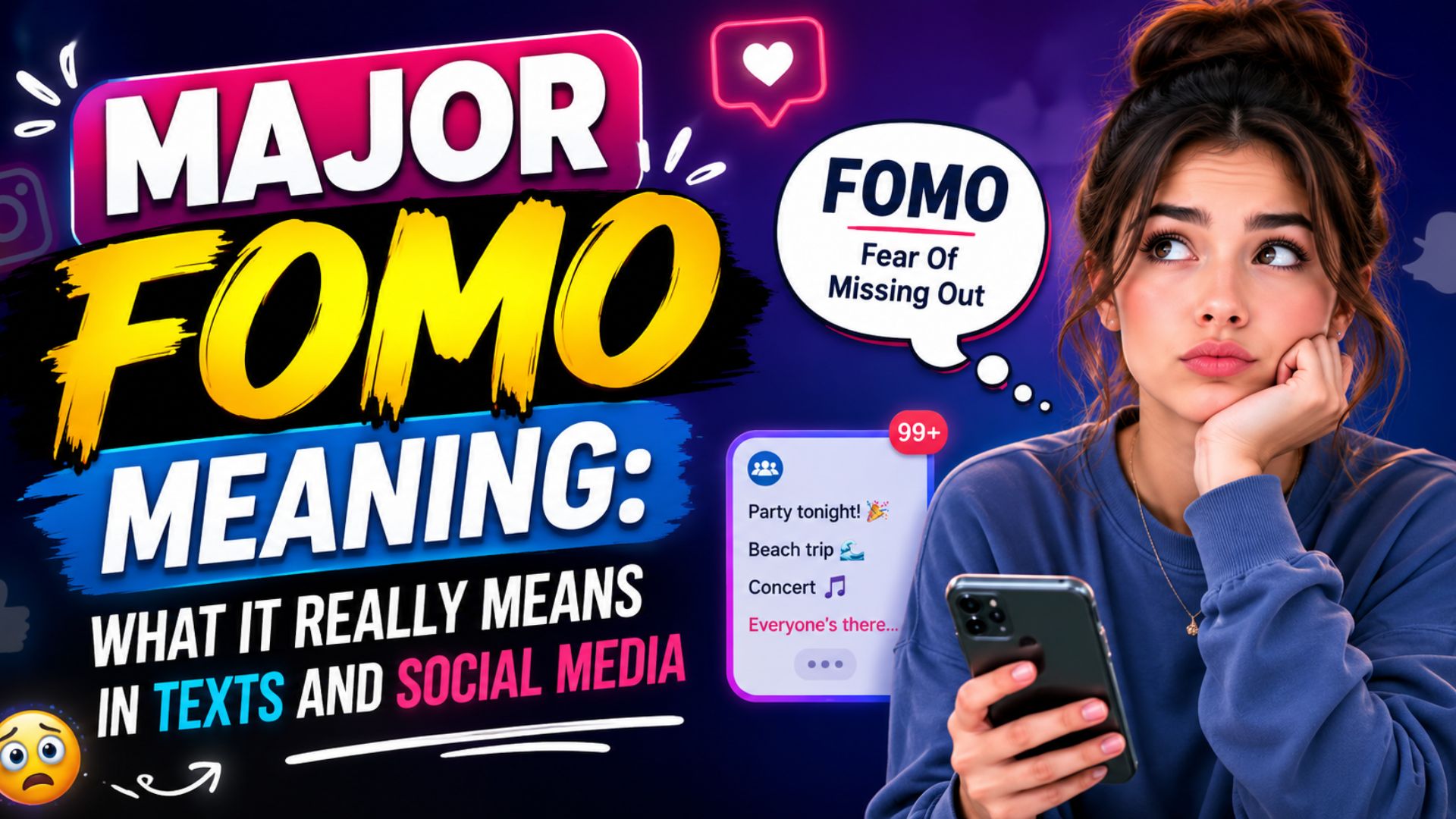
Have you ever scrolled through social media, seen your friends hanging out without you, and suddenly felt like you were missing something exciting? Or maybe someone texted you, “I’m getting major FOMO right now,” and you weren’t exactly sure what they meant.
You’re not alone. FOMO is one of the most common internet slang terms used today, especially on social media platforms, messaging apps, and online communities. Understanding the major FOMO meaning can help you better understand online conversations and even recognize feelings you may have experienced yourself.
In this guide, you’ll learn what FOMO means in text, where it came from, how people use it, why it matters, and what it really says about modern life.
What Does FOMO Meaning in Text?
FOMO stands for Fear of Missing Out.
When someone says they’re experiencing “major FOMO,” they mean they’re feeling a strong sense of anxiety, curiosity, or disappointment because they believe others are having rewarding experiences without them.
In texting, FOMO is often used casually to express a desire to be part of an event, activity, or experience.
For example:
Friend: “We’re all going to the concert tonight!”
You: “Now I’ve got major FOMO.”
In simple terms, the phrase means you wish you could join and don’t want to miss the fun.
Real-life Examples:
Here are a few situations where people commonly use FOMO:
- Seeing vacation photos while you’re stuck at work
- Missing a friend’s birthday party
- Watching everyone talk about a trending TV show you haven’t seen
- Seeing coworkers attend an event you couldn’t join
- Missing a limited-time sale or product launch
In each case, the person feels like they’re missing out on something valuable or enjoyable.
Read more: When a Girl Calls You “King”: What Is She Really Saying?
Origin and Background of the Term

The concept behind FOMO has existed for centuries. People have always worried about being left out of important events or opportunities.
However, the term “FOMO” became popular in the early 2000s as social media platforms grew rapidly.
Before social media, you might hear about an event days later. Today, you can see photos, videos, livestreams, and updates in real time. This constant visibility makes it easier to compare your experiences with those of others.
As platforms like Instagram, TikTok, Snapchat, and Facebook became part of everyday life, FOMO became a widely recognized term for describing that feeling of missing out.
Today, it’s used not only in social settings but also in business, investing, marketing, and entertainment.
How FOMO Is Used in Daily Life
The major FOMO meaning goes beyond internet slang. People use it in many everyday situations.
Social Events
This is the most common use of FOMO.
Example:
“My friends are at the beach and I’m working all weekend. Major FOMO.”
Travel Experiences
People often feel FOMO when they see others visiting exciting destinations.
Example:
“Everyone’s posting vacation photos from Europe. I’m getting serious FOMO.”
Entertainment
Popular movies, games, and TV shows often create FOMO.
Example:
“I haven’t watched the new season yet and everyone keeps talking about it. Major FOMO.”
Shopping and Sales
Businesses frequently use urgency to trigger FOMO.
Example:
“Only two hours left for the discount!”
This can encourage people to buy products because they don’t want to miss the opportunity.
Investing and Trends
FOMO is common in financial markets.
People sometimes rush into investments because they see others making money and fear being left behind.
Emotional or Practical Meaning of FOMO
FOMO isn’t just a trendy phrase. It describes a real emotional experience.
The Emotional Side
At its core, FOMO comes from a basic human desire to belong.
People naturally want to feel included, connected, and involved. When they think others are having better experiences, they may feel:
- Left out
- Anxious
- Curious
- Jealous
- Regretful
However, these feelings are usually temporary.
The Practical Side
FOMO can also motivate action.
For example:
- Joining social activities
- Learning new skills
- Exploring new opportunities
- Staying informed about trends
In moderation, FOMO can encourage positive experiences. The challenge comes when it creates unnecessary stress or constant comparison.
Why Social Media Amplifies FOMO
Think of social media like a highlight reel.
Most people share their best moments, not their everyday struggles.
When you compare your normal life to someone else’s carefully selected highlights, it’s easy to feel like you’re missing out—even when you’re not.
Similar or Related Terms
Several internet slang terms are closely related to FOMO.
| Term | Meaning |
|---|---|
| FOMO | Fear of Missing Out |
| JOMO | Joy of Missing Out |
| YOLO | You Only Live Once |
| FOBO | Fear of Better Options |
| OMO | Opportunity Missing Out |
| OMO | Fear of Missing Opportunities |
FOMO vs JOMO
These two terms are opposites.
FOMO: Worrying about missing experiences.
JOMO: Feeling happy and comfortable choosing not to participate.
Example:
Instead of feeling left out because you skipped a party, JOMO means enjoying a relaxing evening at home.
Common Misunderstandings About FOMO
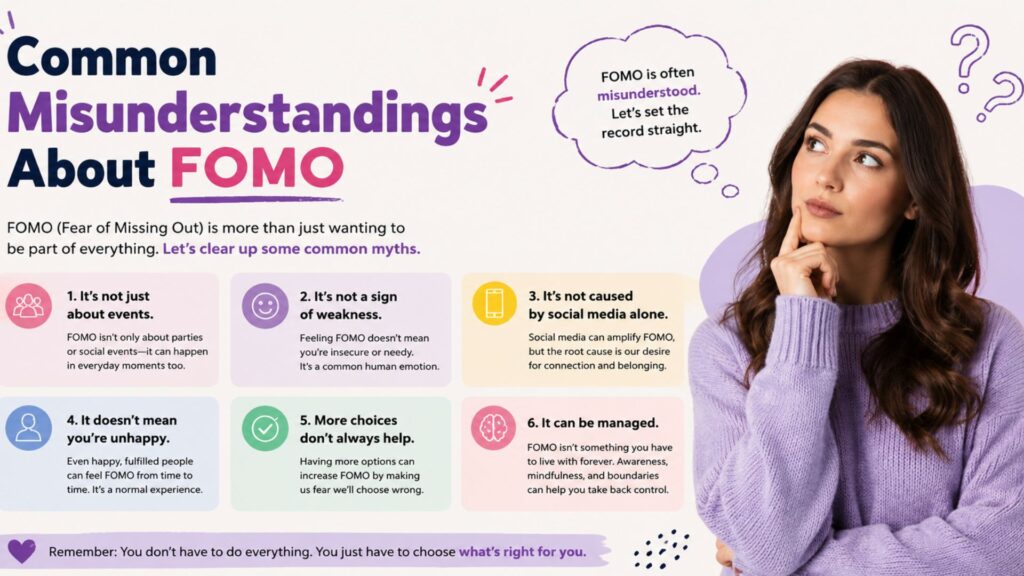
Many people misunderstand what FOMO actually means.
FOMO Doesn’t Always Mean Jealousy
You can experience FOMO without being jealous.
Sometimes you’re simply disappointed that you couldn’t participate in something enjoyable.
FOMO Isn’t Always Negative
A little FOMO can motivate positive action.
For example, seeing friends exercise regularly might inspire you to become more active yourself.
FOMO Isn’t Limited to Social Media
Although social media often triggers it, FOMO can happen anywhere.
People experience it at work, school, family gatherings, networking events, and even during major life decisions.
Everyone Experiences FOMO Sometimes
Many people assume they’re the only ones feeling left out.
In reality, FOMO is a common human experience that affects people of all ages.
Examples of FOMO in Sentences
Seeing the term in context makes it easier to understand.
Example 1
“I’m getting major FOMO seeing everyone’s concert photos.”
Example 2
“They went hiking without me, and now I have serious FOMO.”
Example 3
“I bought the tickets because I didn’t want to experience FOMO later.”
Example 4
“Everyone at work attended the conference except me. Major FOMO.”
Example 5
“The new game looks amazing. My friends are playing it already, and I’ve got FOMO.”
Example 6
“I skipped the event, but honestly, I feel more JOMO than FOMO.”
Why Understanding FOMO Matters Today
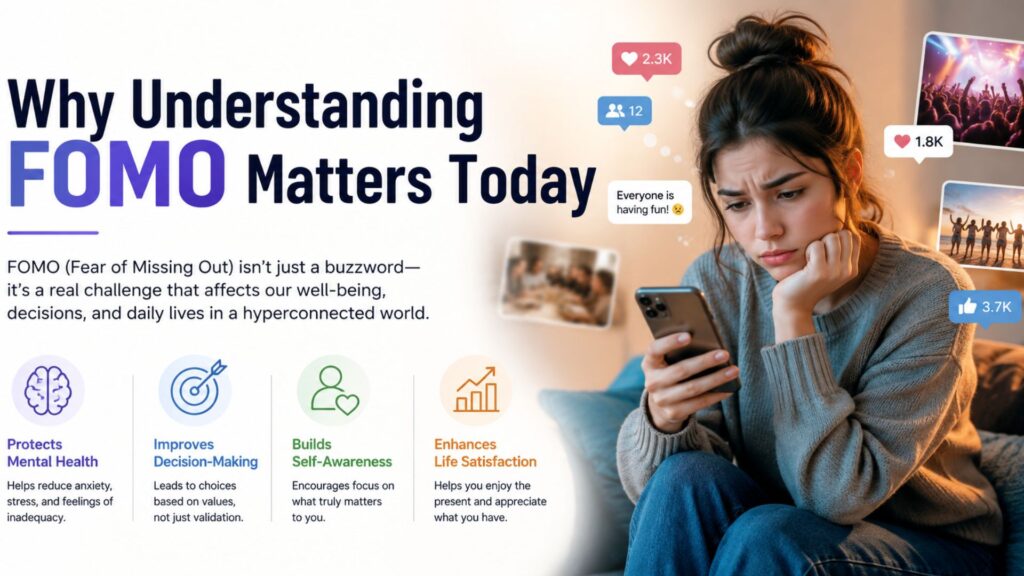
Understanding the major FOMO meaning helps you navigate modern digital life more effectively.
Today’s world is more connected than ever. You can instantly see what friends, influencers, coworkers, and strangers are doing around the clock.
While this connection offers benefits, it also increases opportunities for comparison.
Recognizing FOMO helps you:
- Understand internet slang and online conversations
- Become more aware of your emotions
- Reduce unnecessary comparison with others
- Make more intentional decisions
- Build healthier social media habits
When you recognize FOMO for what it is, you can respond thoughtfully instead of letting it control your decisions.
FAQs
What does FOMO mean in simple words?
FOMO means Fear of Missing Out. It’s the feeling that other people are having rewarding experiences while you’re missing them.
Is FOMO positive or negative?
FOMO is generally viewed as negative because it can create anxiety or stress. However, it can sometimes motivate people to explore opportunities and stay engaged.
Where is FOMO commonly used?
FOMO is commonly used in text messages, social media posts, online communities, workplace conversations, marketing campaigns, and everyday discussions.
Is FOMO formal or informal?
FOMO is mostly informal and commonly used in casual conversations, texting, and social media. However, it also appears in business and marketing discussions.
Why do people search for FOMO meaning in text?
People often encounter the term in messages, social media posts, or online conversations and want to understand what it means and how it’s being used.
Conclusion
The major FOMO meaning is simple: it refers to the fear of missing out on experiences, opportunities, events, or moments that others are enjoying. While the term originated in internet culture, it now describes a common feeling many people experience in everyday life.
Whether you’re scrolling through social media, chatting with friends, or hearing someone mention “major FOMO,” you’ll now understand exactly what they’re talking about. More importantly, recognizing FOMO can help you make healthier decisions, avoid unnecessary comparison, and focus on experiences that truly matter to you.
