

Have you ever received a message ending with JP and wondered what it meant? You’re not alone. Texting abbreviations have become a huge part of online communication, and keeping up with them can sometimes feel like learning a new language. Whether you’re chatting on Snapchat, scrolling through TikTok comments, or messaging friends on Instagram, you’re likely to come across shorthand expressions that aren’t immediately obvious.
If you’re searching for jp meaning in text, the most common meaning is “Just Playing.” People use it after a joke, sarcastic comment, or playful tease to let the other person know they weren’t being serious. It’s a quick way to avoid misunderstandings and keep conversations lighthearted. In this guide, you’ll learn exactly what JP means, where it came from, how people use it in daily conversations, common misconceptions, and plenty of real-life examples.
What Does JP Meaning in Text?
The most common jp meaning in text is:
JP = Just Playing
In simple terms, JP tells someone that a previous message was meant as a joke. It’s similar to saying:
- Just kidding
- I’m joking
- I wasn’t serious
- I was only teasing
People use JP to soften playful comments and make sure the other person doesn’t misunderstand their tone. Since text messages don’t include facial expressions or body language, adding JP helps clarify that a message was intended to be funny.
You’ll commonly see JP on:
- Snapchat
- Instagram DMs
- TikTok comments
- Messenger
- Discord
- Text messages
- Online gaming chats
Simple Example:
Jake: You’re officially banned from our friend group.
Emma: Wait…really?
Jake: JP 😂
Here, JP immediately tells Emma that Jake was joking and not being serious.
Origin and Background of the Term
Like many internet abbreviations, JP developed as online conversations became faster and more casual. Instead of typing “Just Playing” every time they made a joke, users shortened it to two simple letters.
The abbreviation became more common as instant messaging apps and social media platforms grew in popularity. Teenagers and young adults especially embraced short forms because they save time while typing and fit naturally into quick conversations.
Although JP isn’t as universally recognized as abbreviations like LOL or OMG, it’s still used in many online communities where casual humor and playful teasing are common.
In many ways, JP serves the same purpose as a smile or laugh in face-to-face conversations. It signals friendly intent and prevents unnecessary confusion.
Read more: YK Meaning in Text: What It Means in Chat, Snapchat, and Social Media
How JP Is Used in Daily Life
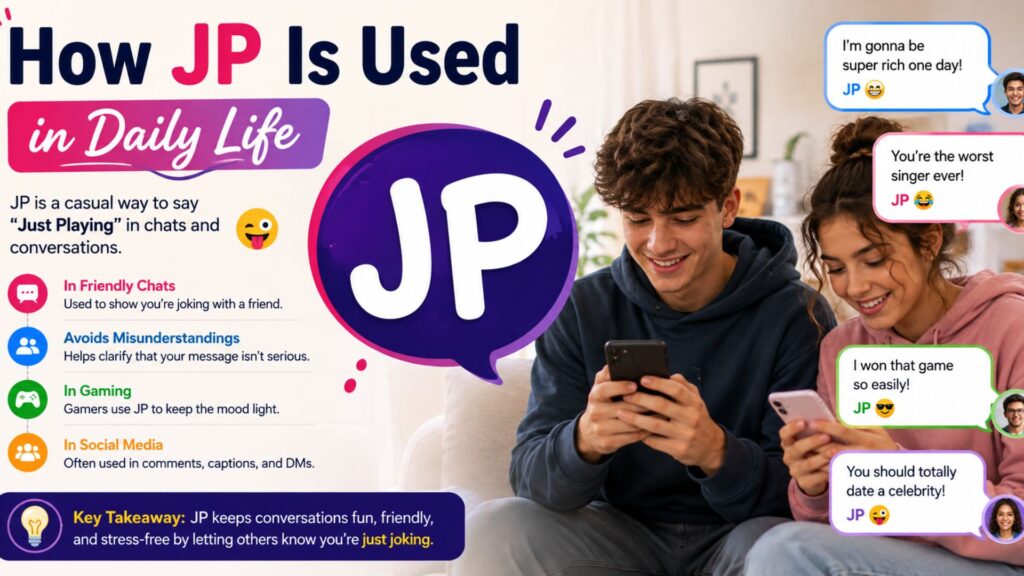
Understanding jp meaning in text becomes much easier when you see it in real conversations.
After Playful Teasing
Friends often tease each other for fun.
Example:
“You’re the slowest person I’ve ever met. JP 😄”
The abbreviation makes it clear the comment isn’t meant to offend.
After Sarcasm
Sarcasm doesn’t always translate well in text.
Example:
“I definitely wanted my phone battery to die today. JP.”
Without JP, someone might think the speaker was being serious.
During Friendly Banter
People use JP to keep conversations light.
Example:
“I’ll never answer your texts again. JP.”
In Group Chats
Group chats are full of jokes and exaggerated comments.
Example:
“I’m leaving this group forever… JP.”
Everyone understands it’s only playful humor.
While Flirting
Flirty conversations often include teasing.
Example:
“I guess you’re too busy for me now… JP 😉”
The abbreviation prevents the message from sounding hurt or angry.
After Exaggerations
People naturally exaggerate for comic effect.
Example:
“I’ve watched that movie 500 times. JP.”
The reader immediately knows it’s an exaggeration.
Emotional or Practical Meaning of JP
Although JP simply stands for “Just Playing,” it also carries an emotional purpose.
People use it to:
- Keep conversations friendly.
- Prevent hurt feelings.
- Clarify jokes.
- Reduce misunderstandings.
- Show playful intent.
- Ease awkward moments.
Think of JP as the texting equivalent of smiling after making a joke. Since written messages lack tone of voice and facial expressions, this small abbreviation fills in the emotional context that would normally come naturally in person.
However, JP isn’t a free pass to say anything. If a joke is offensive or insensitive, adding JP afterward may not completely undo its impact.
Similar or Related Terms
Several texting abbreviations have meanings similar to JP.
| Abbreviation | Meaning | When It’s Used |
|---|---|---|
| JK | Just Kidding | Most common alternative |
| J/K | Just Kidding | Another spelling of JK |
| IWK | I Was Kidding | Clarifies a previous joke |
| LOL | Laugh Out Loud | Shows amusement |
| LMAO | Laughing My… Off | Strong laughter |
| ROFL | Rolling on the Floor Laughing | Extreme laughter |
While all of these relate to humor, JP specifically emphasizes that the speaker was only playing around rather than making a serious statement.
Common Misunderstandings About JP
Because abbreviations often have multiple meanings, JP can easily be misunderstood.
1. JP always means Japan
Not in texting.
While JP can refer to Japan in travel, gaming, or business contexts, the jp meaning in text usually refers to “Just Playing.” Always look at the surrounding conversation.
2. It’s rude or disrespectful
Not by itself.
Most people use JP in friendly conversations to make jokes feel less harsh.
3. It’s professional
No.
JP belongs in casual conversations with friends or family. It’s generally inappropriate for work emails, business messages, or formal communication.
4. Older people don’t use it
Although younger users are more familiar with texting slang, people of all ages use abbreviations once they become comfortable with online messaging.
5. It replaces apologies
Not always.
If a joke genuinely hurts someone’s feelings, simply saying JP may not be enough. A sincere apology is often more appropriate.
6. It works in serious conversations
Usually not.
If you’re discussing something important, using JP can make your message confusing or seem insensitive. It’s best reserved for casual chats.
Examples of JP in Sentences
Here are several natural examples of JP in everyday conversations.
- “You’re fired… JP 😂”
- “I forgot your birthday… JP.”
- “Guess I’m never talking to you again. JP.”
- “You’re way too competitive… JP.”
- “I sold your favorite hoodie… JP!”
- “Relax, JP.”
- “JP, I was only teasing.”
- “Don’t worry—it was JP.”
- “I’m kidding, JP 😄”
- “JP, you know I’d never actually do that.”
These examples show how JP almost always follows a playful or exaggerated statement.
Why Understanding JP Matters Today
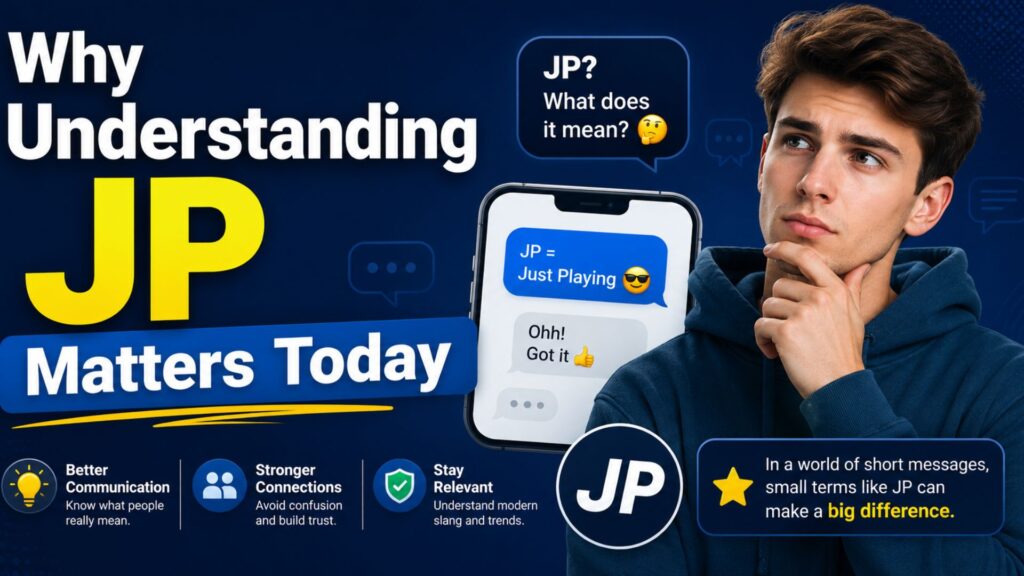
Texting slang evolves quickly, and abbreviations like JP help people communicate more naturally online. Understanding the jp meaning in text helps you recognize humor, avoid misunderstandings, and respond appropriately in conversations.
As more communication happens through messaging apps and social media, knowing common abbreviations becomes increasingly useful. Even if JP isn’t as popular as LOL or OMG, understanding it helps you keep up with modern internet language and communicate more confidently.
FAQs
What does jp meaning in text mean in simple words?
In most text conversations, JP means “Just Playing.” It’s used to let someone know that a previous message was meant as a joke or playful tease.
Is jp positive or negative?
It’s generally positive or neutral. Most people use JP to make conversations friendlier and prevent misunderstandings.
Where is jp commonly used?
You’ll often see JP in text messages, Snapchat, Instagram DMs, TikTok comments, WhatsApp chats, Discord servers, Messenger, and online gaming conversations.
Is jp formal or informal?
JP is informal. It’s best used in casual conversations rather than professional or academic settings.
Why do people search for jp meaning in text?
Many people come across JP in chats or social media and aren’t sure what it means. Searching for its meaning helps them understand the conversation and avoid confusion.
Conclusion
Understanding the jp meaning in text is simple once you know the context. In most casual conversations, JP stands for “Just Playing,” a friendly way to show that a previous message was meant as a joke rather than a serious statement. Whether you’re chatting with friends on Snapchat, Instagram, WhatsApp, or another messaging platform, recognizing JP helps you interpret tone more accurately and avoid unnecessary misunderstandings.
As online communication continues to evolve, learning common abbreviations like JP makes it easier to follow conversations and express yourself naturally. The next time someone ends a message with JP, you’ll know they’re simply saying, “I’m just playing.”
