
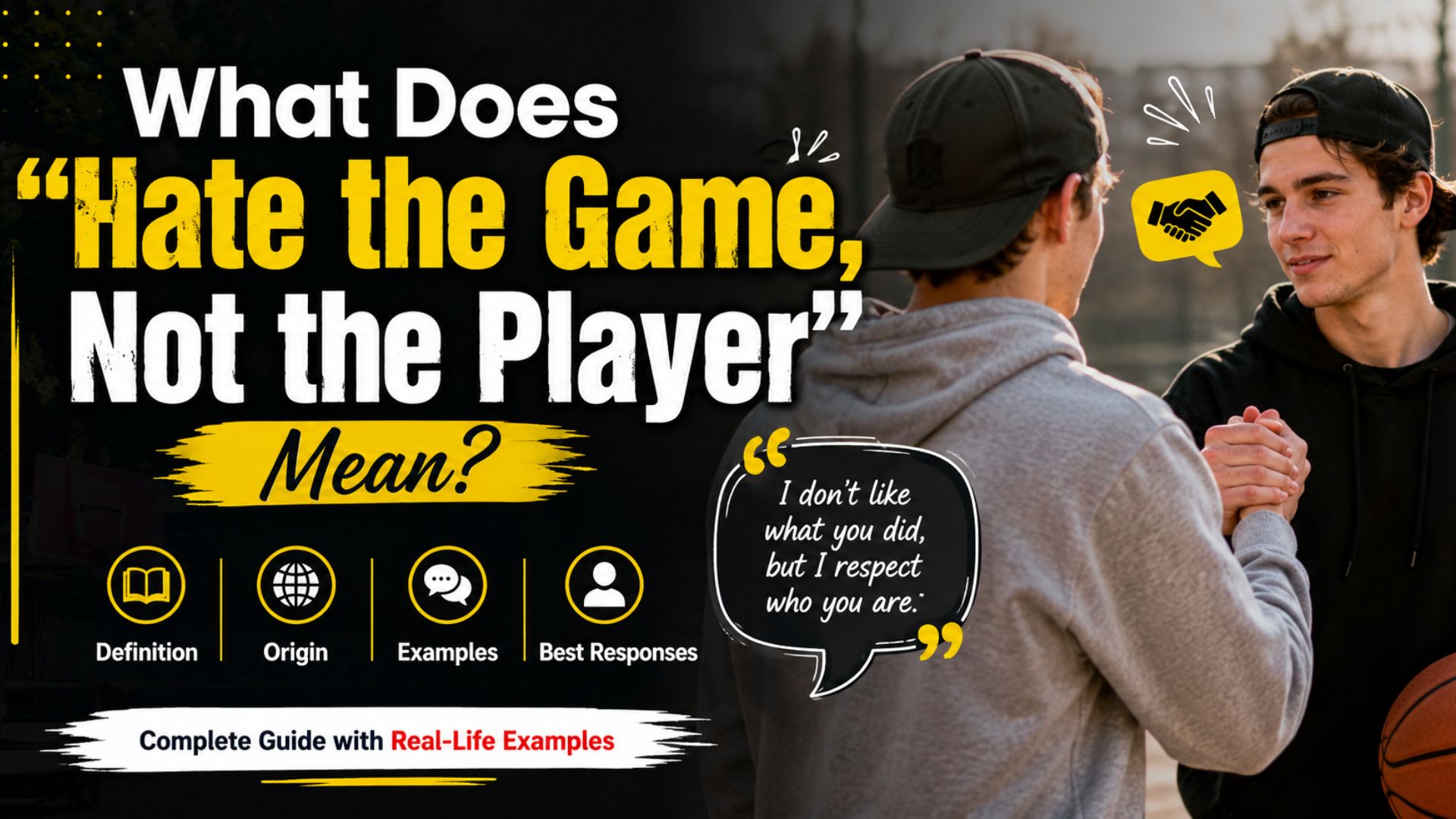
Have you ever heard someone shrug after winning or getting an advantage and say, “hate the game not the player”? It can sound clever, funny, or even a little frustrating depending on the situation. The phrase shows up everywhere—from sports and business to dating, gaming, and social media. But what does it actually mean?
In simple terms, it suggests that if someone is upset about an outcome, they should blame the rules or the system instead of the person who played by those rules. In this guide, you’ll learn the meaning behind hate the game not the player, where it came from, when people use it, and the best ways to respond—whether you’re looking for something funny, confident, sarcastic, or professional.
What Does “Hate the Game, Not the Player” Mean?
The phrase “hate the game, not the player” means that the person isn’t responsible for the unfair or frustrating situation—they’re simply taking advantage of the rules that already exist.
Instead of blaming the individual, the saying encourages you to criticize the system, circumstances, or “game” that allowed the outcome.
In simple terms:
Don’t blame the person for playing by the rules. Blame the rules if you don’t like the result.
For example:
- Someone gets a promotion because they networked well.
- A gamer wins by using a legal strategy everyone can use.
- A salesperson earns the biggest commission by closing more deals.
Someone might jokingly say:
“Hey, don’t hate the player, hate the game.”
The speaker is essentially saying:
“I didn’t create the situation—I just played it well.”
Origin of “Hate the Game, Not the Player”
Although the exact origin isn’t completely clear, the expression became popular in American street culture before spreading through hip-hop, sports, and mainstream entertainment during the 1990s.
Artists, athletes, comedians, and movie characters often used it to defend themselves when others criticized their success or tactics.
Today, you’ll hear hate the game not the player in:
- Sports conversations
- Video games
- Business discussions
- Workplace banter
- Dating situations
- Social media memes
- Everyday conversations
The phrase has become a lighthearted way of saying:
“I’m simply working within the system.”
Read more: How to Respond to “Don’t Work Too Hard” (Funny, Polite & Flirty Replies)
When Do People Say “Hate the Game, Not the Player”?
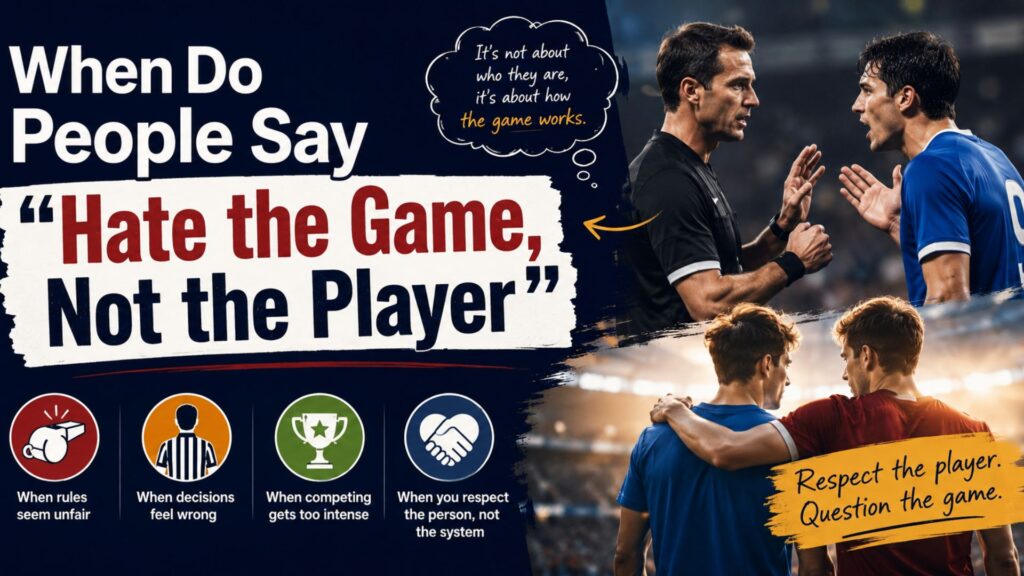
Understanding the context helps you know whether it’s meant as a joke, a defense, or a playful comeback.
When someone benefits from the rules
If someone wins because they understand the system better than everyone else, they may use this phrase.
Example
Friend:
“You always grab the best deals.”
You:
“Hey, hate the game, not the player.”
When competition gets intense
It’s common after sports, board games, or online gaming.
Example
Opponent:
“You’re impossible to beat.”
Winner:
“Don’t hate the player, hate the game.”
When people joke about success
Friends often say it after getting lucky.
Example
“I got upgraded to first class for free. Hate the game, not the player.”
When defending a decision
Sometimes people use the phrase to explain why they took an opportunity others wanted.
Example
“I applied for the position first. Hate the game, not the player.”
Real-Life Examples of “Hate the Game, Not the Player”
Here are some natural conversations where the phrase fits perfectly.
Example 1: Sports
Friend:
“You always pick the strongest team.”
You:
“Hate the game, not the player.”
Example 2: Work
Coworker:
“You always get the easiest clients.”
You:
“I didn’t choose them—they were assigned. Hate the game, not the player.”
Example 3: Dating
Friend:
“Everyone keeps asking you out.”
You:
“I can’t help it. Hate the game, not the player.”
Example 4: Shopping
Friend:
“How do you always find huge discounts?”
You:
“I know where to look. Hate the game, not the player.”
Example 5: Gaming
Opponent:
“That strategy is so annoying.”
You:
“It’s part of the game. Hate the player? Nope—hate the game.”
Funny Responses To “Don’t Hate the Player, Hate the Game”
Sometimes the best response is one that keeps everyone laughing. These replies add humor without turning the conversation into an argument.
- “I’m filing a complaint with the game’s manager. 😂”
- “The game and the player are both looking suspicious today.”
- “I hate Mondays more than either of you.”
- “Plot twist: I actually like the game.”
- “Too late. You’re both on my list.”
- “Guess the game owes me an apology then.”
- “I’m just here for the snacks.”
- “That’s exactly what a player would say.”
- “Can I hate the referee instead?”
- “You’re lucky I’m feeling generous today.”
- “I’ll allow it… this time.”
- “Nice speech. Did the game write it for you?”
- “Sounds like someone rehearsed that line.”
- “You’re making excuses look fashionable.”
- “I’m charging the game rent for living in my head.”
- “Fair enough, but I’m still salty.”
- “Well played… unfortunately.”
- “I’ll pretend I believe you.”
- “You definitely practiced saying that.”
- “Fine, the game wins this round.”
When funny responses work best
Funny replies are perfect when:
- You’re joking with friends.
- The competition is friendly.
- Nobody is genuinely upset.
- You want to keep the mood light.
Humor shows confidence without creating unnecessary tension.
Fearless Responses To “Don’t Hate the Player, Hate the Game”
If someone uses the phrase to justify winning, a confident response can show that you’re not intimidated.
- “I don’t hate either—I just play better next time.”
- “Winning once doesn’t make you unbeatable.”
- “Confidence looks good when it’s earned.”
- “Every game has another round.”
- “We’ll see who smiles at the finish.”
- “Enjoy the victory while it lasts.”
- “I respect good competition.”
- “Luck eventually runs out.”
- “I’m focused on improving, not complaining.”
- “Challenge accepted.”
- “Keep talking—I prefer results.”
- “The scoreboard isn’t permanent.”
- “Today’s winner can become tomorrow’s lesson.”
- “We’ll settle it next round.”
- “Success speaks louder than excuses.”
- “Let’s see how the rematch goes.”
- “Pressure creates champions.”
- “I’m just getting started.”
- “We’ll let the results decide.”
- “Game on.”
Why confident responses work
Fearless responses avoid sounding bitter. Instead, they communicate self-belief and resilience. Rather than arguing about fairness, they shift the focus toward future performance and healthy competition.
Flirty Responses To “Don’t Hate the Player, Hate the Game”
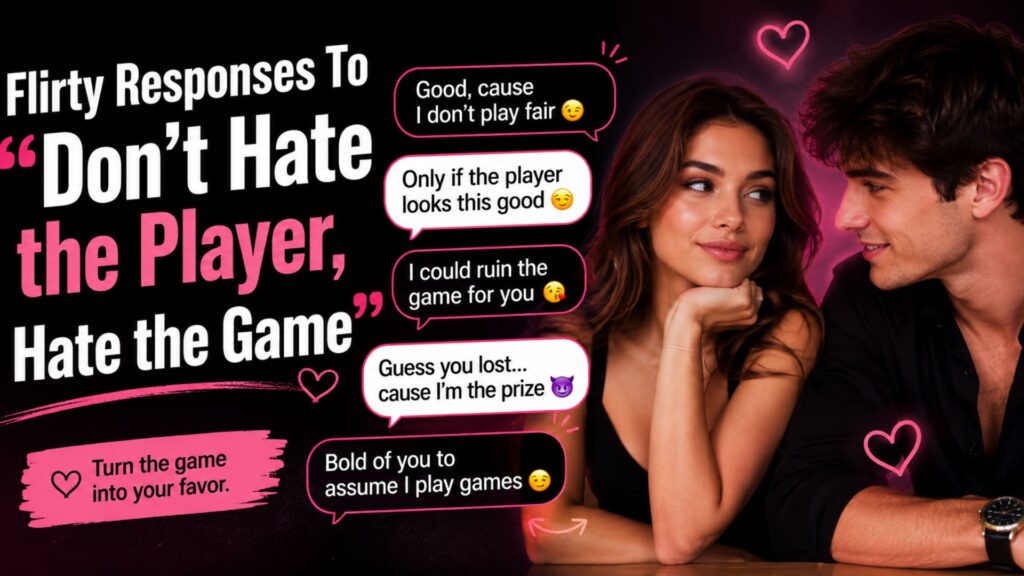
When someone drops this phrase in a playful conversation, it’s the perfect chance to flirt back. A confident, teasing reply can keep the chemistry going without sounding over the top.
- “Maybe the player is the best part of the game. 😉”
- “Careful, you’re making this game more interesting.”
- “So, are you asking me to play too?”
- “I don’t hate the player—I might actually like them.”
- “Guess I’ll need a private lesson from the champion.”
- “Winning looks pretty attractive on you.”
- “Only if I get to be your favorite teammate.”
- “I’d rather team up than compete.”
- “Looks like you’ve mastered more than just the game.”
- “You make losing feel surprisingly fun.”
- “Maybe we both win if we stop competing.”
- “You’re smooth… I’ll give you that.”
- “Who said I was complaining?”
- “I think the player deserves some credit.”
- “Now you’ve got my attention.”
- “I was hoping you’d say something like that.”
- “Maybe I’m here because of the player.”
- “You’re making it hard to argue.”
- “Let’s call it a draw and grab coffee.”
- “I think we’d make a pretty unbeatable team.”
When to use flirty responses
These replies work best when:
- You’re texting someone you like.
- The conversation already has playful energy.
- You’re both comfortable teasing each other.
- You want to keep the conversation moving naturally.
A little confidence goes a long way, but keep it light and respectful.
Sarcastic Responses To “Don’t Hate the Player, Hate the Game”
Sarcasm can be hilarious when both people know you’re joking. These responses add a little bite without turning the conversation into an argument.
- “Right… because the player is completely innocent.”
- “That’s exactly what every winner says.”
- “Convenient excuse.”
- “Sure, let’s blame the universe.”
- “Interesting defense strategy.”
- “I’ll notify the game immediately.”
- “The game should hire you as its lawyer.”
- “That’s a very creative way to avoid responsibility.”
- “I’m sure the game feels terrible.”
- “The player seems awfully happy though.”
- “Nice speech. Did you rehearse it?”
- “Should I send the game an angry email?”
- “You’re making excuses sound professional.”
- “Classic champion behavior.”
- “Well, that’s one way to spin it.”
- “I’m almost convinced.”
- “Almost.”
- “Good thing confidence is free.”
- “I’ll pretend that makes sense.”
- “Noted… with dramatic eye roll.”
Keep sarcasm friendly
Sarcasm is fun among friends, but tone matters. If someone is already upset, a sarcastic reply may make things worse. Read the room before using these comebacks.
Cute Responses To “Don’t Hate the Player, Hate the Game”
If you want to keep things sweet instead of competitive, these cute responses are a great choice.
- “I don’t hate anyone.”
- “Let’s just call it even.”
- “You’re lucky you’re adorable.”
- “I forgive you this time.”
- “Can we be friends anyway?”
- “Life’s too short to stay mad.”
- “You’re making me smile.”
- “We’ll survive this game together.”
- “You’re impossible… in the best way.”
- “I guess everyone deserves a win.”
- “Next round is mine.”
- “You’re fun to compete with.”
- “I’ll let you enjoy your victory.”
- “No hard feelings.”
- “Just don’t get too confident.”
- “Winning isn’t everything.”
- “Let’s celebrate instead.”
- “You’re pretty good, I’ll admit.”
- “Now let’s grab some food.”
- “We’re both winners today.”
Why cute responses work
Cute replies reduce tension and make conversations feel warmer. They’re ideal for close friends, partners, or anyone who enjoys playful banter.
Polite Responses To “Don’t Hate the Player, Hate the Game”
Sometimes the best response is calm, respectful, and mature. These replies acknowledge the situation without creating conflict.
- “Fair enough.”
- “I understand your point.”
- “Everyone plays differently.”
- “That’s one way to look at it.”
- “No worries.”
- “I respect your perspective.”
- “Let’s move on.”
- “It’s all part of the experience.”
- “No hard feelings.”
- “Congratulations on your win.”
- “I appreciate the honesty.”
- “That’s understandable.”
- “We’ll do better next time.”
- “Good game.”
- “Thanks for explaining.”
- “I can respect that.”
- “We’ll agree to disagree.”
- “Life goes on.”
- “Better luck next time—for me.”
- “Let’s keep it friendly.”
Why politeness is powerful
Responding politely shows confidence and emotional maturity. You don’t have to match someone’s energy to make your point.
Professional Responses To “Don’t Hate the Player, Hate the Game”
In the workplace, it’s best to avoid sarcastic or emotional replies. These professional responses help keep conversations respectful and productive.
- “We’re all working within the same guidelines.”
- “The process applies to everyone.”
- “Let’s focus on finding solutions.”
- “I appreciate your perspective.”
- “The system is what it is.”
- “Our goal is to achieve the best outcome.”
- “We’ll continue improving.”
- “Let’s work together moving forward.”
- “Constructive feedback is always welcome.”
- “Everyone is following company policy.”
- “Let’s keep the discussion productive.”
- “We all have the same opportunities.”
- “That’s part of the process.”
- “Let’s focus on what we can control.”
- “We’ll learn from this experience.”
- “Teamwork matters more than competition.”
- “I value fairness and transparency.”
- “Let’s move forward positively.”
- “Results speak for themselves.”
- “Thanks for sharing your thoughts.”
Professional communication tips
If someone says “hate the game not the player” at work, avoid taking it personally. Stay focused on facts, remain respectful, and steer the conversation toward solutions rather than blame.
Creative Responses To “Don’t Hate the Player, Hate the Game”
Want something more original? These creative responses stand out from the usual comebacks and keep the conversation memorable.
- “Every game has hidden levels.”
- “I’m rewriting the rules next round.”
- “Even chess pieces get second chances.”
- “The game may change, but strategy lasts.”
- “Every champion starts as a beginner.”
- “Plot twist: I become the game.”
- “Luck opens doors; skill keeps them open.”
- “Today’s loss is tomorrow’s lesson.”
- “Every move tells a story.”
- “Watch the comeback instead of the scoreboard.”
- “I’m collecting experience points.”
- “Even underdogs surprise people.”
- “A better strategy beats better excuses.”
- “Every ending starts another game.”
- “Legends don’t quit after one round.”
- “The next chapter looks promising.”
- “I’ll write my own victory speech.”
- “Every challenge teaches something valuable.”
- “The best players never stop learning.”
- “Game recognized game.”
Make your response fit the moment
The best comeback isn’t always the funniest or the boldest. Think about who you’re talking to and the mood of the conversation. A playful response works with friends, a confident one fits competition, and a professional reply is best in the workplace. Matching your tone to the situation makes your response feel natural and authentic.
Fearless Flirty Responses To “Don’t Hate the Player, Hate the Game”
Want to mix confidence with a little flirting? These fearless flirty responses show personality while keeping the conversation fun and engaging.
- “Maybe the player deserves a reward instead. 😉”
- “You can stop blaming the game and ask me out.”
- “Winning is fun, but talking to you is better.”
- “I’d rather play on your team.”
- “You make competition look attractive.”
- “Careful—you might make me like the player.”
- “So, what’s the prize for winning your attention?”
- “I think we’re both winning this conversation.”
- “If this is a game, you’re making it hard to leave.”
- “Maybe we should call it a tie and grab dinner.”
- “You talk a big game—I like that.”
- “I don’t hate the player… I’m intrigued.”
- “Looks like we’ve got great chemistry.”
- “Let’s see if you’re as charming in person.”
- “You’re lucky confidence suits you.”
- “I might let you win this round.”
- “You make a convincing argument.”
- “Now you’ve made the game more interesting.”
- “Guess I picked the right opponent.”
- “Let’s make the next round even more fun.”
When to use fearless flirty responses
These replies work best when:
- You’re already flirting.
- The conversation is playful and relaxed.
- You know the other person enjoys teasing banter.
- You want to keep the momentum going without sounding too serious.
Lighthearted Responses To “Don’t Hate the Player, Hate the Game”
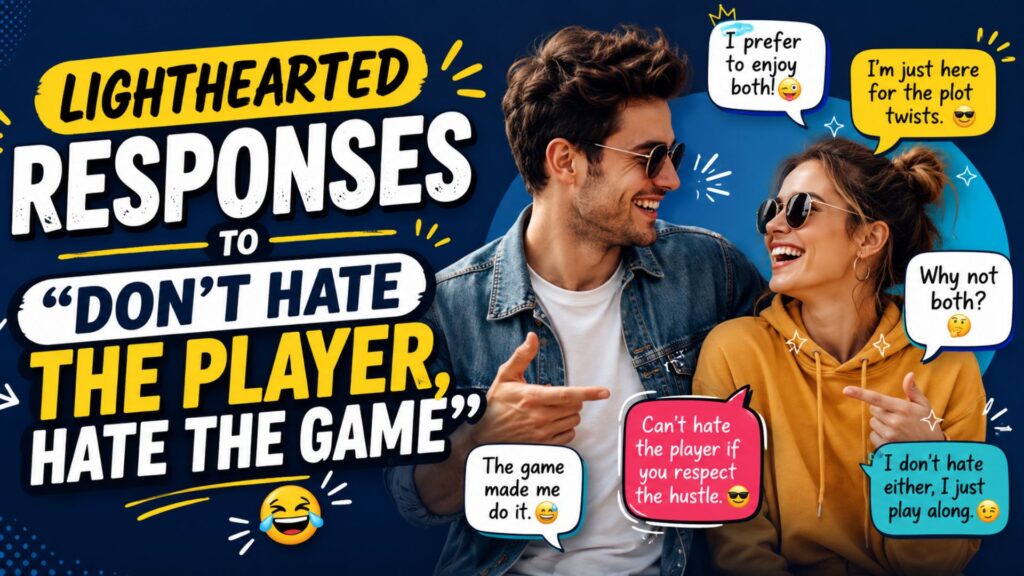
Not every conversation needs a clever comeback. Sometimes a simple, cheerful response is all you need to keep everyone smiling.
- “Fair enough!”
- “I’ll survive.”
- “You got me this time.”
- “Maybe next round.”
- “I’ll bounce back.”
- “Well played!”
- “No complaints here.”
- “You earned it.”
- “Guess that’s life.”
- “Can’t win them all.”
- “I’ll take the challenge.”
- “Let’s keep playing.”
- “It happens.”
- “No drama today.”
- “I respect the hustle.”
- “We’ll laugh about this later.”
- “All in good fun.”
- “The game continues.”
- “See you in the rematch.”
- “I’m already planning my comeback.”
Why lighthearted responses work
A relaxed response shows confidence without sounding defensive. It also helps keep friendly competition exactly that—friendly.
Best Funny Responses to “Don’t Hate the Player, Hate the Game”
If your goal is simply to make people laugh, these are some of the funniest responses you can use.
- “I’m sending the game an invoice.”
- “The game has blocked my calls.”
- “Can I speak to the game’s supervisor?”
- “The player seems suspiciously innocent.”
- “I’m blaming gravity too.”
- “That sounds like premium excuse material.”
- “I’ll complain after my snack.”
- “Fine… but I’m still judging the player.”
- “The game owes me emotional damages.”
- “Next time I’ll read the rulebook first.”
- “Even Google couldn’t explain that one.”
- “You practiced that line, didn’t you?”
- “I’m giving the game a one-star review.”
- “At least make your excuses entertaining.”
- “The plot keeps getting thicker.”
- “I came to win, not to understand.”
- “We’ll let the replay decide.”
- “That’s one way to protect your reputation.”
- “Respectfully… I’m unconvinced.”
- “Good game. Better excuse.”
Tips for choosing the best response
The best response depends on the situation:
| Situation | Best Type of Response |
|---|---|
| Friends joking around | Funny or sarcastic |
| Flirting over text | Flirty or fearless flirt |
| Workplace discussion | Professional or polite |
| Friendly competition | Fearless or lighthearted |
| Family conversations | Cute or polite |
| Social media comments | Funny or creative |
Instead of memorizing one perfect comeback, choose a response that matches the tone of the conversation.
FAQs
Is “hate the game, not the player” an insult?
Not usually. It’s typically a playful expression used to suggest that someone is simply following the rules of a system. However, depending on the tone, it can come across as dismissive or defensive.
Can you use “hate the game, not the player” in a professional setting?
Yes, but use it carefully. In formal workplaces, it’s often better to choose more neutral language. The phrase works best in casual conversations with coworkers rather than serious business discussions.
Is “hate the game, not the player” rude?
It isn’t inherently rude, but context matters. Among friends, it’s often humorous. In an argument, it may sound like you’re avoiding responsibility.
What’s another way to say “hate the game, not the player”?
You could say:
- “I’m just playing by the rules.”
- “Don’t blame me—blame the system.”
- “I’m making the most of the situation.”
- “Those are the rules.”
- “I’m working with what’s available.”
How should I respond if someone says “don’t hate the player, hate the game”?
Your response depends on the situation. You can:
- Make a joke to keep things light.
- Reply confidently during friendly competition.
- Stay polite if it’s a serious discussion.
- Flirt back if the conversation is playful.
Conclusion
The phrase hate the game not the player has remained popular because it’s simple, memorable, and surprisingly versatile. Whether it’s used after winning a game, landing a great opportunity, or joking with friends, the message is the same: don’t blame the person for playing within the rules—question the system instead.
Of course, context matters. Sometimes the phrase is funny, sometimes it’s a clever defense, and other times it’s just playful banter. Knowing what it means—and having the right response ready—helps you handle the conversation with confidence.
Whether you choose a funny comeback, a fearless reply, a flirty response, or a professional answer, the best approach is one that fits the moment and reflects your personality. After all, great communication isn’t just about having the perfect words—it’s about knowing when and how to use them.
