
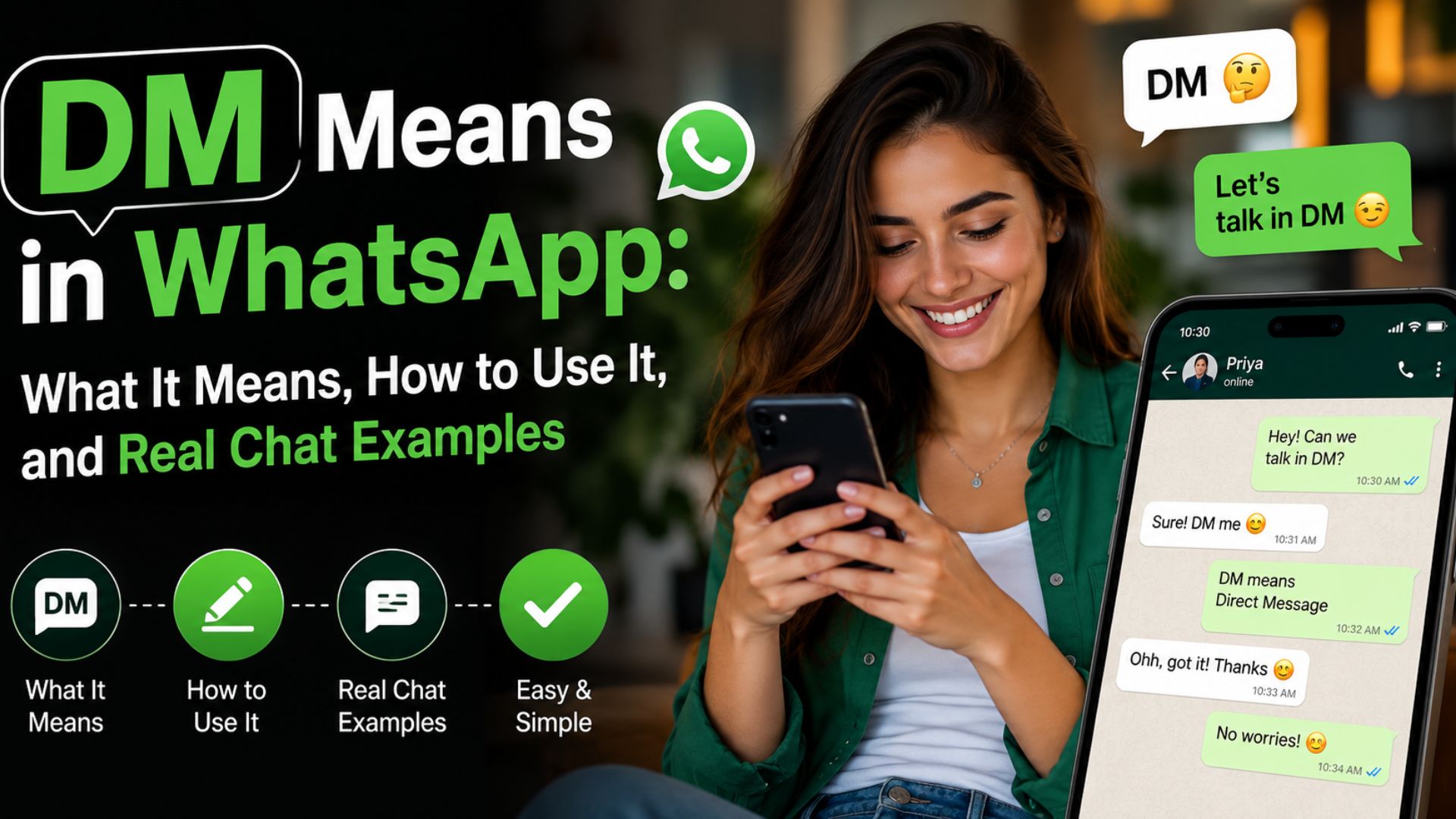
Have you ever seen someone say, “DM me” or “Send me a DM,” and wondered what they meant—especially on WhatsApp? You’re not alone. While the term DM is most commonly associated with social media platforms like Instagram and X (formerly Twitter), many people also use it in WhatsApp conversations. This often leads to confusion about what DM means in WhatsApp and whether it’s different from a regular message.
The good news is that the meaning is simple. In this guide, you’ll learn what DM means in WhatsApp, where the term came from, how it’s used in daily conversations, and when people prefer direct messages over public chats. We’ll also cover real-life examples, common misunderstandings, and practical tips so you can use the term naturally and confidently.
What Does DM Mean in Text?
The term DM stands for Direct Message. It refers to a private conversation between two people rather than a message shared publicly in a group, comment section, or forum.
When talking about DM means in WhatsApp, people are usually referring to sending a private message directly to someone’s chat instead of discussing something in a group conversation.
In simple words:
DM = Direct Message = A private message sent directly to another person.
Although WhatsApp doesn’t officially label chats as “DMs,” many users still use the phrase because it’s widely recognized across social media.
For example:
- “DM me your phone number.”
- “I’ll send you the details in a DM.”
- “Can you DM me your address?”
All of these simply mean “Send me a private message.”
Real-Life Examples
Seeing the phrase in real conversations makes it easier to understand.
Example 1: WhatsApp Group
Sarah: Can someone send me yesterday’s notes?
Ali: Sure, I’ll DM them to you.
Instead of sending the notes in the group, Ali sends them privately.
Example 2: Instagram
Follower: Where did you buy those shoes?
Creator: DM me, and I’ll send you the link.
Example 3: Facebook
Friend: I have something personal to tell you.
You: No problem. DM me.
Example 4: Business
Customer: I’d like more information.
Business: Please DM us your order number.
Example 5: WhatsApp
Friend: I don’t want to share my address in the group.
You: That’s fine. Just DM it to me.
Origin and Background of the Term
The abbreviation DM became popular during the early days of social media, when platforms introduced private messaging alongside public posts and comments.
On websites like Twitter (now X), users could send Direct Messages that were only visible to the sender and recipient. Over time, the abbreviation DM became part of everyday internet language.
As messaging apps such as WhatsApp, Instagram, Facebook Messenger, Discord, and Telegram gained popularity, people continued using the same term—even on platforms that simply call them “messages” or “chats.”
Today, asking someone to “DM me” has become a universal way of saying:
- “Send me a private message.”
- “Let’s talk one-on-one.”
- “Don’t post it publicly.”
Because the phrase is short and easy to understand, it’s now common across almost every major messaging platform.
Read more: FS Abbreviation Meaning: What Does FS Mean in Text and Chat?
How DM Is Used in Daily Life
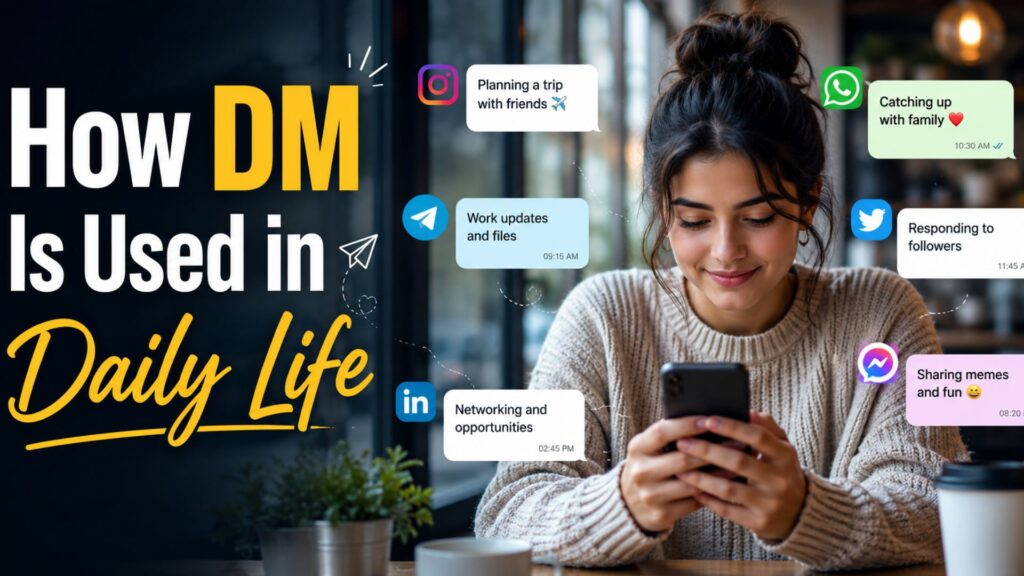
Understanding DM means in WhatsApp becomes easier when you see how people use it in everyday situations.
Sharing Private Information
People often move a conversation into a DM when it involves personal details.
For example:
“DM me your email address.”
This keeps sensitive information out of public chats or group conversations.
Continuing a Conversation
Sometimes a discussion starts in a public comment section before moving to private messages.
Example:
Comment: That’s a great idea!
Reply: Thanks! DM me if you’d like more details.
Customer Support
Many companies ask customers to continue conversations through direct messages.
For example:
“Please DM us your order number so we can help you.”
This allows businesses to protect customer privacy while resolving issues.
Networking
Professionals often use DMs to connect after meeting on LinkedIn or another platform.
Example:
“It was great connecting today. I’ll DM you later.”
Making Plans
Friends frequently use direct messages to organize events without filling a group chat.
For example:
- “I’ll DM you the location.”
- “DM me when you arrive.”
- “Let’s discuss it in DMs.”
Using private messages keeps the conversation organized and avoids overwhelming everyone else in the group.
Tips for Using DM Naturally
If you’re wondering how to use the phrase correctly, here are a few simple guidelines.
- Use DM when referring to a private conversation.
- Say “DM me” instead of posting sensitive information publicly.
- Respect someone’s privacy if they choose to continue a conversation in direct messages.
- On WhatsApp, DM simply refers to messaging someone individually, even though the app doesn’t officially use that term.
- In formal business communication, you can also say “private message” if you want to sound more professional.
Knowing what DM means in WhatsApp helps you communicate more effectively, whether you’re chatting with friends, joining online communities, or interacting with businesses.
Emotional or Practical Meaning of DM
The phrase DM means in WhatsApp is more than just a way to describe a private message. Depending on the situation, sending a DM can have different emotional and practical purposes. Sometimes it’s simply about keeping a conversation organized, while other times it shows trust, respect for privacy, or a desire to have a more personal discussion. For example, if someone says, “DM me when you’re free,” they’re inviting you to continue the conversation one-on-one instead of discussing it publicly. Businesses also ask customers to send a DM when personal details like order numbers, phone numbers, or addresses are involved. Friends may switch to DMs to share private news, make plans, or discuss something that doesn’t belong in a group chat. In many cases, moving a conversation into a direct message makes communication feel more personal and secure.
Similar or Related Terms
If you’re learning what DM means in WhatsApp, you’ll probably come across other messaging abbreviations that are commonly used online. Although they have different meanings, they often appear in the same conversations.
| Term | Meaning | Example |
|---|---|---|
| PM | Private Message | “PM me your address.” |
| IM | Instant Message | “Send me an IM when you’re online.” |
| LMK | Let Me Know | “LMK when you’re available.” |
| HMU | Hit Me Up | “HMU later tonight.” |
| TBH | To Be Honest | “TBH, I enjoyed the movie.” |
| FYI | For Your Information | “FYI, the meeting has been moved.” |
| BRB | Be Right Back | “BRB, I’m answering the door.” |
| IDK | I Don’t Know | “IDK what time it starts.” |
| DM Me | Send me a private message | “DM me if you’re interested.” |
| Inbox Me | Message me privately | “Inbox me for more information.” |
Although DM and PM are often used interchangeably, DM has become the more popular term because of social media platforms like Instagram, X, Facebook, and TikTok.
Common Misunderstandings About DM
Many people misunderstand what DM means in WhatsApp, especially if they’re new to social media or messaging apps. Here are some common misconceptions.
People Think DM Is Only for Instagram
One of the biggest myths is that DM only applies to Instagram. In reality, people use the term across many platforms, including WhatsApp, Facebook Messenger, Discord, X, TikTok, LinkedIn, and Telegram. On WhatsApp, a DM simply refers to a private one-on-one chat.
People Believe DM and WhatsApp Messages Are Different
Some users assume a DM is a special type of message. It isn’t. On WhatsApp, when someone says, “DM me,” they simply mean, “Send me a private message.”
People Think DMs Are Always Private and Secure
While DMs are private conversations, they’re not completely risk-free. Screenshots can be taken, messages can be forwarded, and accounts can be compromised. That’s why you should avoid sharing sensitive personal or financial information unless you completely trust the recipient.
People Think Businesses Only Use Email
Today, many businesses handle customer support through direct messages. It’s common to see companies say:
- “Please DM us your order number.”
- “DM us so we can assist you.”
- “Send us a DM with your account details.”
This helps protect customer privacy while resolving issues more efficiently.
People Think DM Is Too Informal
Although DM is an informal abbreviation, it’s widely accepted in modern communication. Even brands, influencers, customer support teams, and professionals often use phrases like “DM us” or “Send us a DM” on social media. However, in formal business emails, writing “private message” or “contact us directly” may sound more professional.
Best Practices for Using DM
Using DM correctly is simple when you follow a few basic guidelines:
- Use DM when referring to a private conversation instead of a public one.
- Don’t share confidential information in group chats if a direct message is more appropriate.
- Respect someone’s privacy if they prefer to continue the conversation through DMs.
- Avoid sending unsolicited or repetitive DMs to people you don’t know.
- In professional settings, use direct messages respectfully and keep your communication clear and polite.
Understanding what DM means in WhatsApp helps you communicate more effectively across messaging apps and social media while respecting privacy and maintaining good online etiquette.
Examples of DM in Sentences
The easiest way to understand DM means in WhatsApp is by seeing how people use it in real conversations. Whether you’re chatting with friends, coworkers, or businesses, the meaning stays the same—a private message sent directly to someone.
Friends
Friend: The group chat is getting crowded.
You: I’ll DM you the details.
Friend: Can you send me the photos?
You: Sure, I’ll DM them now.
Friend: I don’t want to post my phone number here.
You: No problem. Just DM it to me.
Friend: What’s your address?
You: I’ll send it in a DM.
Follower: Where did you buy that jacket?
Creator: DM me, and I’ll send you the link.
Business
Customer: My order hasn’t arrived.
Support: Please DM us your order number so we can check the status.
Workplace
Coworker: Can we discuss the project?
You: Absolutely. DM me when you’re available.
These examples show that DM means in WhatsApp exactly what it means on most social media platforms—a private conversation between two people.
Why Understanding DM Meaning in Text Matters Today
As digital communication continues to grow, knowing what DM means in WhatsApp helps you communicate more confidently across different platforms. Whether you’re using WhatsApp, Instagram, Facebook Messenger, X, Discord, or LinkedIn, you’ll frequently come across phrases like “DM me” or “Send me a DM.”
Understanding this simple abbreviation helps you know when someone wants to move a conversation away from a public space and into a private chat. This is especially useful when sharing personal information, discussing business matters, asking customer support for help, or making plans with friends.
Learning common texting abbreviations like DM also improves your digital communication skills. Instead of feeling confused by internet slang, you’ll recognize these terms instantly and respond naturally. Just as importantly, you’ll know when it’s appropriate to use a direct message and when a public reply is enough.
Finally, remember that while DMs offer more privacy than public comments, you should still be careful about what you share online. Good digital habits include protecting your personal information and only sending sensitive details to people or businesses you trust.
FAQs
What does DM meaning in text in simple words?
DM stands for Direct Message. It means sending a private message directly to another person instead of posting publicly or chatting in a group.
Is DM positive or negative?
Neither. DM is a neutral term. It simply describes a private conversation. Whether it’s positive or negative depends entirely on the context of the message.
Where is DM commonly used?
You’ll commonly see DM on:
- Facebook Messenger
- X (formerly Twitter)
- TikTok
- Discord
- Telegram
People also use the phrase in everyday conversations, even if the app doesn’t officially call private chats “DMs.”
Is DM formal or informal?
DM is generally considered informal. It’s perfect for texting, social media, and casual workplace messaging. In formal emails or official documents, writing “private message” or “contact me directly” is usually more appropriate.
Why do people search for DM meaning in text?
Many people encounter phrases like “DM me” on WhatsApp or social media and want to know what they mean. They search for the meaning to understand conversations, communicate more confidently, and learn when to use direct messages appropriately.
Conclusion
Understanding DM means in WhatsApp is easier than it might seem. DM simply stands for Direct Message, which refers to a private conversation between two people. Although the term became popular on social media, it’s now widely used on WhatsApp and many other messaging platforms.
Knowing what DM means helps you communicate more effectively, whether you’re chatting with friends, contacting customer support, networking professionally, or discussing personal matters. It also helps you recognize when someone wants to continue a conversation privately rather than in a public group or comment section.
As online communication evolves, abbreviations like DM have become part of everyday language. By understanding their meaning and using them appropriately, you’ll feel more confident in text conversations while maintaining good online etiquette and protecting your privacy.
