Have you ever received a text that simply says “YWA” and wondered what the person meant? If so, you’re not alone. Texting slang can be confusing because a few letters can carry a surprisingly specific tone.
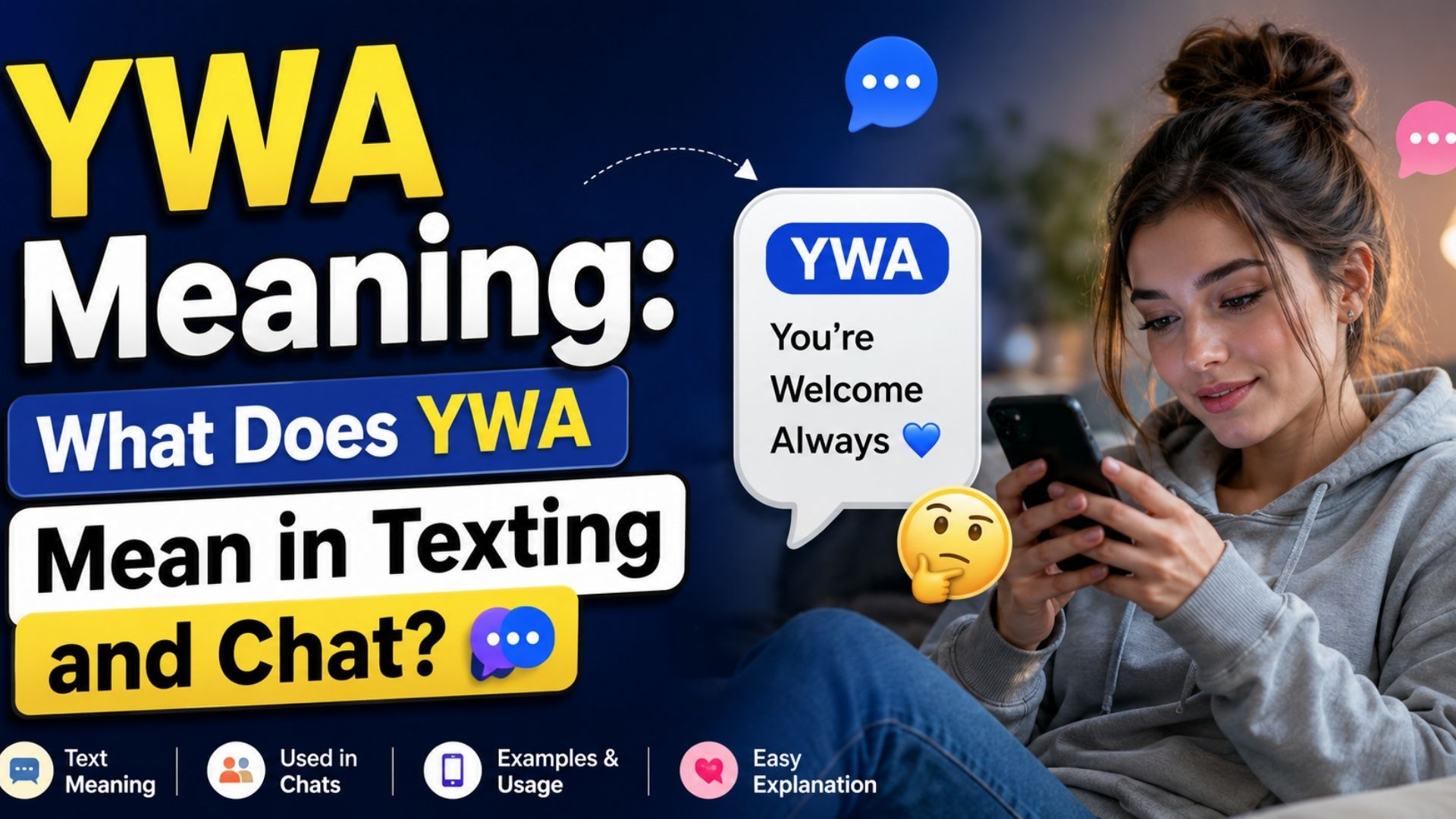
The YWA meaning in texting is most commonly “You’re Welcome Anyway.” People usually use it after doing something helpful, especially when the other person forgets to say thank you. Depending on the conversation, YWA can sound friendly, playful, teasing, or slightly sarcastic.
For example, if you send your friend the notes they needed and they immediately change the subject without saying thanks, you might reply, “YWA 😂.” In that situation, you’re basically saying, “You’re welcome anyway,” while lightly pointing out that they forgot to thank you.
However, context matters. Like many texting abbreviations, YWA doesn’t always carry exactly the same emotional tone. Let’s break down how people use it and what you should understand before replying.
What Does YWA Meaning in Text?
The most common YWA meaning in text is “You’re Welcome Anyway.”
It’s generally used after someone has helped another person, but the expected “thank you” either didn’t come or wasn’t acknowledged. The word “anyway” adds a small hint of attitude, which can make the message sound playful or sarcastic.
For example:
Person 1: “I sent you the address.”
Person 2: “Got it!”
Person 1: “YWA 😂”
Here, YWA jokingly reminds Person 2 that they received help and forgot to say thanks.
The abbreviation is especially common in casual text conversations, direct messages, social media comments, and group chats. It’s not something you’d normally use in a formal email or professional document.
A simple way to understand YWA
Think of it as a shortened version of:
“You’re welcome anyway.”
It can communicate two things at once:
- “I helped you.”
- “You forgot to thank me, but you’re welcome.”
That second idea is what gives YWA its distinctive tone.
Origin and Background of the Term
YWA comes from the broader culture of internet slang and text-message abbreviations. As online conversations became faster and more casual, people began shortening common phrases to save time and make messages feel more relaxed.
Unlike some abbreviations with a clearly documented creator or launch date, YWA doesn’t have one universally established origin. It developed naturally alongside other conversational shortcuts such as “YW” for “you’re welcome,” “TY” for “thank you,” and “NP” for “no problem.”
The addition of “anyway” changes the feeling of the phrase. A simple “YW” is usually neutral, while “YWA” can gently call attention to the fact that the other person didn’t acknowledge the favor.
Over time, people also started using YWA humorously between friends. That means you shouldn’t automatically assume someone is annoyed when they send it. Their relationship with you and the surrounding conversation usually tell you more than the abbreviation itself.
How YWA Is Used in Daily Life

YWA usually appears in casual conversations where people already understand each other’s sense of humor. Its meaning can shift slightly depending on the situation, so context is important.
Here are some common situations where you might see it.
1. When Someone Forgets to Say Thank You
This is one of the clearest uses of YWA.
Imagine you help your friend find a restaurant, send them the location, and they respond with, “Perfect!” without saying thanks.
You might jokingly reply:
“YWA 😂”
You’re not necessarily angry. You’re simply pointing out that they skipped the usual thank-you.
In this situation, YWA can be a lighthearted nudge rather than a serious complaint.
2. Playful Sarcasm Between Friends
Close friends often use YWA as a joke.
For example:
Friend: “Thanks for carrying the whole team.”
You: “YWA 😎”
Here, the abbreviation might not even be correcting a forgotten thank-you. Instead, it can exaggerate the idea that you deserve appreciation.
That’s why tone matters so much with texting slang. A laughing emoji, previous jokes, or a close friendship can make YWA feel completely harmless.
3. After Doing a Favor
You might use YWA after completing a small favor for someone.
For example:
“I fixed your presentation formatting. YWA!”
The phrase can work as a playful way of acknowledging your own effort.
It’s particularly natural when the favor was small and the conversation is informal.
4. In Family Group Chats
YWA can also appear in family conversations, especially when relatives have a relaxed sense of humor.
For example:
Mom: “Can someone send me the shopping list?”
You: “Sent it.”
Mom: “Got it.”
You: “YWA 😂”
In a family group chat, the abbreviation might simply be a playful reminder that you helped.
Of course, not every family uses internet slang in the same way. If your relatives rarely use abbreviations, writing “You’re welcome anyway” may be clearer.
Read More: TMI Full Form in Chat: What Does TMI Mean in Texting?
5. As a Meme Reply
Internet humor has made abbreviations like YWA useful as quick reactions.
Someone might post a funny message about doing a favor and receiving no appreciation. Another person could comment “YWA” as a humorous response.
In these cases, the abbreviation may be more about the joke than an actual request for thanks.
The surrounding meme, caption, or conversation usually makes the intended meaning obvious.
6. As a Gentle Reminder
Sometimes YWA works as a gentle reminder that someone forgot to acknowledge your help.
For example:
“Sent you the files you needed. YWA 🙂”
The emoji can soften the message and make it clear that you’re not seriously upset.
Without context, though, YWA can sometimes sound more pointed than intended. If you genuinely want to avoid misunderstanding, saying “You’re welcome!” is safer.
Emotional or Practical Meaning of YWA
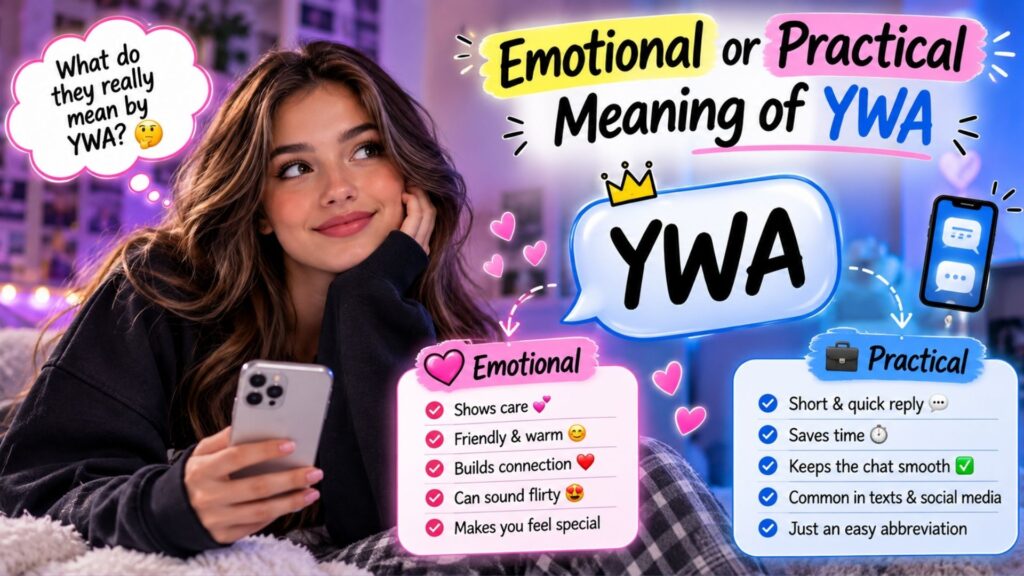
YWA doesn’t have one fixed emotional tone. The same abbreviation can sound completely different depending on who sends it and how they write it.
Here’s a useful breakdown:
| Tone | What YWA may communicate |
|---|---|
| Friendly | “You’re welcome anyway!” |
| Playful | “Hey, you forgot to thank me 😂” |
| Sarcastic | “Apparently, thanks were optional.” |
| Teasing | “I did you a favor, remember?” |
| Slightly annoyed | “I helped you, and you didn’t acknowledge it.” |
The relationship between the people matters a lot.
If your best friend sends “YWA 😂,” you’ll probably understand it as a joke. If someone you barely know sends “YWA.” with no emoji, it might feel more pointed.
That’s an important part of understanding texting language: the letters alone don’t always tell you the tone.
Similar or Related Terms
YWA belongs to a larger group of texting abbreviations used to respond to thanks or acknowledge favors.
| Term | Meaning | Typical tone |
| YWA | You’re Welcome Anyway | Playful or slightly sarcastic |
| YW | You’re Welcome | Neutral and casual |
| TY | Thank You | Friendly and direct |
| TYSM | Thank You So Much | Warm and appreciative |
| NP | No Problem | Casual and reassuring |
| NBD | No Big Deal | Relaxed |
| DW | Don’t Worry | Reassuring |
| Ofc | Of Course | Casual and helpful |
The key difference is that YWA contains a subtle reminder about appreciation, while “YW” simply means “you’re welcome.”
Key Difference:
If someone says:
“YW!”
They’re simply responding to your thanks.
If someone says:
“YWA 😂”
They may be jokingly saying:
“You’re welcome anyway, even though you forgot to thank me.”
That extra word changes the tone.
Common Misunderstandings About YWA Meaning in Text
Because texting abbreviations depend heavily on context, people sometimes misunderstand what YWA is supposed to communicate.
Here are some common assumptions that aren’t always correct.
1. It’s Always Rude
YWA isn’t automatically rude.
A close friend might use it purely as a joke. For example:
“YWA 😂❤️”
The emojis make the playful intention fairly obvious.
However, YWA can sound rude if someone uses it after a serious disagreement or sends it in a cold, blunt way. Context determines the emotional meaning.
2. It Means “You’re Welcome Always”
This is a common misunderstanding.
The usual texting interpretation of YWA is “You’re Welcome Anyway,” not “You’re Welcome Always.”
The “A” represents “Anyway” in the common usage.
That said, abbreviations can sometimes be created or interpreted differently by individual people. If the context seems unusual, asking what they mean is better than assuming.
3. It’s Formal
YWA is informal internet and texting language.
You generally wouldn’t use it in:
- Business letters
- Formal emails
- Academic writing
- Official documents
- Professional applications
For formal communication, simply write “You’re welcome” or use another appropriate phrase.
4. It’s Only Sarcastic
Not necessarily.
Sarcasm is one possible use, but YWA can also be friendly or playful.
For example:
“YWA! Hope it helps 😊”
That sounds much softer than:
“YWA.”
The surrounding words, punctuation, and emojis can change the impression significantly.
5. Only Teenagers Use It
Texting abbreviations aren’t limited to one age group.
Anyone who regularly communicates through messaging apps, social platforms, or online communities may encounter or use abbreviations like YWA.
Usage depends more on communication habits than age.
6. It’s Angry
YWA can express mild annoyance, but it doesn’t automatically mean someone is angry.
If someone sends:
“YWA 😂”
they may simply be teasing.
If they send:
“YWA.”
after you ignored their help, the message could sound more serious.
When you’re unsure, look at the conversation before and after the message rather than judging the abbreviation alone.
Examples of YWA Meaning in Sentences
Seeing YWA in realistic conversations makes its meaning much easier to understand.
Example 1:
A: “I sent you the homework notes.”
B: “Got them!”
A: “YWA 😂”
Here, A is joking because B didn’t say thank you.
Example 2:
A: “I picked up your order.”
B: “Awesome!”
A: “YWA 😌”
This sounds playful and mildly teasing.
Example 3:
A: “Thanks for helping me move.”
B: “YWA!”
In this case, YWA can simply be used playfully as “You’re welcome anyway,” although a normal “YW” would sound more natural if the person already said thanks.
Example 4:
Friend: “You forgot your charger.”
You: “Can you bring it tomorrow?”
Friend: “Sure.”
You: “YWA 😂”
Here, the abbreviation is used humorously after the friend agrees to help.
Example 5:
A: “I fixed the issue with your account.”
B: “That worked!”
A: “YWA!”
This can be a playful way of highlighting the favor.
Why Understanding YWA Meaning in Text Matters Today
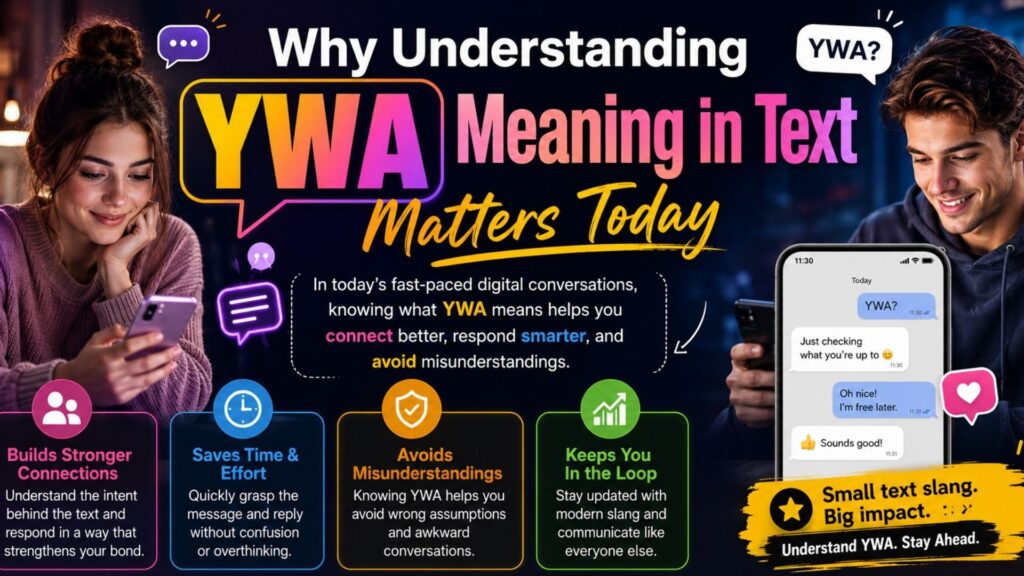
Text messages don’t give you many of the signals you get during face-to-face conversations. You can’t hear someone’s voice, see their facial expression, or immediately know whether they’re joking.
That’s why abbreviations can sometimes cause confusion.
Understanding the YWA meaning helps you interpret the message based on context instead of assuming the sender is angry or rude. It also helps you respond in a way that matches their tone.
For example, if a friend sends “YWA 😂,” replying with a serious apology might make the conversation awkward. A playful answer such as “Okay, okay, thank you! 😂” would probably fit better.
The same principle works in reverse. If you want to use YWA yourself, consider whether the other person understands your sense of humor. With someone you don’t know well, “You’re welcome!” is usually clearer.
Ultimately, texting slang is less about memorizing abbreviations and more about understanding context, relationship, punctuation, and tone.
FAQs:
What does ywa meaning in text mean in simple words?
YWA most commonly means “You’re Welcome Anyway.” People usually use it after helping someone who forgot to say thank you. It can sound playful, teasing, or slightly sarcastic depending on the context.
Is ywa positive or negative?
YWA can be either positive or slightly negative depending on how it’s used. Among friends, it’s often playful. In a tense conversation, it can sound mildly annoyed or sarcastic.
Where is ywa commonly used?
YWA is mainly used in casual text messages, direct messages, group chats, social media conversations, and other informal online communication.
Is ywa formal or informal?
YWA is informal texting slang. It’s appropriate for casual conversations but generally isn’t suitable for professional emails, academic writing, or formal documents.
Why do people search for ywa meaning in text?
People often search for ywa meaning because texting abbreviations can have different interpretations. Understanding the common meaning helps them figure out whether the sender is being friendly, playful, sarcastic, or annoyed.
Conclusion:
The most common YWA meaning in texting is “You’re Welcome Anyway.” It’s usually used when someone has helped another person and wants to jokingly point out that they didn’t receive a thank-you.
However, YWA isn’t automatically rude or angry. Between friends, it can be nothing more than playful teasing. Emojis, punctuation, and the relationship between the people involved can completely change how the message feels.
So, if someone sends you “YWA,” don’t immediately assume they’re upset. Look at the conversation around it. If they’re joking, you can joke back. If they seem genuinely annoyed, a simple “Thanks, I appreciate it” can clear things up quickly.
In short, YWA = “You’re Welcome Anyway,” and its exact tone depends on the context in which it’s used.
