Have you ever ended an email with “looking forward to working with you” and wondered if it was the best phrase to use?
You’re not alone. This expression appears in countless emails, job offers, client proposals, networking messages, and business introductions. It’s professional, positive, and widely accepted. However, because it’s used so often, many people look for fresh alternatives that sound more natural, engaging, or memorable.
The good news is that there are plenty of ways to express enthusiasm about a future collaboration. Whether you’re writing a formal email, responding to a new colleague, welcoming a client, or simply trying to avoid repeating the same phrase, understanding how and when to use it can improve your communication.
In this guide, you’ll learn the meaning of looking forward to working with you, when to use it, and alternative responses for different situations and personalities.
What Does “Looking Forward to Working With You” Mean?
Before exploring alternatives, it’s helpful to understand why this phrase is so popular.
When you say “looking forward to working with you,” you’re expressing positive anticipation about a future collaboration. It communicates:
- Enthusiasm
- Professionalism
- Respect
- Optimism
- Willingness to cooperate
For example, if you’ve just accepted a new job, sending a message that says:
“Thank you for the opportunity. I’m looking forward to working with you and the team.”
shows excitement while maintaining a professional tone.
Think of it as the workplace equivalent of saying, “I’m excited about what’s ahead.”
Read more: What to Say When an Ex Reaches Out and Asks How You Are
When Should You Use “Looking Forward to Working With You”?
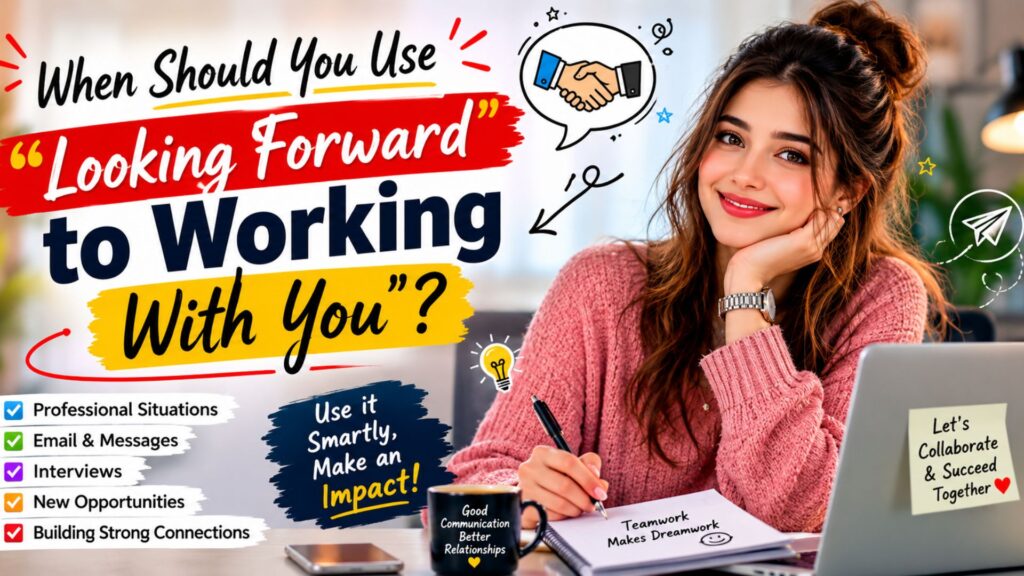
This phrase works well in many professional situations, including:
- Job acceptance emails
- Client onboarding messages
- Business partnerships
- Networking follow-ups
- Team introductions
- Project kickoff emails
- Vendor communications
However, context matters. A highly formal legal email may require different wording, while a casual startup environment might welcome something more conversational.
Funny Responses
Sometimes a little humor can help build rapport, especially in relaxed workplace cultures.
Here are some funny alternatives:
- Looking forward to making spreadsheets look exciting together.
- Can’t wait to tackle this adventure with you.
- Here’s to productive meetings and functioning Wi-Fi.
- Looking forward to solving problems before coffee runs out.
- Let’s make this project slightly less complicated together.
- Excited to see what kind of trouble we can professionally create.
- Looking forward to joining forces.
- Ready to make teamwork look easy.
- Let’s hope we’re both as organized as we claim to be.
- Looking forward to turning ideas into reality—and maybe a few deadlines.
Humor works best when you already have an established relationship with the recipient.
Bold & Fearless Responses
If you want to sound confident and energetic, these alternatives can help.
- Ready to make great things happen together.
- Excited to achieve exceptional results with you.
- Looking forward to building something remarkable.
- Let’s create success together.
- Ready to hit the ground running.
- I’m excited about what we’ll accomplish.
- Looking forward to exceeding expectations together.
- Let’s make an impact.
- I’m eager to contribute from day one.
- Together, we’ll achieve great results.
These responses project confidence while remaining professional.
Flirty Responses
In personal conversations, the phrase can take on a lighter, more playful tone.
- Looking forward to spending more time with you.
- I think working with you might be my favorite part.
- Can’t wait to see what we create together.
- Looking forward to our future conversations.
- This partnership already sounds promising.
- Excited to get to know you better.
- I have a feeling this will be fun.
- Looking forward to seeing your brilliant ideas.
- Working with you sounds like a pretty good deal.
- I think we’re going to make a great team.
Use these only in appropriate personal or social situations, not professional environments.
Polite & Professional Responses
These alternatives are ideal for business communication.
Professional Alternatives
- I look forward to collaborating with you.
- I’m excited to begin working together.
- I appreciate the opportunity to work with you.
- I look forward to contributing to the project.
- I’m eager to support the team’s goals.
- Thank you for the opportunity; I look forward to our collaboration.
- I’m excited to partner with you on this initiative.
- I look forward to a productive working relationship.
- I anticipate a successful collaboration.
- I’m pleased to begin working together.
Why These Alternatives Work
Professional communication is about creating confidence and trust.
For example:
“I look forward to collaborating with you on this project.”
sounds specific and purposeful. It tells the recipient you’re focused on teamwork rather than simply using a generic closing line.
Creative & Witty Responses
If you want your message to stand out, consider these creative alternatives.
- Excited to turn ideas into achievements together.
- Looking forward to writing the next chapter with you.
- Ready to build something meaningful side by side.
- Here’s to a successful journey ahead.
- Looking forward to combining strengths and creating results.
- Let’s transform plans into progress.
- Excited to see where this partnership takes us.
- Looking forward to making great ideas happen.
- Here’s to future wins together.
- Ready to create something worth celebrating.
Creative wording can make your message more memorable while keeping it professional.
Sarcastic & Cheeky Responses
These should only be used with colleagues or friends who appreciate humor.
- Looking forward to our future email chains.
- Can’t wait for our exciting meetings about meetings.
- Here’s to countless calendar invitations.
- Looking forward to pretending we understand every spreadsheet.
- Let’s conquer deadlines one coffee at a time.
- Excited for all the “quick questions” that take thirty minutes.
- Looking forward to surviving the project together.
- Can’t wait to become experts overnight.
- Here’s to productive chaos.
- Looking forward to discovering what “urgent” really means.
Keep sarcasm lighthearted and workplace-appropriate.
Cute & Friendly Responses
For casual conversations and friendly professional relationships, these options work well.
- Happy to be working with you.
- Can’t wait to get started.
- Excited for what’s ahead.
- Looking forward to teaming up.
- Glad we’re working together.
- Ready for this adventure.
- Looking forward to learning from you.
- Excited to join the team.
- Happy to be part of the journey.
- Looking forward to a great experience.
These responses feel warm without sounding overly formal.
Other Ways to Say Looking Forward to Working With You Sample
If you’re searching for sample phrases, here are some of the best alternatives.
| Original Phrase | Alternative |
|---|---|
| Looking forward to working with you | Excited to collaborate with you |
| Looking forward to working with you | Eager to begin working together |
| Looking forward to working with you | Happy to partner with you |
| Looking forward to working with you | Excited about our collaboration |
| Looking forward to working with you | Looking forward to contributing to the team |
| Looking forward to working with you | Anticipating a successful partnership |
These alternatives help you vary your communication while maintaining professionalism.
Other Ways to Say Looking Forward to Working With You Email
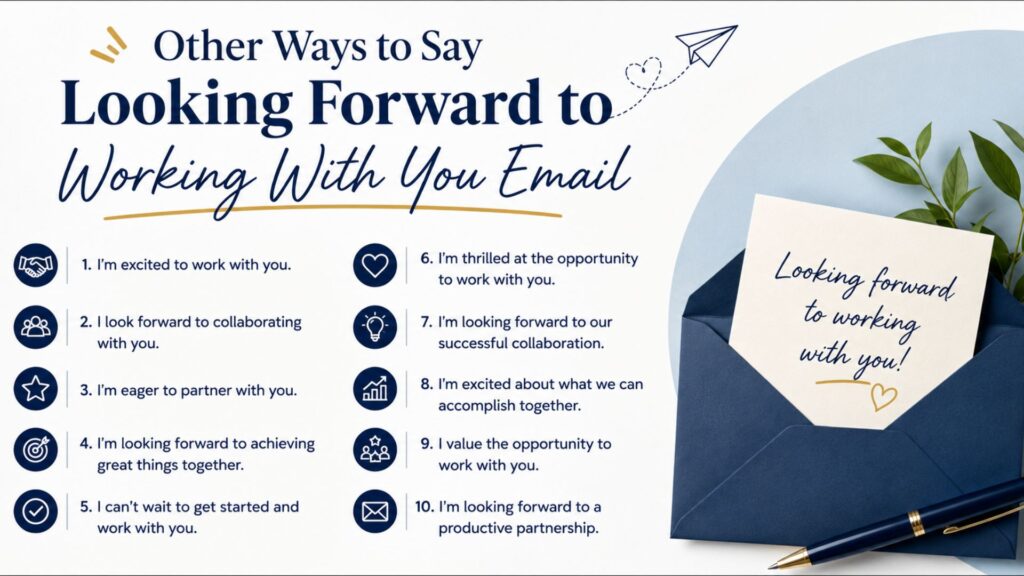
When writing an email, you often need something polished and professional.
Example 1: New Client Email
“Thank you for choosing our services. We’re excited to collaborate with you and help achieve your goals.”
Example 2: Job Acceptance Email
“I appreciate the opportunity and look forward to contributing to the team.”
Example 3: Project Kickoff Email
“I’m eager to begin working together and help make this project a success.”
Example 4: Business Partnership Email
“We’re excited about this partnership and look forward to achieving great results together.”
Example 5: Team Introduction Email
“I’m delighted to join the team and look forward to working alongside everyone.”
The best email alternative depends on the tone of the relationship and the purpose of the message.
FAQs
Is “looking forward to working with you” professional?
Yes. It’s one of the most widely accepted professional phrases for expressing enthusiasm about future collaboration.
Can I use “looking forward to working with you” in a job acceptance email?
Absolutely. It’s commonly used when accepting a new position and introducing yourself to future colleagues.
What is a stronger alternative to “looking forward to working with you”?
You can say, “I’m excited to collaborate with you” or “I’m eager to contribute to the team’s success.”
Is the phrase too formal?
Not necessarily. It’s professional without being overly formal, which makes it suitable for most business situations.
What should I avoid when replacing this phrase?
Avoid wording that sounds overly casual, vague, or exaggerated in professional communication. Match your tone to your audience.
Conclusion
The phrase looking forward to working with you remains one of the best ways to express enthusiasm, professionalism, and optimism about future collaboration. It’s simple, respectful, and effective in a wide range of situations.
However, using alternatives can help your communication feel fresher and more personal. Whether you prefer a professional tone, a creative approach, or a friendly message, choosing the right wording can strengthen relationships and leave a positive impression.
The next time you’re about to write “looking forward to working with you,” consider your audience and choose the variation that best reflects your personality and purpose.
