

Have you ever caught yourself saying “no worries” over and over again?
It’s one of the most common phrases in everyday conversation. Whether someone apologizes, thanks you, or asks for a favor, “no worries” often feels like the easiest response. However, using the same phrase repeatedly can start to sound repetitive, especially in professional settings.
The good news is that there are plenty of other ways to say no worries that fit different situations. Some sound professional, others are playful, and some add a touch of humor or personality to your conversations.
In this guide, you’ll discover alternatives that work in casual chats, workplace emails, text messages, and even lighthearted conversations with friends.
Funny Responses
Sometimes a little humor can make an interaction more memorable.
Here are some funny alternatives to “no worries”:
- My stress level remains unchanged.
- The world is still spinning.
- No damage done.
- Crisis officially avoided.
- My therapist says I’m handling it well.
- The alarm bells never went off.
- My coffee survived, so we’re good.
- No worries—my day wasn’t exciting anyway.
- Disaster level: zero.
- We’re still friends… for now.
Funny responses work best when you know the other person well and understand their sense of humor.
Read more: Romantic Replies to “Sweet Dreams” Messages
Fearless Responses

Want to sound confident and unfazed?
These responses communicate that the situation isn’t a problem at all.
- I’ve got it covered.
- Consider it handled.
- Not an issue.
- That’s nothing to worry about.
- I’m completely fine with it.
- No problem whatsoever.
- It doesn’t bother me.
- Everything’s under control.
- We’re all good here.
- I’ve seen worse.
These phrases project confidence without sounding dismissive.
Flirty Responses
If you’re chatting with someone you like, a standard “no worries” can feel a bit boring.
Instead, try:
- For you? Anytime.
- I’d happily do it again.
- You’re worth the trouble.
- I wasn’t worried once.
- Anything that involves you is worth it.
- No worries, I like hearing from you.
- I’ll make an exception just for you.
- You owe me a smile now.
- That’s the easiest favor I’ve done all day.
- No worries, you make it hard to say no.
The key is to keep the tone light and genuine.
Polite Responses
There are many situations where professionalism and courtesy matter more than creativity.
Some polite alternatives include:
- You’re very welcome.
- It’s absolutely fine.
- Please don’t worry about it.
- Not a problem at all.
- Happy to help.
- That’s perfectly okay.
- Think nothing of it.
- It was my pleasure.
- Glad I could assist.
- Don’t mention it.
These responses work well in customer service, workplace communication, and everyday interactions.
Creative Responses
Want something more unique?
These alternatives add personality without sounding strange.
- Consider the matter settled.
- Water under the bridge.
- All systems are still operational.
- No turbulence detected.
- We’re sailing smoothly.
- The situation remains drama-free.
- Everything’s still on track.
- The story continues uninterrupted.
- Nothing lost, nothing broken.
- We move forward.
Creative responses can help your conversations feel more memorable.
Sarcastic Responses
Sarcasm should be used carefully, but among friends, it can be entertaining.
- My entire week is ruined now.
- I’ll never recover from this.
- Thanks for the lifelong trauma.
- I’ll add it to my list of imaginary problems.
- The emotional damage is unbearable.
- I’ll need years to process this.
- My disappointment is purely fictional.
- This changes absolutely nothing.
- I’ll try to survive somehow.
- The tragedy is overwhelming.
Make sure your audience understands your humor before using these.
Cute Responses
Cute responses create warmth and friendliness.
- It’s all good.
- You’re okay.
- No biggie.
- Don’t sweat it.
- It’s totally fine.
- We’re good.
- No harm done.
- All smiles here.
- Everything’s okay.
- You’re forgiven.
These work especially well with friends, family members, and close coworkers.
Professional Responses
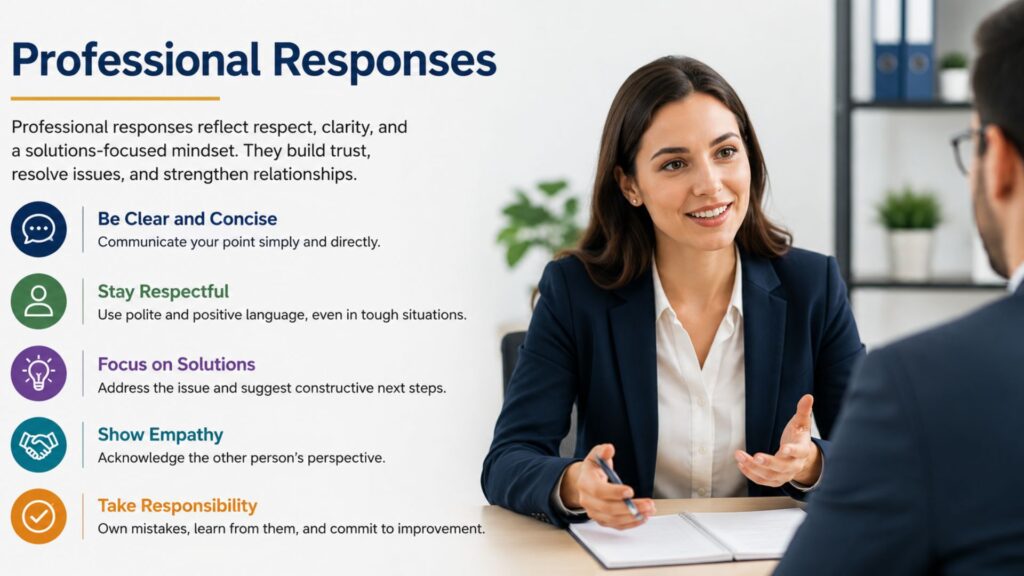
In business communication, it’s often better to replace “no worries” with something more polished.
Best Professional Alternatives
- You’re welcome.
- It was my pleasure.
- Happy to assist.
- Not a problem.
- Certainly.
- Glad I could help.
- No issue at all.
- Consider it taken care of.
- I’m happy to support you.
- It was no inconvenience.
When to Use Professional Alternatives
Imagine a client says:
“Sorry for sending this request so late.”
Instead of replying with:
“No worries.”
You could say:
“Happy to help. Please let me know if you need anything else.”
It sounds more professional while maintaining a friendly tone.
Playful Responses
Playful alternatives strike a balance between humor and friendliness.
- You’re in the clear.
- No panic necessary.
- We’re still on speaking terms.
- The friendship remains intact.
- No penalty points awarded.
- You’re safe this time.
- I’ll let it slide.
- The universe remains balanced.
- Permission granted.
- You’re officially worry-free.
These responses keep conversations light and engaging.
Other Ways to Say “No Worries (If Not)” 🙂
Sometimes you’re offering flexibility rather than responding to an apology.
For example:
“If not, no worries.”
Here are some better alternatives:
- If not, that’s completely fine.
- If it doesn’t work out, no problem.
- If you’re unavailable, I understand.
- No pressure either way.
- If not, that’s okay.
- Feel free to decline.
- If it isn’t possible, don’t worry about it.
- Only if it works for you.
- No obligation at all.
- If not, we can explore other options.
These phrases sound thoughtful and considerate.
Another Way to Say “No Worries” (Professionally) 💼
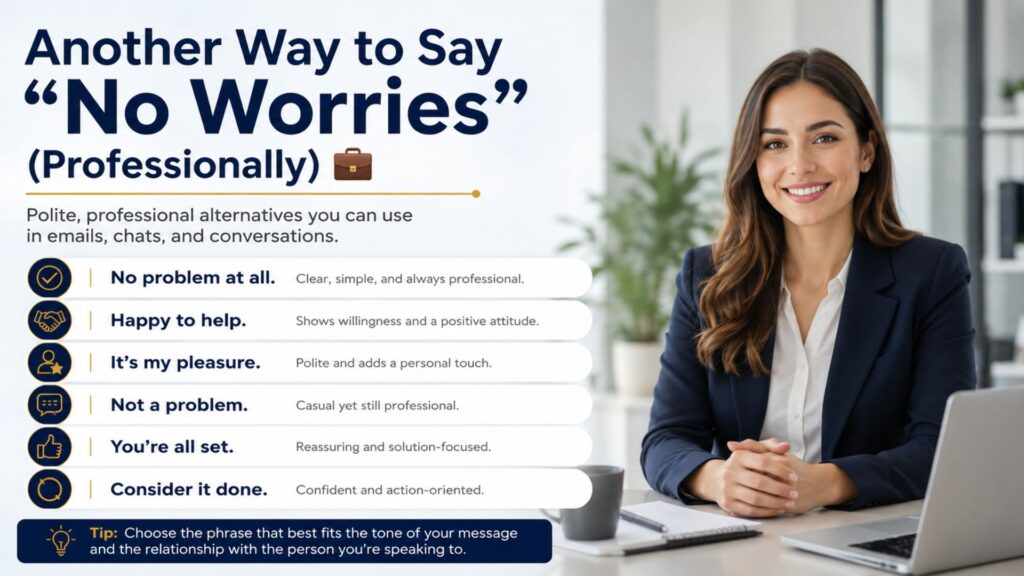
When writing emails, communicating with clients, or speaking with management, choosing the right wording matters.
Here’s a comparison table:
| Casual Phrase | Professional Alternative |
|---|---|
| No worries | Happy to assist |
| No problem | Certainly |
| It’s all good | That’s perfectly fine |
| Don’t worry about it | Please don’t be concerned |
| Sure thing | Absolutely |
| No big deal | It was no inconvenience |
| You’re good | Everything is in order |
Why Professional Language Matters
Professional communication isn’t about sounding formal for the sake of it. It’s about creating confidence.
When you choose polished language, you signal reliability, competence, and respect. Small wording changes can make a surprisingly strong impression, especially in customer-facing or leadership roles.
FAQs
What can I say instead of “no worries”?
You can say “happy to help,” “not a problem,” “you’re welcome,” “my pleasure,” or “don’t mention it,” depending on the situation.
Is “no worries” professional?
It’s acceptable in many workplaces, but more formal alternatives such as “happy to assist” or “my pleasure” often sound more polished.
What is the most polite alternative to “no worries”?
“It’s absolutely fine” and “please don’t worry about it” are among the most polite options.
Can I use “no worries” in an email?
Yes, especially in casual business environments. However, client-facing emails often benefit from more professional alternatives.
Why should I use other ways to say no worries?
Using varied language keeps your communication fresh, helps match the tone of different situations, and allows you to sound more professional when needed.
Conclusion
Learning other ways to say no worries can instantly improve how you communicate. While the phrase itself is friendly and widely accepted, having alternatives gives you more flexibility in different situations.
For casual conversations, playful and funny responses keep things interesting. In professional settings, polished alternatives like “happy to assist” or “my pleasure” create a stronger impression. And when you’re talking with friends, family, or someone special, choosing a response that fits the moment can make your communication feel more genuine and memorable.
The next time you’re about to type “no worries,” try one of these alternatives and see how naturally it elevates the conversation.
