Have you ever shared good news with someone and heard them say, “I’m happy for you”?
At first glance, it seems straightforward. They’re expressing joy about your success, achievement, or positive experience. But depending on the situation, relationship, and tone, the phrase can carry different meanings. Sometimes it’s heartfelt and sincere. Other times, it may sound polite, formal, playful, or even slightly sarcastic.
Understanding the happy for you meaning can help you respond appropriately and keep the conversation flowing naturally.
In this guide, you’ll learn what “happy for you” really means, when people use it, and the best ways to respond in different situations—from funny and flirty to professional and polite.
Read more: 100+ Best Late Replies to Send When You Respond Late
What Does “Happy for You” Mean?
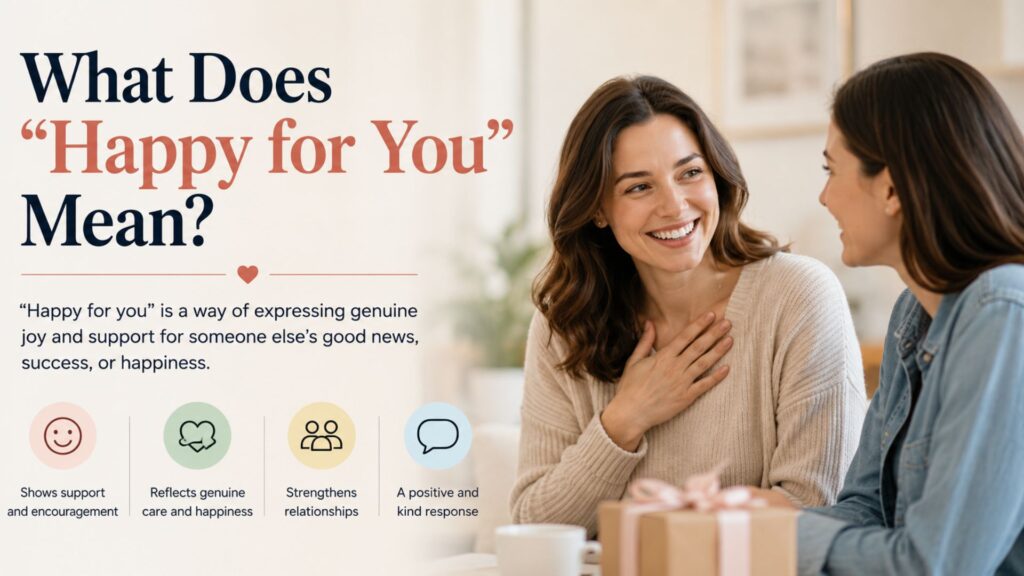
In simple terms, saying “happy for you” means someone is pleased about something positive happening in your life.
For example:
- You got a promotion.
- You passed an important exam.
- You bought a new house.
- You started a new relationship.
- You achieved a personal goal.
When someone says they’re happy for you, they’re acknowledging your success and sharing in your excitement.
Think of it as emotional support. They may not be directly involved in your achievement, but they’re celebrating it with you.
However, context matters.
Different Meanings Behind “Happy for You”
| Situation | Possible Meaning |
|---|---|
| Close friend | Genuine excitement |
| Family member | Pride and support |
| Coworker | Professional congratulations |
| Crush | Interest mixed with encouragement |
| Sarcastic tone | Possible jealousy or teasing |
Most of the time, though, the phrase is positive and sincere.
Why Your Response Matters
When someone says they’re happy for you, they’re making an effort to celebrate your moment.
A thoughtful response shows appreciation and strengthens your connection.
Imagine telling a friend you landed your dream job. If they say, “I’m so happy for you,” they’re sharing your excitement. Responding warmly keeps that positive energy alive.
Let’s look at some great ways to reply.
1️⃣ Funny Responses
Humor can make conversations more memorable and enjoyable.
Try these funny responses:
- “Thanks! My years of pretending to know what I’m doing finally paid off.”
- “I appreciate it. My luck is as surprised as I am.”
- “Thank you! I plan to celebrate responsibly… probably.”
- “Same here. I still can’t believe it.”
- “Thanks! The universe finally answered one of my emails.”
- “I’m happy for me too.”
- “Don’t worry, I’ll stay humble for at least a week.”
Funny replies work best with friends and people who understand your personality.
2️⃣ Brilliant Responses
These responses sound thoughtful and confident.
- “Thank you. I’ve worked hard for this, so that means a lot.”
- “I appreciate that more than you know.”
- “Your support makes the achievement feel even better.”
- “Thank you. It’s been a long journey.”
- “I’m grateful for the encouragement.”
- “That’s kind of you to say.”
- “I’m excited to see where this leads next.”
Brilliant responses show gratitude while acknowledging your accomplishment.
3️⃣ Flirty Responses
If the person saying it is someone you’re interested in, a playful response can create chemistry.
- “Thanks. It’d be even better if we celebrated together.”
- “You’re making this moment even sweeter.”
- “I’m happy too… especially now.”
- “Thank you. Your approval means a lot.”
- “Maybe I’ll save part of the celebration for you.”
- “You’re making me smile even more.”
- “That was sweet. Almost as sweet as you.”
Keep the tone light and natural.
4️⃣ Polite Responses
Sometimes a simple and respectful reply is all you need.
- “Thank you so much.”
- “I really appreciate that.”
- “That’s very kind of you.”
- “Thank you for your support.”
- “I appreciate your encouragement.”
- “That means a lot to me.”
- “Thank you for sharing in my happiness.”
Polite responses work in almost every situation.
5️⃣ Professional Responses
In workplace settings, professionalism matters.
- “Thank you. I appreciate your support.”
- “That’s very kind of you.”
- “I appreciate the encouragement.”
- “Thank you for recognizing the achievement.”
- “I’m grateful for your support.”
- “Thank you. I’m looking forward to the next challenge.”
- “I appreciate your thoughtful words.”
These responses maintain professionalism while showing gratitude.
6️⃣ Creative Responses
Want to stand out?
Try these creative replies.
- “Thank you. My inner victory dance appreciates it.”
- “That’s wonderful to hear. My excitement levels just doubled.”
- “Thanks! It’s been quite the adventure.”
- “I appreciate it. This chapter is off to a good start.”
- “Thank you. The hard work finally turned into good news.”
- “That’s music to my ears.”
- “You just added another reason to celebrate.”
Creative responses add personality to the conversation.
7️⃣ Sarcastic Responses
Sarcasm can be fun when used with close friends.
- “Wow, your enthusiasm is overwhelming.”
- “Good, because someone should be.”
- “Finally, someone recognizes my greatness.”
- “I was waiting for your official approval.”
- “Your happiness for me means everything.”
- “Excellent. I’ll update the records.”
- “The celebration may now continue.”
Use sarcasm carefully since tone doesn’t always translate well through text.
8️⃣ Cute Responses
Cute responses feel warm and genuine.
- “Aww, thank you.”
- “That’s so sweet of you.”
- “You just made my day.”
- “Thank you for being happy with me.”
- “You’re the best.”
- “That means a lot coming from you.”
- “You’re making me smile.”
These work especially well with friends, family, and romantic interests.
9️⃣ Playful/Teasing Responses
A little teasing can keep things fun.
- “You should be. I’m kind of amazing.”
- “I knew you’d eventually come around.”
- “I was waiting for that reaction.”
- “Your timing is perfect.”
- “Thank you. I accept your admiration.”
- “You’re welcome to join the fan club.”
- “I’m glad someone appreciates my brilliance.”
Playful responses add energy without sounding arrogant.
🔟 Short & Sweet Responses
Sometimes less is more.
- “Thank you!”
- “I appreciate that.”
- “That’s so kind.”
- “Thanks, that means a lot.”
- “I’m grateful.”
- “Thank you so much.”
- “I really appreciate it.”
These responses are quick, effective, and universally appropriate.
When Someone Says “Happy for You” Through Text
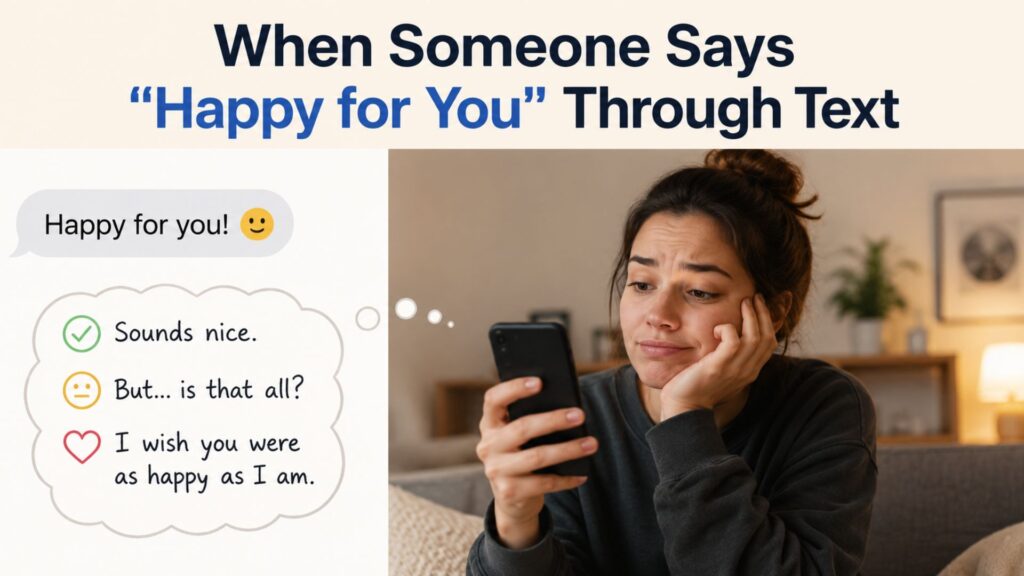
Text messages don’t include facial expressions or tone of voice, so context becomes important.
For example:
You: “I got the job!”
Them: “I’m happy for you!”
A simple response like “Thank you! I’m really excited about it” keeps the conversation positive.
If you want to continue chatting, you can add:
- “How’s your week going?”
- “Have you ever experienced something similar?”
- “Thanks! It still feels unreal.”
This helps the conversation move forward naturally.
FAQs
Is “happy for you” always sincere?
Most of the time, yes. However, tone, context, and your relationship with the person can affect its meaning. In most conversations, it’s intended as genuine support.
What’s the best response to “happy for you”?
A simple “Thank you, that means a lot” works in almost every situation.
Can “happy for you” be sarcastic?
Yes. In some cases, people may use it sarcastically, especially if the tone sounds forced or exaggerated. Context is the key.
Is “happy for you” a compliment?
Absolutely. It shows someone recognizes your success and wants to celebrate it with you.
How do I respond to “happy for you” over text?
A warm response like “Thank you! I’m really excited about it” works perfectly and keeps the conversation positive.
Conclusion
Understanding the happy for you meaning helps you recognize the positive intention behind the phrase and respond confidently.
In most cases, it’s a sincere expression of support, encouragement, and shared happiness. Whether the person is a friend, family member, coworker, or romantic interest, a thoughtful response strengthens the connection and shows appreciation.
The best reply depends on the situation. You might choose something funny, flirty, professional, playful, or simply heartfelt. Whatever you choose, responding with genuine gratitude is always the safest and most effective approach.
