
Nobody likes having this conversation.
You notice someone’s breath smells bad, and suddenly your brain starts panicking. Do you say something? Ignore it? Offer gum and hope they get the hint?
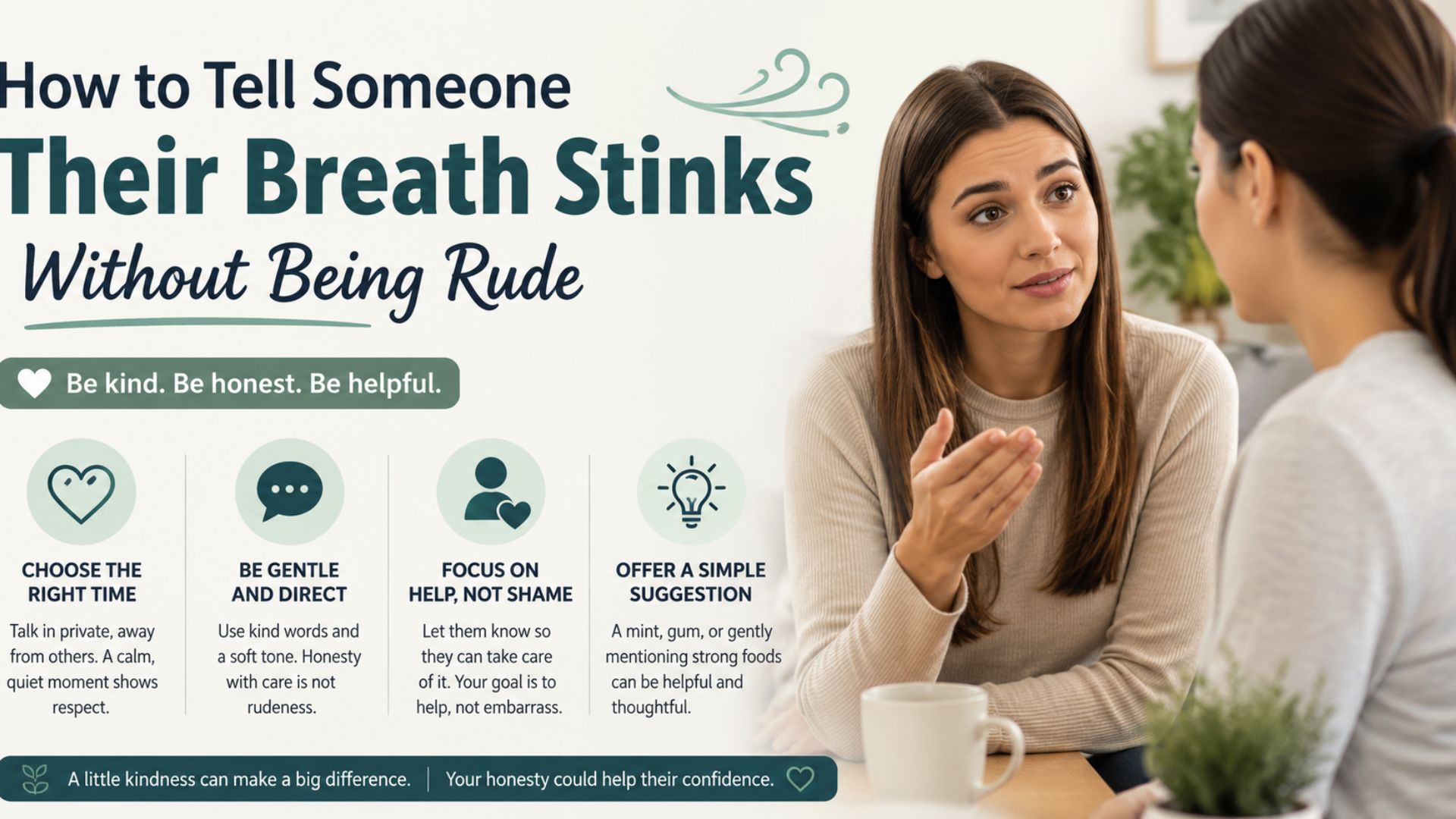
Learning how to tell someone that their breath stinks without being rude is one of those awkward life skills nobody really teaches you. However, when handled kindly, honesty is usually better than letting someone walk around unaware.
Think about it this way: if your breath smelled bad, you’d probably want someone you trust to tell you discreetly instead of everyone silently suffering through it.
The key is all in the delivery.
In this guide, you’ll find funny, polite, fearless, professional, sarcastic, cute, and quick responses you can actually use in real life — without sounding cruel or embarrassing the other person.
Why Bad Breath Conversations Feel So Awkward
Let’s be honest. Breath is personal.
Unlike having spinach in your teeth or a wrinkled shirt, bad breath feels more sensitive because it’s tied to hygiene, health, and confidence.
That’s why most people avoid mentioning it entirely.
However, staying silent can sometimes be worse. A kind, respectful comment can actually help someone avoid embarrassment later.
For example:
- Maybe they skipped brushing before work
- Maybe they drank coffee all morning
- Maybe they genuinely have a dental issue they don’t know about
In simple terms, your goal isn’t to shame them. It’s to help them while protecting their dignity.
Read more: When a Guy Offers You a Sip of His Drink: What It Really Means
Best Ways to Tell Someone Their Breath Stinks Kindly
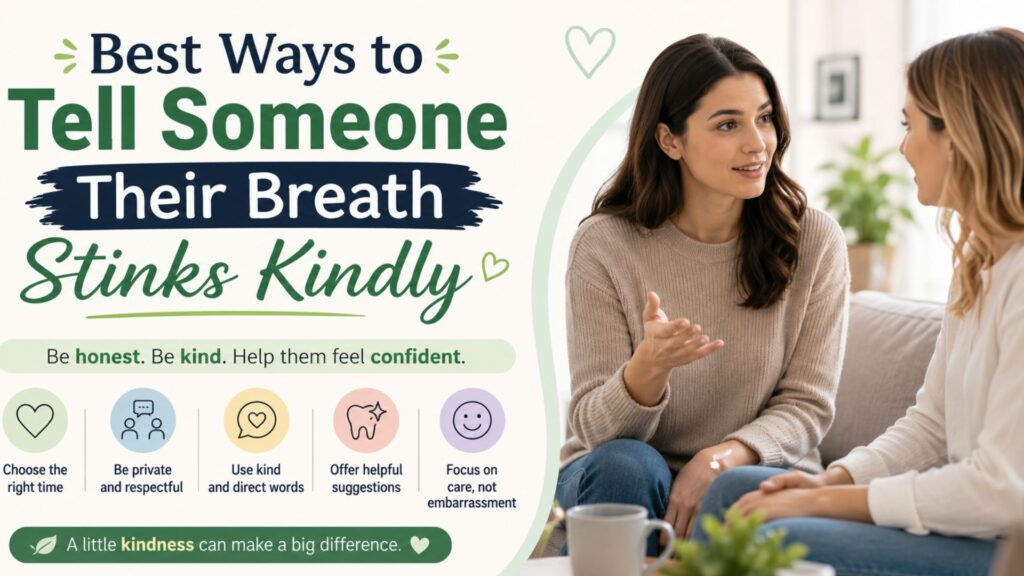
Before jumping into specific responses, here are a few smart rules that make the conversation easier.
| What Helps | What Makes It Worse |
|---|---|
| Speaking privately | Calling them out publicly |
| Using a calm tone | Sounding disgusted |
| Being gentle | Making jokes that embarrass them |
| Offering a solution | Criticizing them personally |
| Keeping it brief | Overexplaining |
Timing matters too. Don’t blurt it out mid-conversation in front of other people.
A little tact goes a long way.
Funny Responses:
Humor can soften awkward moments if you already have a playful relationship with the person.
The trick is making the joke light — not humiliating.
Here are some funny ways to handle it:
- “Your breath just attacked me emotionally.”
- “Quick question… did garlic win the battle today?”
- “I think your coffee fought your toothpaste and won.”
- “Emergency mint situation incoming.”
- “Your breath has a strong personality today.”
- “I suddenly understand why gum was invented.”
- “Your mouth is telling dramatic stories right now.”
- “I care about you too much not to mention this.”
Funny responses work best with close friends, siblings, or partners who won’t take it personally.
Fearless Responses:
Sometimes the clearest approach is simply honest and direct.
You don’t need to be harsh — just confident and respectful.
Try these:
- “Hey, I think you might need a mint.”
- “I’m telling you because I’d want someone to tell me too.”
- “I think your breath smells a little off today.”
- “You may want to check your breath.”
- “I hope you don’t mind me saying this, but your breath is pretty strong.”
- “I wanted to tell you privately before someone else did.”
Fearless responses work because they avoid confusion and passive-aggressive hints.
Flirty Responses:
If this is your partner, crush, or someone you flirt with, you can keep the tone playful and sweet.
For example:
- “You’re cute, but your breath is fighting against you today.”
- “Come back after a mint and I’ll continue flirting.”
- “I like being close to you… usually.”
- “You owe me gum after this.”
- “You’re lucky your personality is attractive.”
- “I’d kiss you right now if your breath cooperated.”
Flirty responses work best when there’s already chemistry and comfort between you both.
Polite Responses:
This is usually the safest approach.
Polite responses feel caring instead of judgmental.
Here are some good examples:
- “Hey, I just wanted to let you know discreetly.”
- “I hope this doesn’t come across badly, but your breath smells a little strong.”
- “I thought you’d want to know.”
- “Would you like a mint?”
- “I’m only mentioning it because I’d appreciate the same honesty.”
- “You may want some gum or water.”
In professional or social settings, kindness matters more than cleverness.
Professional Responses:
Telling a coworker or colleague their breath stinks can feel especially uncomfortable.
However, professionalism and privacy make a huge difference.
How to Handle It at Work
Never mention it publicly or joke about it in a group setting.
Instead:
- Pull them aside privately
- Keep your tone neutral
- Be brief and respectful
Here are some professional examples:
- “I wanted to mention something privately because I’d appreciate the same.”
- “You may want a mint or some water.”
- “I hope you don’t mind me saying this discreetly.”
- “I thought you’d want to know before your next meeting.”
- “I’m only mentioning it to be helpful.”
Professional honesty should feel supportive, not embarrassing.
Creative Responses:

Creative responses make the moment feel less stiff and awkward.
These are especially useful with friends.
- “Your breath entered the room before you did.”
- “Mint technology exists for a reason.”
- “Your mouth is going through something right now.”
- “Your breath just unlocked a memory.”
- “This conversation needs gum as a supporting character.”
- “Your coffee breath has evolved into its final form.”
- “Your breath deserves its own warning label.”
Creative responses keep the mood lighter while still getting the message across.
Sarcastic Responses:
Sarcasm can work — but only if the relationship can handle it.
Otherwise, it may sound mean.
Use these carefully:
- “Wow, mint companies must hate you.”
- “Your breath could remove paint.”
- “I suddenly miss oxygen.”
- “That breath has range.”
- “You trying to knock people unconscious?”
- “I think my nose just filed a complaint.”
- “That’s not breath. That’s a chemical event.”
Sarcastic responses are risky, so save them for people who genuinely enjoy that kind of humor.
Cute Responses:
Cute responses soften the message and make it feel less harsh.
These work especially well in relationships.
- “Baby, you need a mint.”
- “You’re adorable… but your breath isn’t.”
- “Come here after brushing your teeth.”
- “I brought gum because I care.”
- “Your smile is cute. Your breath needs backup.”
- “You need a little refresh.”
- “I still like you, don’t worry.”
Cute responses balance honesty with affection.
Quick Responses:
Sometimes you don’t want a long conversation. You just want to handle it smoothly and move on.
Here are quick, easy responses:
- “Mint?”
- “Want some gum?”
- “You may need mouthwash.”
- “Your breath’s a little strong.”
- “Quick breath check.”
- “Try this gum.”
- “You good on toothpaste today?”
- “Hydrate and grab a mint.”
Simple and direct often works best.
What NOT to Say When Someone’s Breath Stinks
This matters just as much as knowing what to say.
Avoid phrases that sound insulting, dramatic, or humiliating.
Don’t Say Things Like:
- “Your breath is disgusting.”
- “What died in your mouth?”
- “You smell horrible.”
- “Brush your teeth.”
- “Everyone noticed.”
Even if you’re joking, comments like these can seriously embarrass someone.
Remember, the goal is to help — not humiliate.
Why People Sometimes Have Bad Breath
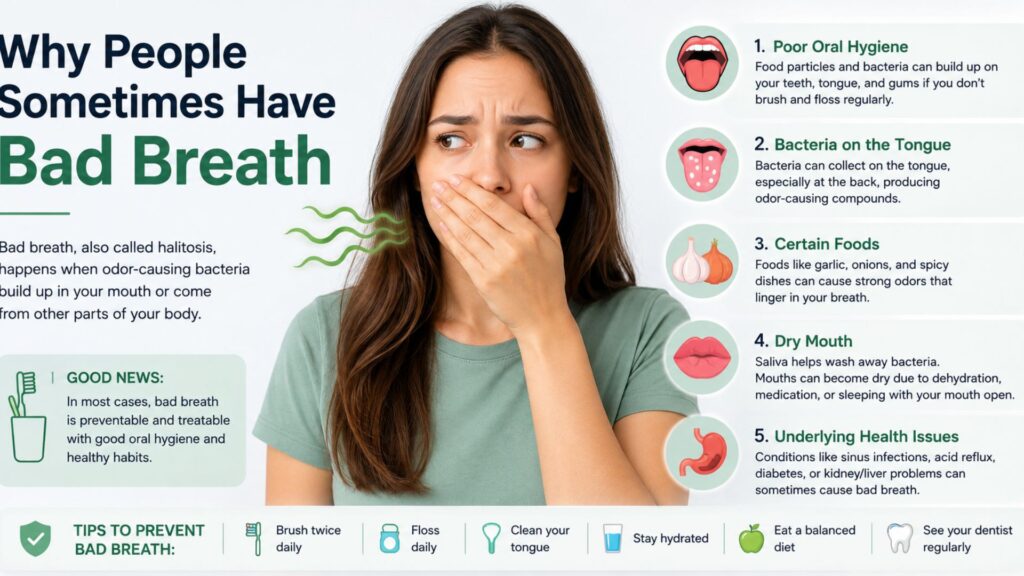
Understanding the cause can make you more compassionate.
Bad breath isn’t always caused by poor hygiene.
Common reasons include:
- Coffee
- Garlic or onions
- Dry mouth
- Fasting
- Smoking
- Dental problems
- Tonsil stones
- Dehydration
- Certain diets
In some cases, chronic bad breath may even signal a medical issue.
That’s another reason kindness matters.
FAQs:
How do you politely tell someone their breath stinks?
The best approach is private, calm, and respectful. For example: “I hope you don’t mind me mentioning this, but your breath smells a little strong.”
Should you tell someone they have bad breath?
Usually, yes — especially if you know them well. Most people would rather know than stay unaware.
What’s the nicest way to tell someone their breath smells?
Offering gum or saying, “I’d want someone to tell me too,” helps soften the conversation.
Is it rude to tell someone their breath stinks?
Not if you do it kindly and privately. Tone matters more than the message itself.
What if someone gets offended?
That can happen, even with good intentions. However, being respectful and discreet greatly reduces the chance of hurt feelings.
Conclusion:
Knowing how to tell someone that their breath stinks without being rude is really about balancing honesty with kindness.
You don’t need a perfect script. You just need empathy.
Whether you use humor, politeness, confidence, or a quick mint offer, the goal stays the same: help the person without embarrassing them.
And honestly, most people appreciate quiet honesty more than silent judgment.
Handled the right way, an awkward moment can become a thoughtful one instead.
