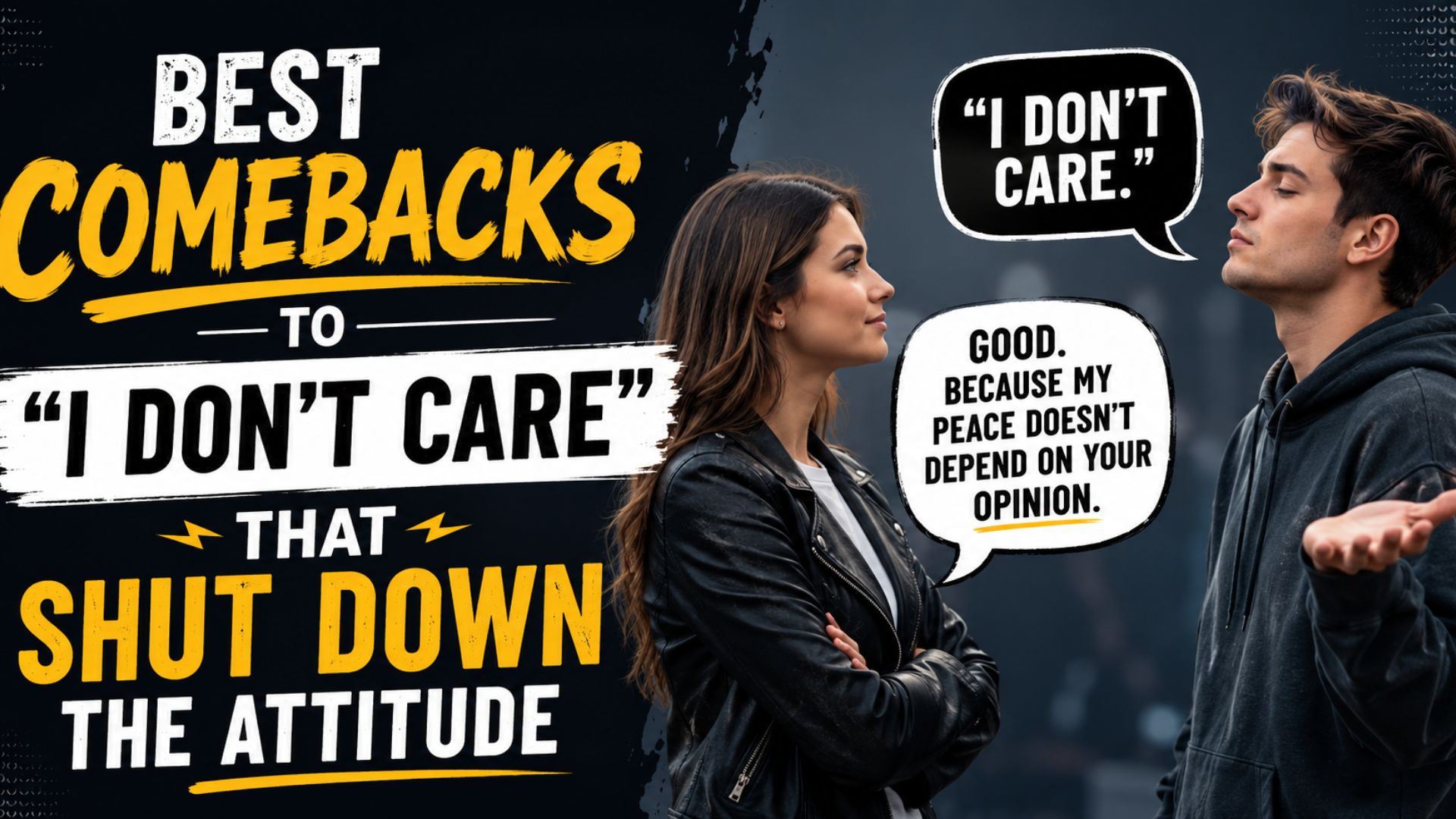
Few phrases kill a conversation faster than “I don’t care.”
Sometimes it’s said jokingly. Sometimes it’s pure attitude. And other times, it’s meant to annoy you, dismiss your opinion, or shut down the conversation completely.
That’s exactly why people look for smart comebacks to “I don’t care” — because staying silent can feel awkward, but overreacting usually makes things worse.
The good news? You don’t need a dramatic speech to respond well.
A clever comeback can:
- Keep the conversation funny
- Shut down rude behavior
- Show confidence
- Flip the energy instantly
- Make you sound calm instead of emotional
The best responses depend on the situation. A sarcastic comeback might work with friends, while a polite response may fit work or school better.
In this guide, you’ll find funny, fearless, flirty, sarcastic, professional, and meme-style replies you can actually use in real conversations.
Why “I Don’t Care” Feels So Annoying
Before jumping into the comebacks, it helps to understand why this phrase gets under people’s skin.
When someone says “I don’t care,” it can feel like:
- They’re dismissing you
- They want the last word
- They’re avoiding the conversation
- They’re trying to sound emotionally detached
- They want a reaction
However, not every “I don’t care” means the same thing.
For example:
- A friend jokingly saying it during banter feels harmless.
- Someone saying it during an argument feels disrespectful.
That’s why your response should match the tone and situation.
Read more: Sorry to Bug You Synonym: Better Professional Alternatives
Funny Comebacks That Keep The Vibe Light
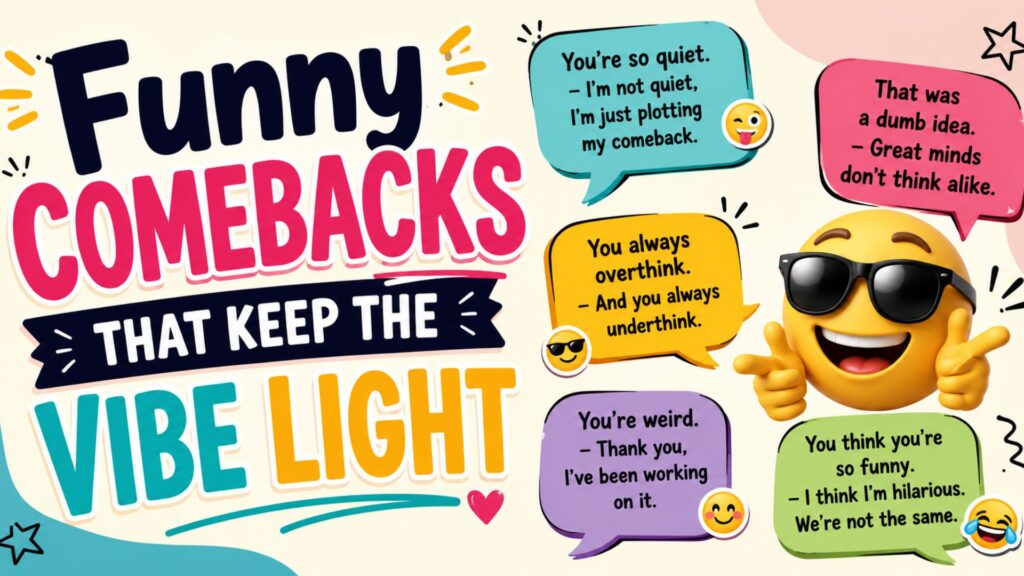
Humor is usually the safest and smartest approach. Funny replies keep things playful without creating unnecessary drama.
Here are some funny comebacks to “I don’t care”:
- “That’s okay, I brought enough caring for both of us.”
- “You cared enough to respond though.”
- “Interesting. Tell me more about how much you don’t care.”
- “Your emotional support has been noted.”
- “And yet… here we are.”
- “That sounded rehearsed.”
- “You say that like it’s a superpower.”
- “Congrats on your independence.”
- “I’ll survive somehow.”
- “Wow, such mystery and emotional depth.”
Why Funny Responses Work
Funny responses lower tension instantly. Instead of turning the conversation into a fight, they make the other person look less powerful without sounding aggressive.
Humor also shows confidence because you’re not reacting emotionally.
Fearless Replies That Hit Hard
Sometimes you need a response that’s calm, direct, and confident.
These fearless replies work well when someone says “I don’t care” with attitude.
- “That doesn’t change anything.”
- “You’re allowed to feel that way.”
- “Good thing I wasn’t asking for permission.”
- “Not everyone has to care.”
- “Okay, and?”
- “You seem very committed to announcing that.”
- “That sounds like a you problem.”
- “Interesting response.”
- “I’ll manage somehow.”
- “You finished?”
Confidence Beats Anger
A calm response usually hits harder than yelling or getting defensive. Think of confidence like ice water — quiet but impossible to ignore.
Flirty Responses That Charm Instantly
Believe it or not, “I don’t care” can sometimes be playful flirting.
A teasing response keeps the chemistry alive.
- “You care a little. I can tell 😉”
- “That attitude is kinda cute.”
- “You say that, but you’re still texting me.”
- “Aww, pretending not to care?”
- “You’d miss me if I disappeared.”
- “That fake coldness isn’t convincing.”
- “You sound adorable when you act tough.”
- “You’re trying way too hard to seem unbothered.”
- “I think you care more than you admit.”
- “Careful, that attitude is attractive.”
Flirty Banter Creates Tension
Playful teasing works in flirting because it creates back-and-forth energy. The key is keeping it light instead of overly emotional.
Polite But Sharp Replies
Sometimes the smartest comeback is classy and controlled.
These responses stay polite while still making your point.
- “That’s completely your choice.”
- “No worries.”
- “Thanks for letting me know.”
- “Fair enough.”
- “I understand.”
- “Good to know.”
- “That’s okay.”
- “Not everyone will.”
- “I appreciate your honesty.”
- “Understood.”
Why Calm Replies Feel Powerful
Polite responses often frustrate rude people more than angry reactions do. Why? Because you’re refusing to give them emotional control.
Professional Clever Responses
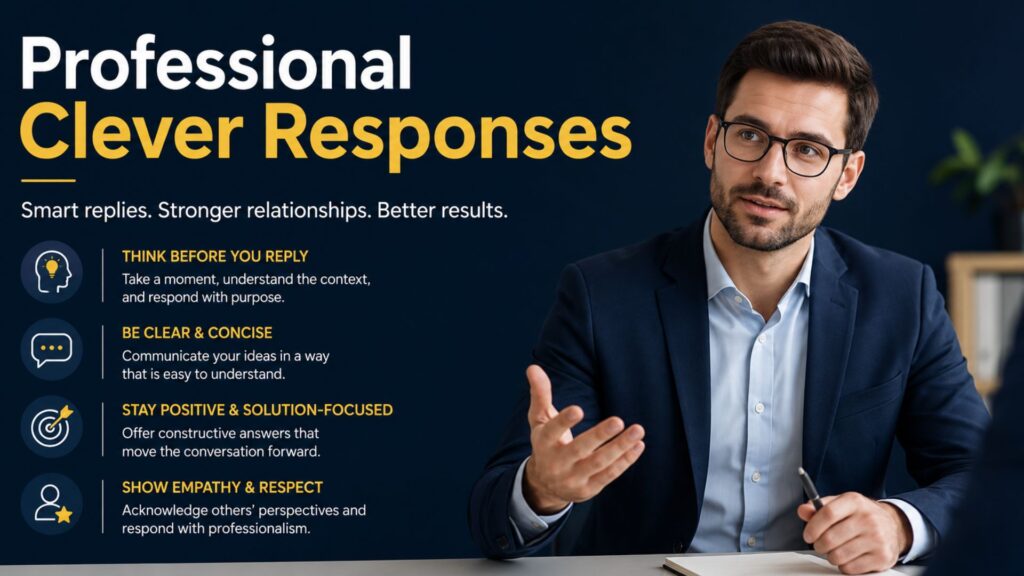
In workplaces or formal settings, you need responses that sound mature and composed.
Here are some professional alternatives:
- “Understood.”
- “Thanks for the feedback.”
- “I appreciate the honesty.”
- “Noted.”
- “That’s your perspective.”
- “I understand your position.”
- “We can leave it there.”
- “I hear you.”
- “Thanks for clarifying.”
- “Let’s move forward.”
Why Professionalism Matters
A clever professional response protects your reputation. It keeps you calm, respectful, and emotionally intelligent — especially in stressful situations.
Creative Comebacks That Stand Out
Want a response people actually remember? Try something unexpected.
- “The passion in your indifference is inspiring.”
- “You should put that on a motivational poster.”
- “I felt the emotional disconnect from here.”
- “Your commitment to not caring deserves an award.”
- “That’s the strongest ‘I don’t care’ I’ve ever heard.”
- “I’ll alert the media immediately.”
- “History will remember this moment.”
- “You almost convinced me.”
- “Your nonchalance is cinematic.”
- “That was aggressively unbothered.”
Creativity Makes Conversations More Interesting
Creative replies work because they break predictable conversation patterns. Instead of reacting emotionally, you turn the moment into entertainment.
Sarcastic Replies With Bite
Sarcasm can be hilarious when used correctly.
- “Clearly.”
- “You’ve mentioned that like three times now.”
- “Your dedication to not caring is impressive.”
- “I couldn’t tell at all.”
- “Wow, thanks for the emotional TED Talk.”
- “You seem weirdly passionate about not caring.”
- “That sounded personal.”
- “I’ll try to recover from this.”
- “Your support means everything.”
- “Very brave of you.”
Don’t Overdo Sarcasm
Too much sarcasm can turn playful conversations into arguments. Use it carefully, especially over text where tone gets lost easily.
Cute & Sweet Comebacks
Sometimes soft energy works better than savage energy.
These cute replies keep things warm and playful:
- “Okay grumpy.”
- “You’re still listening though 😊”
- “I’ll pretend that didn’t hurt my feelings.”
- “Aww, don’t be mean.”
- “That’s not very sweet of you.”
- “You secretly care.”
- “You sound cranky today.”
- “I forgive you.”
- “That was rude… but kinda funny.”
- “I’ll survive somehow.”
Cute Responses Lower Defensiveness
Cute replies work well because they soften tension instead of escalating it.
Bold & Fearless One-Liners
Need something short and strong? These one-liners get straight to the point.
- “Then stay uninvolved.”
- “Cool story.”
- “That changes absolutely nothing.”
- “Thanks for sharing.”
- “You care enough to comment.”
- “Okay tough guy.”
- “And life goes on.”
- “Noted.”
- “You done?”
- “Anyway…”
Short Replies Feel Confident
Short responses often sound stronger because they don’t try too hard.
Think of them like verbal mic drops.
Internet Meme-Style Comebacks
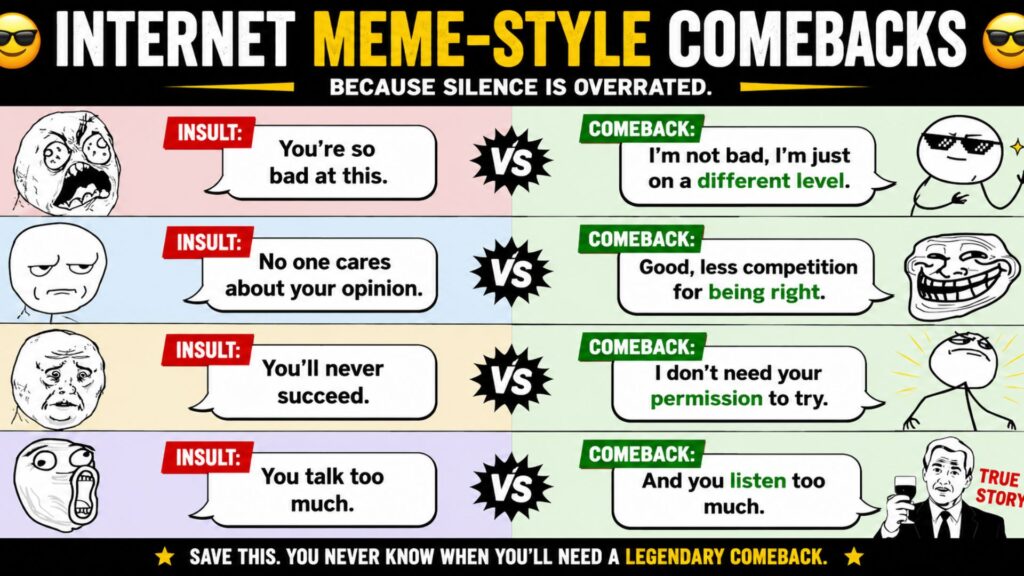
These feel perfect for texting, TikTok comments, or online banter.
- “Bro thought that was cold 💀”
- “The edge is unreal.”
- “Okay anime villain.”
- “That sounded cooler in your head.”
- “Main character syndrome detected.”
- “The emotional damage was minimal.”
- “Certified unbothered moment.”
- “You want a medal?”
- “Peak internet behavior.”
- “Respectfully, nobody asked.”
Meme Replies Work Online
Internet humor thrives on exaggeration and irony. Meme-style responses feel modern, funny, and easy to share.
How to Choose the Right Comeback
Not every situation needs a savage response.
Here’s a quick guide:
| Situation | Best Style |
|---|---|
| Friendly banter | Funny or playful |
| Flirting | Flirty or cute |
| Arguments | Fearless or calm |
| Workplace | Professional |
| Online comments | Meme-style or sarcastic |
| Rude strangers | Short and confident |
The smartest comeback isn’t always the harshest one. It’s the one that keeps you in control.
FAQs
What’s the best comeback to “I don’t care”?
The best comeback depends on the situation. Funny responses work well with friends, while calm confident replies work better during arguments.
Should I respond when someone says “I don’t care”?
Not always. Sometimes silence is stronger. However, a smart comeback can help you keep control of the conversation.
Are sarcastic comebacks rude?
They can be. Tone matters a lot, especially in texting where sarcasm is easy to misunderstand.
How do I sound confident without sounding angry?
Keep your response short, calm, and emotionally controlled. Confidence usually sounds relaxed, not loud.
What’s a funny comeback to “I don’t care”?
One popular option is:
“You cared enough to reply.”
It’s playful, simple, and works in many situations.
Conclusion
Hearing “I don’t care” can feel annoying, dismissive, or disrespectful depending on the tone behind it. However, the right response can completely shift the conversation.
Whether you use humor, confidence, sarcasm, or playful charm, the best comebacks to “I don’t care” help you stay calm and in control instead of reacting emotionally.
Sometimes the smartest response is funny. Sometimes it’s fearless. And sometimes it’s simply not giving the attitude any power at all.
At the end of the day, confidence always lands harder than anger.
