
Have you ever received a message saying “I’m on DND” and wondered what the person meant? Or perhaps you noticed “DND” on someone’s phone and weren’t sure whether it had anything to do with you.
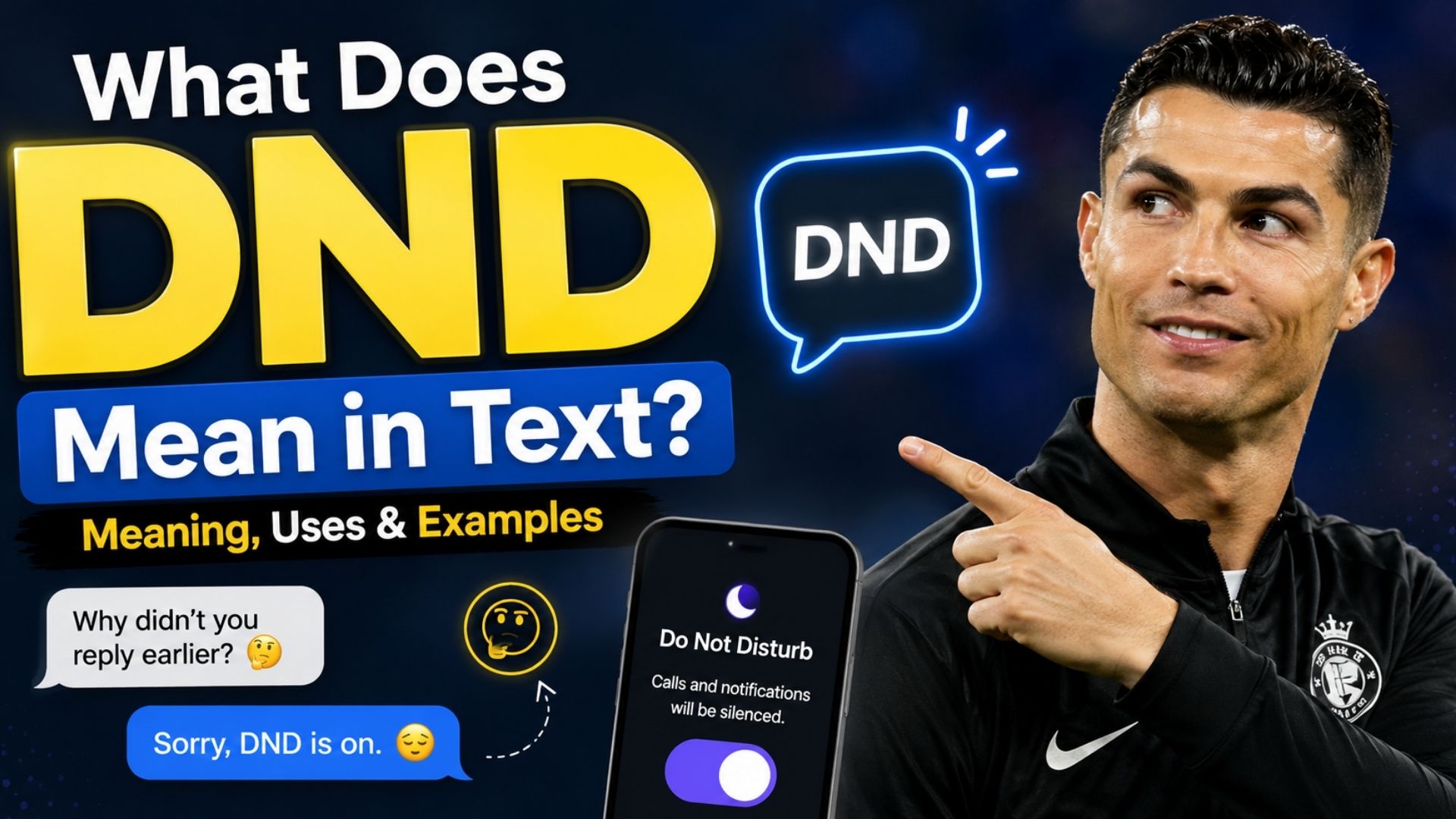
In texting and everyday digital communication, DND usually means “Do Not Disturb.” It refers to a setting or status that limits notifications and interruptions. When someone turns on DND, their phone or app may silence calls, messages, alerts, or other notifications for a period of time.
The meaning is usually practical rather than personal. Someone might use DND while working, studying, sleeping, attending a meeting, or simply taking a break from their phone. So, if you see “DND” in a text, don’t automatically assume the person is ignoring you.
Let’s break down what DND means, where you’ll see it, and how to understand it correctly in different conversations.
What Does DND Meaning in Text?
The most common answer to what does DND mean in text is “Do Not Disturb.”
People use DND in two closely related ways. First, it can describe a device setting that reduces or silences notifications. Second, someone may use it as a quick status message to tell others that they don’t want to be interrupted.
For example:
“I’m studying, DND for the next two hours.”
This means:
“I’m studying, so I have Do Not Disturb turned on and may not respond right away.”
You might also see messages such as:
- “Going on DND.”
- “Sorry, I was on DND.”
- “My phone was on DND.”
- “DND until 5.”
- “I’ll text you when I’m off DND.”
The exact behavior depends on the phone, app, or settings being used. DND can silence some or most notifications without necessarily turning the device completely off.
Origin and Background of the Term
“Do Not Disturb” is an older phrase that existed long before smartphones. Traditionally, a “Do Not Disturb” sign was used on hotel doors, offices, and other private spaces to indicate that someone didn’t want visitors or interruptions.
Digital devices adopted the same basic idea.
As smartphones became central to everyday communication, operating systems introduced notification controls that allow people to temporarily reduce interruptions. The familiar phrase “Do Not Disturb” became shortened to DND in casual conversations.
Today, you may encounter DND in phone settings, messaging apps, gaming platforms, workplace communication tools, and social media conversations.
The basic idea remains the same: “Please don’t interrupt me right now.”
Read more: What Does GN Mean in Text? Meaning, Uses & Examples Explained
How DND Is Used in Daily Life
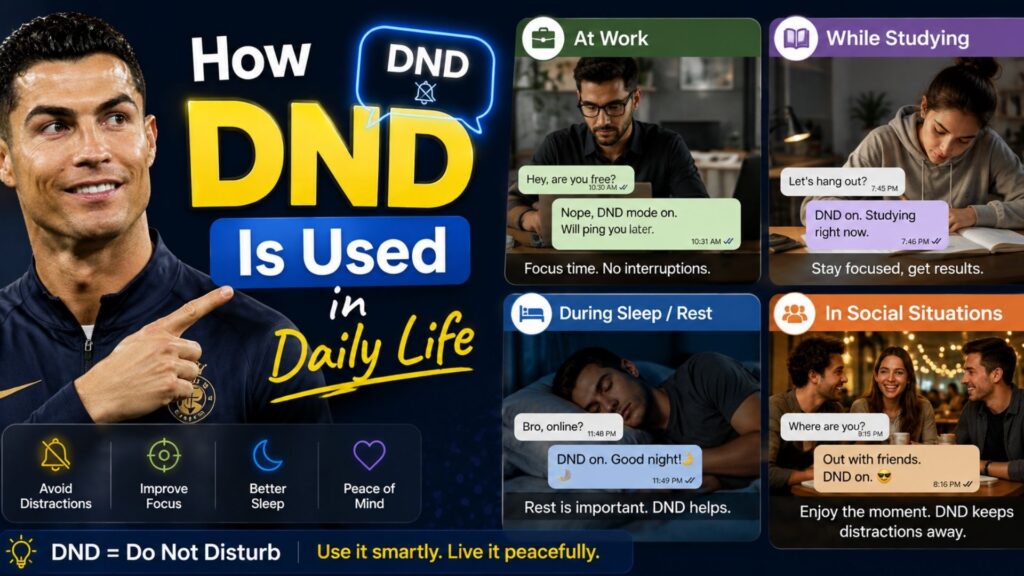
DND can be useful whenever someone needs uninterrupted time. It isn’t necessarily about avoiding a particular person. In many cases, it simply means the person wants fewer digital distractions.
Here are some common situations where you might see or hear DND.
1. During Work Hours
People often turn on DND while working, especially when they need to concentrate on an important task.
For example:
“I’m finishing a report, so I’ll be on DND until lunch.”
This tells coworkers or friends that the person may not immediately see or respond to messages.
DND can be especially helpful when someone needs a period of deep focus. Instead of checking every notification as it appears, they can finish their task and respond later.
2. While Studying
Students may use DND to avoid distractions while studying or preparing for exams.
For example:
“DND for the next three hours. Exam tomorrow!”
Here, DND communicates a clear boundary. The person isn’t necessarily upset with anyone. They simply want to protect their study time.
It can also help reduce the temptation to repeatedly check social media, messages, or other notifications.
3. Before Sleeping
One of the most common uses of DND is at night.
Someone might text:
“Going to sleep. My phone’s on DND.”
This means they probably won’t notice normal notifications until they wake up.
Some people schedule DND automatically during their usual sleeping hours. That way, they don’t have to manually turn it on every night.
4. During Meetings
Meetings are another obvious time to use DND.
For example:
“I’m in a meeting. DND for 30 minutes.”
The person may still be able to use their phone, but notifications won’t constantly interrupt them.
In professional settings, DND can help people stay focused and avoid accidentally checking messages during important discussions.
5. For Mental Breaks
DND isn’t only about work or sleep.
Sometimes people use it simply because they want a break from constant notifications.
For example:
“Taking a little time offline. I’m on DND.”
This can be a healthy digital boundary. Being constantly available can feel exhausting, especially when messages and alerts arrive throughout the day.
Turning on DND gives someone a chance to focus on another activity without responding immediately.
6. Gaming Sessions
Gamers also use DND when they want uninterrupted play.
For example:
“DND—I’m in the middle of a match.”
A notification or phone call at the wrong moment can interrupt concentration, particularly during competitive games.
In this situation, DND simply means the person wants to finish what they’re doing before dealing with incoming notifications.
Emotional or Practical Meaning of DND
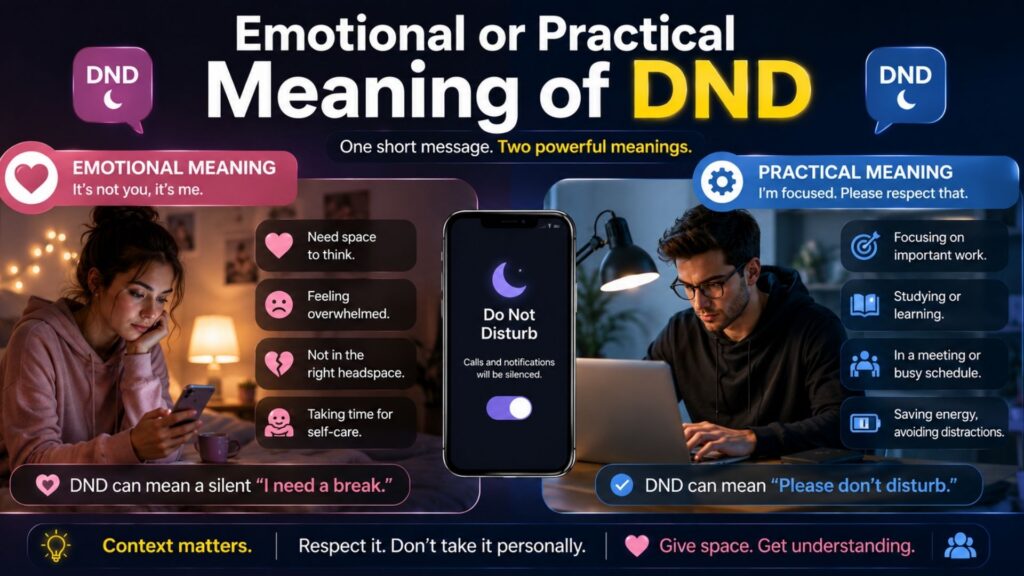
The emotional meaning of DND depends heavily on context.
Most of the time, it has a practical meaning: the person wants uninterrupted time.
However, someone can also use DND to establish a personal boundary. They may be tired, busy, studying, working, relaxing, or simply taking time away from their screen.
| Situation | Likely meaning |
|---|---|
| “I’m on DND at work.” | They’re focusing on work |
| “DND while I sleep.” | They don’t want nighttime notifications |
| “Going on DND for a while.” | They want uninterrupted time |
| “Sorry, I missed your message. I was on DND.” | Notifications were limited or silenced |
| “DND during the game.” | They don’t want interruptions |
So, if someone doesn’t reply while their DND status is active, the safest interpretation is usually that they’re unavailable rather than deliberately ignoring you.
Similar or Related Terms
Several terms are closely related to DND, but they don’t always mean exactly the same thing.
| Term | Meaning | Main idea |
| DND | Do Not Disturb | Reduce interruptions |
| Silent Mode | Notifications are silenced | Less sound |
| Airplane Mode | Wireless connections are generally disabled | Disconnect from networks |
| Offline | Not currently connected or available | No active connection |
| Busy | Currently occupied | May respond later |
| Focus Mode | Designed to limit distractions | Concentration |
| Mute | Stops notifications from a specific source | Quiet one conversation/app |
The important difference is that DND is specifically about controlling interruptions. It doesn’t necessarily mean the person has no internet connection or has completely stopped using their phone.
Common Misunderstandings About DND
DND can sometimes create confusion, especially when someone sees a status and assumes it has a personal meaning.
Here are some common misunderstandings.
1. “DND means someone is ignoring me.”
Not necessarily.
If someone has DND enabled, they may simply be unavailable or trying to focus. They might not even see your message immediately.
For example, if your friend is studying and turns on DND, their delayed response probably has nothing to do with you.
2. “DND is rude.”
DND itself isn’t rude.
In fact, using it can be a practical way to manage interruptions. People have work, sleep, family time, study sessions, and personal activities that require attention.
The important part is how someone communicates their availability.
3. “DND means they’re upset.”
DND doesn’t automatically indicate anger.
Someone can turn it on while feeling perfectly happy. They may simply want some quiet time.
If you’re concerned about someone’s mood, look at the broader conversation instead of interpreting DND alone.
4. “DND blocks everything.”
Not always.
DND settings vary between devices and apps. Some allow certain people, repeated calls, alarms, or important notifications to get through.
So DND doesn’t necessarily mean the person cannot receive or see anything. It usually means their device is managing interruptions according to their selected settings.
5. “Only introverts use DND.”
Anyone can use DND.
Students, professionals, parents, gamers, travelers, business owners, and people who simply want uninterrupted time may use it.
The reason usually has more to do with the situation than personality.
Examples of DND in Sentences
Seeing DND in real conversations makes the meaning easier to recognize.
Example 1:
“I’m studying for my exam, so I’m on DND.”
Meaning: The person wants uninterrupted study time.
Example 2:
“Sorry for the late reply. I was on DND.”
Meaning: They may not have noticed your notification right away.
Example 3:
“Going on DND for the next hour.”
Meaning: They don’t want to deal with interruptions for a while.
Example 4:
“DND—I’m in a meeting.”
Meaning: They’re occupied and probably won’t respond immediately.
Example 5:
“I keep my phone on DND while sleeping.”
Meaning: They limit nighttime notifications.
Example 6:
“Don’t worry if I don’t answer. I’ll be on DND during the game.”
Meaning: They’re warning you in advance that they may not see messages.
Example 7:
“Finally putting my phone on DND and relaxing.”
Meaning: They’re taking a break from digital interruptions.
Example 8:
“Was on DND all morning. What did I miss?”
Meaning: They intentionally limited notifications and are now catching up.
Why Understanding DND Meaning in Text Matters Today
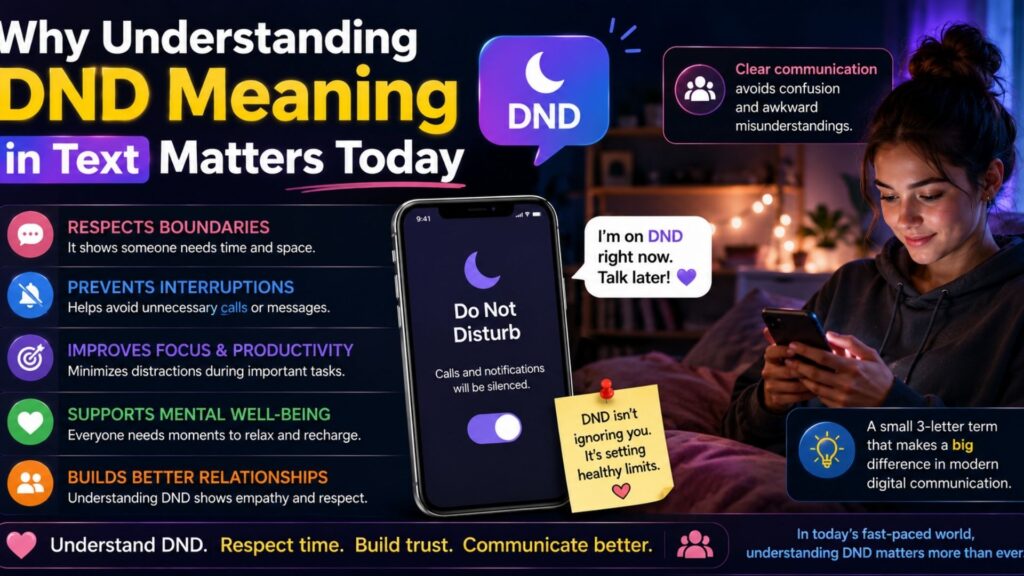
Digital communication has made people feel constantly available. Messages, calls, app notifications, social media alerts, and work updates can arrive at almost any time.
That’s why understanding what does DND mean in text is useful. It helps you interpret a delayed reply without immediately assuming something is wrong.
Imagine sending a message to a friend and seeing that they’re on DND. Instead of thinking, “They’re ignoring me,” you can recognize that they may simply be busy or taking a break.
DND also reflects a broader shift toward digital boundaries. People increasingly use notification controls to protect their attention, sleep, work, and personal time.
In simple terms, DND is often less about avoiding people and more about controlling when interruptions are allowed.
That distinction matters. A person can care about you and still need time when they aren’t available to respond.
FAQs:
What does dnd meaning in text in simple words?
DND usually means “Do Not Disturb.” In texting, it generally means someone has enabled a setting or status that limits notifications and interruptions.
Is dnd positive or negative?
DND is neither inherently positive nor negative. It’s usually a practical status that tells others the person doesn’t want to be interrupted for a while.
Where is dnd commonly used?
DND is commonly used on smartphones, messaging apps, gaming platforms, social media, workplace communication tools, and in everyday text conversations.
Is dnd formal or informal?
“DND” is an informal abbreviation. While the full phrase “Do Not Disturb” can be used in formal contexts, the abbreviation is more common in casual digital communication.
Why do people search for dnd meaning in text?
People search for DND meaning in text because they may see the abbreviation in a message, status, or phone setting and want to know whether it means someone is unavailable, ignoring them, or simply limiting notifications.
Conclusion:
So, what does DND mean in text? In most cases, it means “Do Not Disturb.”
Someone may use DND while working, studying, sleeping, attending a meeting, gaming, or taking a break from their phone. It usually indicates a desire for fewer interruptions rather than anger or avoidance.
The exact behavior can vary depending on the device or app, but the basic idea remains simple: the person wants some uninterrupted time.
If someone is on DND, don’t immediately assume they’re ignoring you. Give them space, let them finish what they’re doing, and wait for them to respond when they’re available.
Understanding small texting terms like DND can make digital conversations much easier because you’re less likely to misread a simple status as a personal message.
